


Attend any hospitality conference such as AHIC, ATM, The Hotel Show or others, there’s a good chance Marloes Knippenberg will be speaking there. Not only as the CEO of Kerten Hospitality, a mixed-use operator in the region, but more often than not, as the industry’s ‘disruptor’.
After all, since taking charge of the company in 2015, she’s refused to do anything by the book, instead taking on the industry as she sees fit and always looking to the future. You won’t find any ‘traditional’ hotels in her portfolio, which is just the way she likes it.
Today, Kerten has a pipeline of more than 3,500 keys, 20,000 square metres of co-working spaces, a strong presence across the MENA region, and a plethora of accolades for Knippenberg’s successful leadership and impact on the company. At the time of writing, Kerten has 11 owned brands including its F&B ventures, as well as a footprint of more than 35 projects across 12 countries.
Joining them will be two glamping eco-resorts in Ras Al Khaimah. The Cloud7-branded sites are part of the company’s focus on sustainablilty, eco-tourism and communities.
Knippenberg’s own entry into hospitality was as traditional as it gets though, catching the tourism bug from an early age. She tells Hotelier Middle East: “We moved when I was 13 away from the place I had known since I was a kid, to a very touristic little village in south of Holland. All my new friends had parents who owned restaurants and hotels so pretty much all in their free time, they were always in those places. So if I wanted to play or meet up with any of them, half of the time they couldn’t make it. So, I started doing the dishes at these places just so I could be near my friends while they worked. I learned so much by doing it, and I loved it.

“By that time, I was just starting to go to college, and really I was not a great studier. I could get good grades if I wanted to but as I grew up, I wanted a real job for myself. I wanted to be a waitress because to me that’s where all the cool people were. I was around 14 so at that time I was still too young to do it as a full-time job, but a couple did give me a job as a dishwasher.
“While I started as a dishwasher, I moved up to salad maker, then French fries and eventually sous chef. I did that on weekends, vacations and sometimes on some weekdays. My parents weren’t super pleased with what I was doing at the time. While I was there though, I saw all these people older than me going to hotel schools and I really admired what they were doing.”
The Hilton Days
Despite being a self-proclaimed ‘bad student’, one thing Knippenberg did excel in was hospitality and people.
When she graduated from Hotelschool The Hague with a BA in hospitality management, she was named the school’s “most promising student” – naturally gifted in the art of hospitality.
The golden girl quickly found herself brought into hotel giant Hilton, enrolled in its elevator programme where the young Dutch woman found herself brushing shoulders with some of the industry’s most influential members.
She explains: “[Hilton] was the best school I could’ve had. I have worked really hard to get where I am but I have also been really lucky in regards to timing. I joined [Hilton’s] elevator programme at a time where the company had all kinds of iconic hospitality experts working there.
“When we boarded, there were only 10 people in the programme, so we got exposure to the president and vice president all the time for 18 months. It wasn’t just a ‘first job’, I actually got to meet all these amazing experts. I stopped breathing every time they walked in.
“For those 18 months, Hilton nurtures you into a ‘golden child’ where you’re given all these amazing opportunities and exposure. But once it’s done, you really have to prove yourself. I was pretty much the youngest there so I was always moved around Hilton to new roles.”
During her time with Hilton, she held a range of operational and commercial positions across the likes of Zurich in Switzerland, Birmingham in the UK, Vienna in Austria and in Turkey.

Turning Kerten into a disruptor
By the time she became CEO of Kerten Hospitality, the industry’s owners were smarter than they had been before.
They were ready for something new in hotels, ready for Knippenberg’s ‘untraditional approach’.
She says: “Where we started disrupting was when we went into mixed-used. Owners were smarter by the time Kerten picked up, so we can in at a time where we could be there for the next level of hospitality. Kerten attracts a different kind of owner, so organically we’re in a position where people demand something different.
“Since we’re able to look at every project individually, we don’t need to be traditional in any way. We look at every owner individually, too, as well as looking at the location and the market. To talk about our owners, I could tell you stories about every single one. Not a single one is traditional, or old-fashioned or normal in any way. They all have their own reasons why they want to be in hospitality.”
Kerten properties are characterised by their open spaces, co-working areas, collaborative brands, and ability to easy serve a variety of purposes. Organisationally, the company is highly fluid and adaptable, as Knippenberg goes on to explain: “Kerten has always been about working remotely. For us, we have more business leads than ever, we’re stronger than before and we have even more people that want to join us. We were suggesting ‘digital nomads’ as a trend even before the pandemic.
“Nobody listened [to us], they said ‘just give it another 10 years’. Now people are thinking maybe they need a hospitality product for people who pick up their lives and move around a lot.
Our story has been reinforced by Covid and our story has become a reality far sooner than anyone expected.”
The fluidity of the company
Much like the CEO’s commitment to finding ‘untraditional owners’, she says she always tries to employ those from younger generations, those who think outside of the box.
Gen Z, in particular, she says really resonate with the company and its ethos. She says: “[Gen Z] is pretty much my go-to generation. Our remote-ship for example wasn’t just born out of Covid, it was done because that’s how students like to work. We gave students real roles and real responsibilities. To see the content and ideas they produce out of that is fascinating. They are the first generation that don’t know a time before technology and the internet. These students are able to have 25 apps open at once, watch TV and use two computers at the same time. You cannot put a person like that behind a desk and tell them to do the same thing for eight hours straight. It’s totally wrong.
“I think we have a lot to learn from this generation and from them, [hospitality] can change for the better.”
With such a high amount of respect for the next generation of hoteliers, Knippenberg says the company’s sustainability and CSR initiatives are rooted in making a better world for the future. This is in contrast to other companies that push sustainability “for the sake of it.”
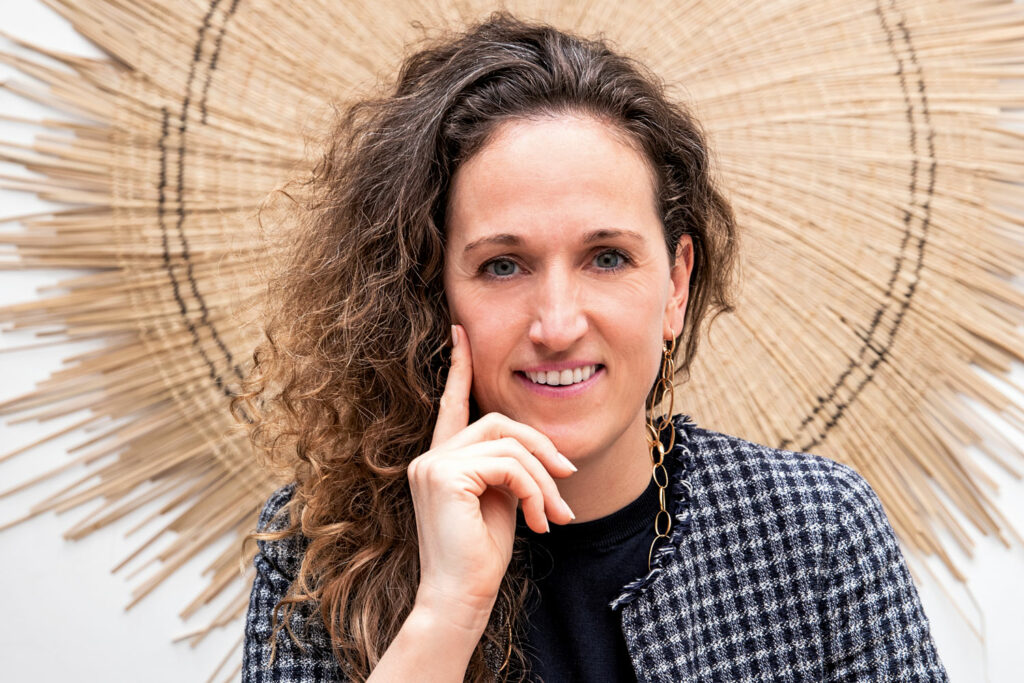
Leadership style
With Kerten’s high levels of flexibility both in terms of product and organisation, comes a lot of trust, explains the CEO. She tells us it can be difficult to hire for Kerten as many traditional hoteliers struggle with its working style and philosophy. She says: “Everyone likes the sound of freedom, but to actually be given it, can be unnatural sometimes. People would much rather have a to-do list or set of deliverables and deliver against those. The toughest if is someone has been in a corporate role for a long time before joining Kerten. They’re used to structure, they’re used to set times and office spaces. Kerten meanwhile is 24/7 and some weeks are heavier than others. Building Kerten upwards has been like a start-up. You constantly have to be switched on.
“So my leadership style is easy on those with an entrepreneurial spirit. I’d say I have a little bit more energy than other people, there’s no stopping me so it can be hard to keep up!”
The future of Kerten
According to Knippenberg, the future is in collaborations. She believes: “People are looking for brands within brands. It brings about convenience and really gives guests everything they need in one place. It may sound obvious, but if a hotel doesn’t have something a guest needs, they will leave the hotel to find it.

“Everything we do has a reason. I really believe that when you collaborate, you create new audiences for your business. Even without a legal relationship, you bring a different soul to your brand.
“We’re there to create the platform for them and help them with the partnerships abroad.”
The future
“We have openings in Kuwait, Georgia, Egypt, Saudi and RAK, of course.
“There are so many pieces in the region for us still to play with. We’re also looking at the Mediterranean and parts of North Africa, too. For the first time in Kerten’s history, scale-wise, we’re entering a totally new level. For now we’re maximising our results in this region [the Middle East] before moving on.”
Kerten’s rise through the industry has proven that the Middle East is ready for the company’s untraditional mixed-use approach. With plans across the rest of the world, let’s hope everyone else is ready too.