

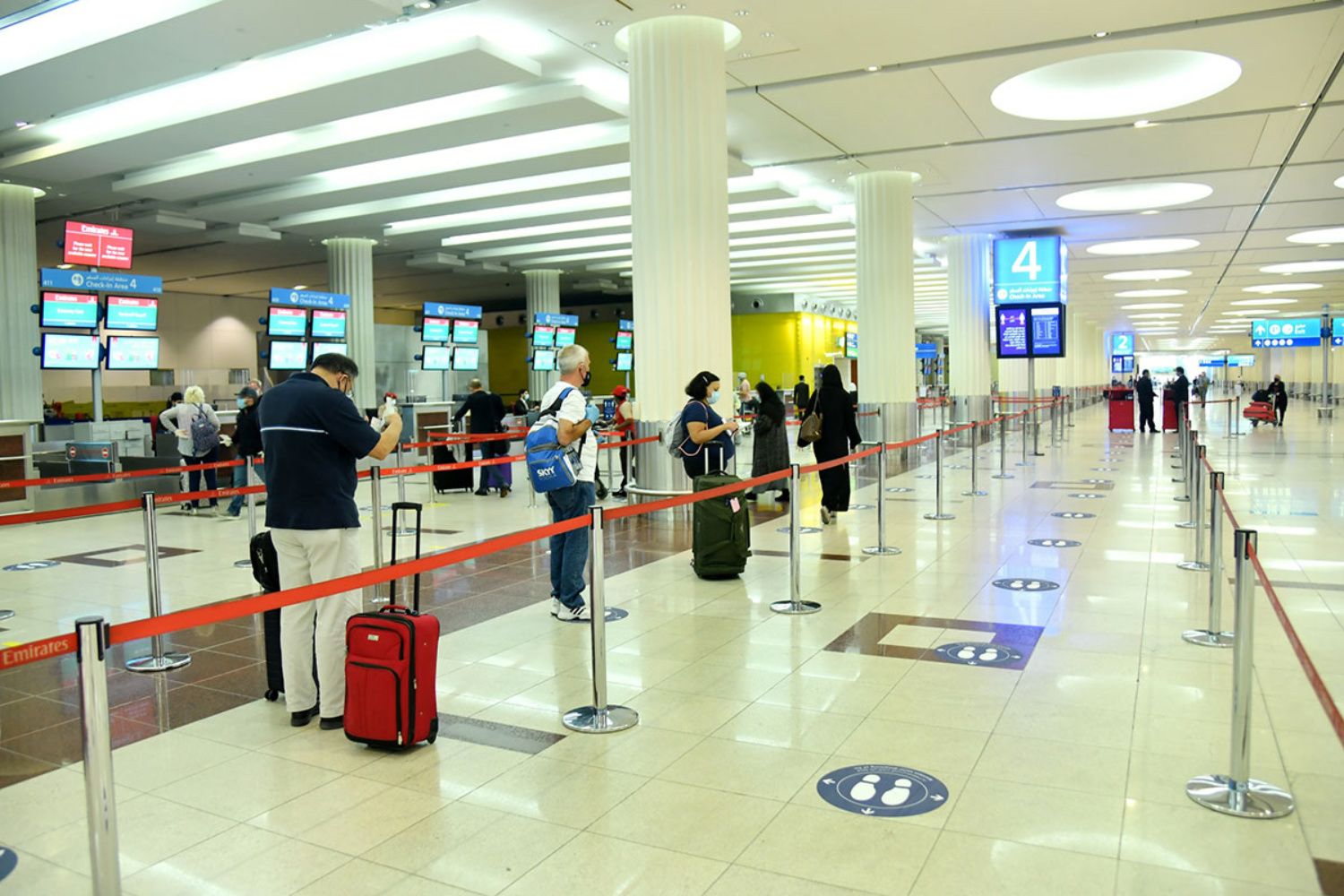
Ever since the Wright brothers first took flight in 1903, the aviation industry has been one of the rapidly evolving and changing sectors on the planet. Once the pandemic struck, this attribute has never been truer, with new travel guidelines spun out by authorities each hour.
The Middle East’s travel and aviation sector in particular is constantly updating itself to become safer and more robust in this post-COVID-19 landscape. Read on for all the major updates and developments this week.
February 5: IATA urges all airlines to shake-up business models
The International Air Transport Association (IATA) has been at the forefront of aviation debate since the advent of the pandemic. An authoritative body for the industry on a global level, it often speaks out on current topics and urges those at the top to reconsider decisions. This week, CEO Alexandre de Juniac said that airlines need to start developing more sustainable business models if they want to overcome similar catastrophes in the future. “I would like the aviation sector to at least in five years to be financially stronger,” he told sister-title Aviation Business. “We cannot continue with airlines having such weak balance sheets and low profitability. It’s not reasonable and when there is a crisis – we cannot plan for a crisis of this magnitude every five years – but when there is a crisis, they are too fragile. A stronger financially position would be very, very positive for the industry.”
February 7: IATA predict air travel recovery is at risk from new COVID-19 mutations
Two days later, Hotelier Middle East covered another prediction from IATA, this time warning aviation businesses about new COVID-19 strains. De Juniac said: “Last year was a catastrophe. There is no other way to describe it. What recovery there was over the Northern hemisphere summer season stalled in autumn and the situation turned dramatically worse over the year-end holiday season, as more severe travel restrictions were imposed in the face of new outbreaks and new strains of COVID-19.”
February 7: Emirates restricts non-nationals on flights to Kuwait and Saudi Arabia
As of February 7, Dubai’s national carrier Emirates Airline no longer accepts non Kuwaiti national passengers on flights from Dubai to Kuwait. The restrictions are in place until 20 February 2021. Customers holding tickets with Kuwait as a final destination are not accepted for travel at their point of origin. Exemptions are first degree relatives of Kuwaitis, domestic workers travelling with Kuwaiti sponsors, and domestic workers registered on Belsalamah platform. The same goes for non Saudi national passengers on flights from Dubai to Saudi Arabia, until further notice. Customers holding tickets with final destinations in Saudi Arabia are no longer accepted for travel at their point of origin. Exemptions are diplomatic passport holders and health practitioners and their families.
February 8: Report surfaces finding MEA airlines have the world’s most stressed pilots
The COVID crisis has wreaked havoc across global aviation markets causing thousands of pilots to lose their jobs. Sister title Aviation Business reports that many pilots now feel undervalued by their employers and are anxious about financial uncertainty, according to The Pilot Survey 2021, published by GOOSE Recruitment and FlightGlobal. Almost half of pilots said that the pandemic had impacted their mental health, with younger pilots being affected more than older crew. In fact, over a third of pilots said they would consider changing their career as a result of rising stress levels and worsening contracts and mental health. And pilots flying in the Middle East and Africa (60 percent) were least likely to repeat their career choices, given the chance.
February 8: Kuwait says air traffic is likely to pick up
A mandatory hotel quarantine rule being introduced in Kuwait will have the knock-on effect of passenger flights resuming in the country, according to health sources in the country. Starting from February 21, Kuwait will enforce a seven-day hotel quarantine for all passengers arriving into the country. Additionally, passengers will need to undergo an additional seven days of domestic quarantine.
February 9: WTTC speaks out against ‘high-risk country’ concept
A prominent travel body has for governments to abandon the concept of ‘high-risk countries’ and instead focus on how individual ‘high-risk travellers’ are treated at borders to facilitate the restart of the industry. The World Travel & Tourism Council (WTTC) said governments around the world should redefine their whole approach to risk assessment, to revive international business and leisure travel. “Risk-based on entire countries is neither effective nor productive,” Gloria Guevara, WTTC’s CEO. “Redefining risk towards individual travellers instead will be key for unlocking the door to the return of safe international travel. We need to learn from past experiences and crises such as 9-11.”
February 9: New COVID travel app trialled in UAE flight
SimplyGo, a health and travel app with the same purpose as the IATA Travel Pass, has been trialled on a flight from Europe to the UAE. Ahead of the trial, some travellers obtained negative COVID-19 results via their SimplyGo app prior to boarding. Another group had a positive result or did not have a test done at all. They were ultimately denied check-in and boarding. The data was then securely stored on the SimplyGo platform to be accessed by airlines and border officials authorising boarding of the plane and eventual arrival at the UAE.
February 10: Abu Dhabi to Alexandria flights given start date
Low-cost carrier Wizz Air Abu Dhabi announced another regional route which it will start later this month. From February 22, passengers can hop between the UAE capital city and Alexandria in Egypt for as low as AED179. Heading from Abu Dhabi to Borg El Arab, the flight takes approximately four and a half hours according to Wizz Air’s website.
February 10: Etihad Airways vaccinates all cabin crew and pilots
Abu Dhabi’s Etihad Airways said it was the world’s first airline with 100 percent of its operating pilots and cabin crew vaccinated against COVID-19. The airline began vaccinating its crews earlier this year along with its Dubai-based counterpart, Emirates. “We proactively made the vaccine available to all our employees to not only help combat the effects of COVID-19 but to make travellers feel confident and reassured the next time they fly with us,” said Tony Douglas, CEO of Etihad Aviation Group. “We are the only airline in the world to make COVID-19 testing mandatory for every passenger and crew member before every flight and now, we’re the first airline in the world with 100 percent vaccinated crew on-board.”
February 10: Another report highlights feelings of isolation among cabin crew
The perks associated with working as a flight attendant have all but evaporated in the wake of global COVID-19 restrictions with many cabin crew members now feeling lonelier and more socially isolated than ever before, according to The Crew Collective a global platform and network aimed at improving personal wellbeing among flight attendants. It said mental health and stress is an increasing concern among crews facing job and financial insecurity and the risk of contracting coronavirus while travelling. During the pandemic, thousands of cabin crew have been laid off and furloughed indefinitely as airlines desperately try to cut costs.
February 11: Air Arabia reveals Q4 2020 results
UAE low-cost carrier Air Arabia lost $56 million (AED192 million) in 2020 as airports closed and aviation came to a standstill amid the coronavirus pandemic, the airline said on Wednesday this week. A $5 million (AED20 million) profit in the fourth quarter failed to offset the annual loss, which compared to a $270 million (AED1 billion) profit in 2019.
*Dates reflect the day of publication on HotelierMiddleEast.com.*