

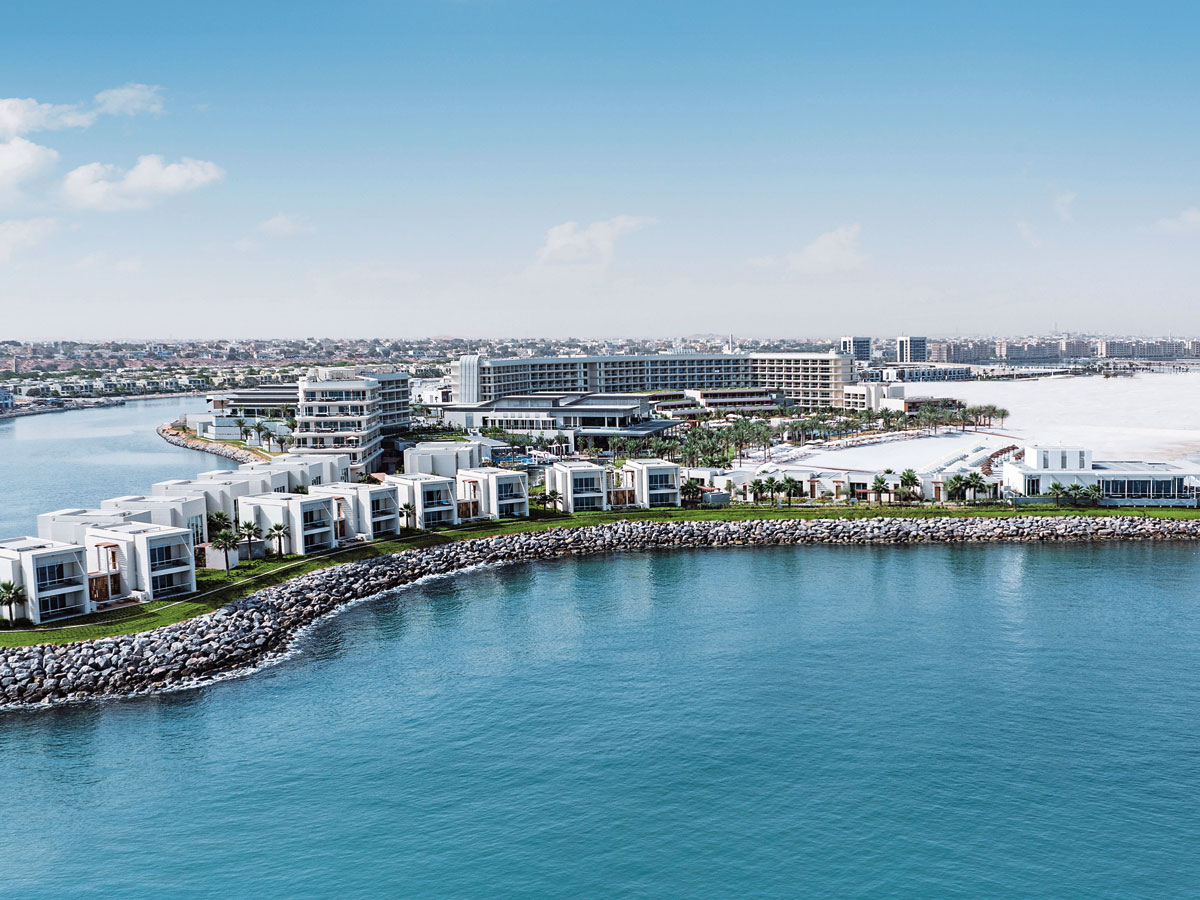
While Dubai and Abu Dhabi have long been recognised for their advancements in the hospitality sector, Ras Al Khaimah has emerged as a standout destination, evolving from a quiet emirate with limited infrastructure into a dynamic tourist hotspot and evolved into a major player in the UAE’s hospitality scene.
Its strategic investments, coupled with a focus on adventure tourism, and cultural experiences, have positioned the emirate as a preferred destination for both leisure and business travellers. With its world-renowned attractions and growing portfolio of luxury hotels and resorts, Ras Al Khaimah continues to attract international visitors and solidify its position as a must-visit destination in the region.
Year-on-year growth
According to the Ras Al Khaimah Tourism Development Authority (RAKTDA), the emirate welcomed a record 1.22 million overnight arrivals last year, up eight percent on 2022 numbers and bolstered by a significant 24 percent year-on-year pick-up in international visitors.
The hospitality sector in Ras Al Khaimah has grown exponentially over the past decade and a half, from only 3,384 hotel rooms in 2010 to 7,650 in 2024, according to Kostas Nikolaidis, senior account manager MEA at STR. He adds: “Hotel performance in the emirate continues strong with July YTD RevPAR of 369 AED, ranking second only behind Dubai in all emirates.
“The growth in hotel supply comes hand in hand with Ras al Khaimah’s rise in prominence as a tourism destination. Ras Al Khaimah as a destination is maturing by offering a range of accommodation options to cover the needs of a wide variety of international visitors, event organisers and local UAE residents alike.”
RAKTDA was formed in 2011 and set an initial goal of attracting 1.5 million visitors annually by 2021, which was achieved, the emirate is on track to draw three million visitors by 2030.
Strategic investments
The growth is largely due to strategic investments, such as the US$4 billion Wynn Al Marjan Island project, as well as other hotels and attractions. Along with significant enhancements in international air and sea connectivity, these developments have made RAK a more accessible and appealing destination, helping it evolve from a quiet emirate into a major tourism hub, according to Tatiana Veller, managing director of Stirling Hospitality Advisors. RAK’s international airport now serves over 500,000 passengers annually.

JS Anand, founder & CEO of Leva Hotels, said: “Guests visiting Dubai now frequently include a stay in Ras Al Khaimah in their itineraries, an option that was not as common a few years ago. The emirate’s hospitality sector has flourished through strategic investments, capitalising on its natural beauty, adventure tourism, and cultural heritage.
“The addition of modern infrastructure, sustainability initiatives, and wellness-focused offerings has bolstered its position in the regional tourism market. Ras Al Khaimah’s tourism and hospitality sector is poised to reach three million visitors annually by 2030, becoming a cornerstone of its economic future.”
RAK has become a magnet for international investments, according to Veller, who adds that the hospitality sector attracts significant interest from China, India, Europe and the MENA region. The emirate’s government incentives, infrastructure development, tourism strategy, partnerships, unique selling propositions, and favourable business environment have made it an attractive destination for investors.
The hospitality sector in the emirate offers strong returns, with internal rates of return ranging from 12 to 20 percent depending on project specifics, and it is already home to diverse global luxury and upscale brands that are expanding RAK’s offerings with luxury experiences.
Adventure tourism and UAE’s first gaming resort
The emirate has successfully carved out a niche as a must-visit destination for travellers coming to Dubai or Abu Dhabi and tapped into the growing demand for nature and adventure tourism.
Anand adds: “Rather than mimicking Dubai or Abu Dhabi, Ras Al Khaimah has positioned itself as the UAE’s adventure tourism hub, highlighting its beachfront hotels and resorts, which now boast occupancy rates of 70 to 80 percent, a significant improvement from earlier decades.”
With its stunning landscapes, from the rugged Jebel Jais mountains to the vast desert and beautiful beaches, it’s become the destination for adventure seekers, according to Pieter Van Beugen, GM, DoubleTree by Hilton Resort. Activities like hiking, zip-lining, and mountain biking have given the emirate a unique edge, drawing visitors who crave both relaxation and excitement.

Veller adds that the Emirate is quickly becoming the attraction spot for sportsmen and fans, hosting a growing number of activities like RAK Half Marathon in February, Tough Mudder in April, and Highlander Adventure in November, to name just a few.
Anand explains: “Ras Al Khaimah has consistently aligned itself with global trends in hospitality and tourism, which has significantly contributed to its growing appeal. By staying ahead of international trends, the emirate has successfully attracted a diverse range of visitors.”
One of the big moves has been the plans for the UAE’s first gaming resort, which significantly elevated the emirate’s tourism profile and will attract a new wave of international visitors and investment. Wynn Resort Al Marjan Island, and the associated gaming legislation, is undoubtedly the most significant development for Ras al Khaimah’s hospitality sector in recent years.
Ali Manzoor, head of hospitality at CBRE MENA, says: “It has had a transformative effect on the emirate’s hospitality sector, with several signings from brands and operators that may once not have considered the emirate for development. Furthermore, branded residential launches have been coming to market at an accelerating rate and are achieving sales rates that were once thought impossible.”

A trend for business travel and staycations
Van Beugen attributes the quick rise of The Ras Al Khaimah hospitality market to a few more factors. He notes that there’s been a noticeable shift toward high-end tourism, with more luxury hotels and resorts opening up in the emirate. He also notes that diversifying hotel operations allows a range of international brands to enter the scene.
With its expanding infrastructure and growing portfolio of venues, the emirate is well-positioned to attract corporate events and business travellers looking for something different from the usual city experiences. There is significant potential for meetings, incentives, conferences, and exhibitions (MICE) tourism in Ras Al Khaimah.
He adds: “Staycations have become hugely popular among locals and expats living in the UAE. Ras Al Khaimah’s proximity to other emirates makes it an ideal quick getaway destination for those looking to unwind without the need for international travel.”
Visitation has largely fallen into two distinct demand segments with divergent characteristics. Domestic visitation tends to have a short length of stay of one to two nights and largely occurs over the weekends and during holiday periods. Inbound visitation, by contrast, tends to have higher average spending, and a longer length of stays which often fall between ten to fourteen days.
Manzoor adds that historically, Ras al Khaimah’s hotel sector has appealed to a price-sensitive guest profile. “Looking forward, Ras al Khaimah will have a three-pronged value proposition – a destination with affordable beachfront accommodation, a destination with several adventure activities, and, once complete, a premier gaming destination,” he says.
Neighbouring competition, seasonality and attracting talent
Like any thriving industry, it’s important to acknowledge and address these challenges to ensure continued sustainable growth and success.
Seasonality is one challenge, as the hot summer months lead to a drop in tourist numbers. To address this, hotels and tourism operators often offer special deals and discounts during the off-peak season, promoting year-round attractions such as indoor activities, and wellness retreats to ensure a steady flow of visitors throughout the year.
According to Van Beugen, another main challenge is the reliance on inbound tourists, with fewer walk-in guests compared to busier, more centrally located emirates. “To address this, industry leaders are focusing on enhancing the visitor experience, improving marketing efforts, and forging partnerships with international travel agencies to attract more global travelers.”
Another hurdle is the difficulty in attracting young talent to work in the hospitality industry. Van Beugen adds that Ras Al Khaimah’s location, combined with the general perception of hospitality jobs, can make it challenging to build a strong workforce. To combat this, there’s a push to create more appealing career opportunities, offering competitive packages, training programs, and partnerships with hospitality schools to draw in younger professionals.
Veller adds: “RAK competes with larger markets like Dubai and newer destinations in Saudi Arabia and Qatar for skilled hospitality workers. To counter this, RAK is investing in purpose-built staff housing and improving work-life balance to retain talent. Furthermore, initiatives to improve public transportation and staff accommodations are being implemented to support the hospitality workforce.”

The rising cost of land and construction, especially in premium areas like Al Marjan Island, as well as the availability of contractors for high-volume, high-level projects is another significant challenge says Veller. Karim Abdelhamid, general manager of Sofitel Al Hamra Beach Resort says it can be tricky finding the right balance between growth and preserving the natural environment, which is a crucial asset for Ras Al Khaimah. Industry professionals tackle this issue by promoting eco-friendly practices and sustainable tourism development.

Sustainable tourism strategy
In 2019, RAKTDA launched its Sustainable Tourism Destination Strategy, which aims to make Ras Al Khaimah a leading sustainable tourism destination by 2025. The strategy is committed to minimising the environmental impact of tourism activities while maximising economic and social benefits for the local community.
RAKTDA also introduced a mandatory Green Hotel Certification Program for all hotels operating in the emirate. This unique programme encourages hotels to adopt sustainable practices, including energy and water conservation, waste reduction, and the use of renewable energy. By 2021, several hotels had already achieved Green Key or other sustainability certifications, and the emirate continues to push for full compliance by 2025.
Branded as the ‘Green Emirate’, Van Beugen sayss: “Ras Al Khaimah is committed to sustainable tourism. Its focus on eco-friendly practices and preserving natural landscapes has attracted travellers looking for a more responsible and authentic experience, further setting it apart from other destinations in the UAE.”
Ras Al Khaimah is the first destination in the Middle East to achieve EarthCheck’s Silver Certification and has been very quick to adopt sustainability and incorporate it extensively across its hospitality sector, aligning with global efforts to reduce environmental impact and promote responsible tourism.
RAK is also advancing sustainability through its Barjeel Green Building Regulations, which mandate energy and water efficiency for all new buildings, including hotels. All new hospitality developments are being designed with sustainability in mind.
Veller adds: “Barjeel aims to reduce energy consumption by 30 percent and water usage by 20 percent, ensuring that hospitality projects are eco-friendly. Additionally, RAK Reem (Renewables and Energy Efficiency Program) oversees the Energy Efficiency and Renewables Strategy 2040, encouraging retrofitting of existing buildings and integrating renewable energy, further supporting sustainable hotel operations.”
Technology plays an important role in shaping the future of hospitality in Ras Al Khaimah, particularly in how the industry engages with travellers. Social media and digital marketing have become essential tools for promoting the emirate, allowing hotels and resorts to connect directly with potential guests and showcase the unique experiences Ras Al Khaimah has to offer.
AI is also revolutionising targeted marketing efforts, enabling businesses to better understand traveller preferences and deliver personalised offers and experiences. By leveraging these technologies, Ras Al Khaimah’s hospitality sector is enhancing guest engagement, streamlining operations, and staying competitive in a digital-first world.