

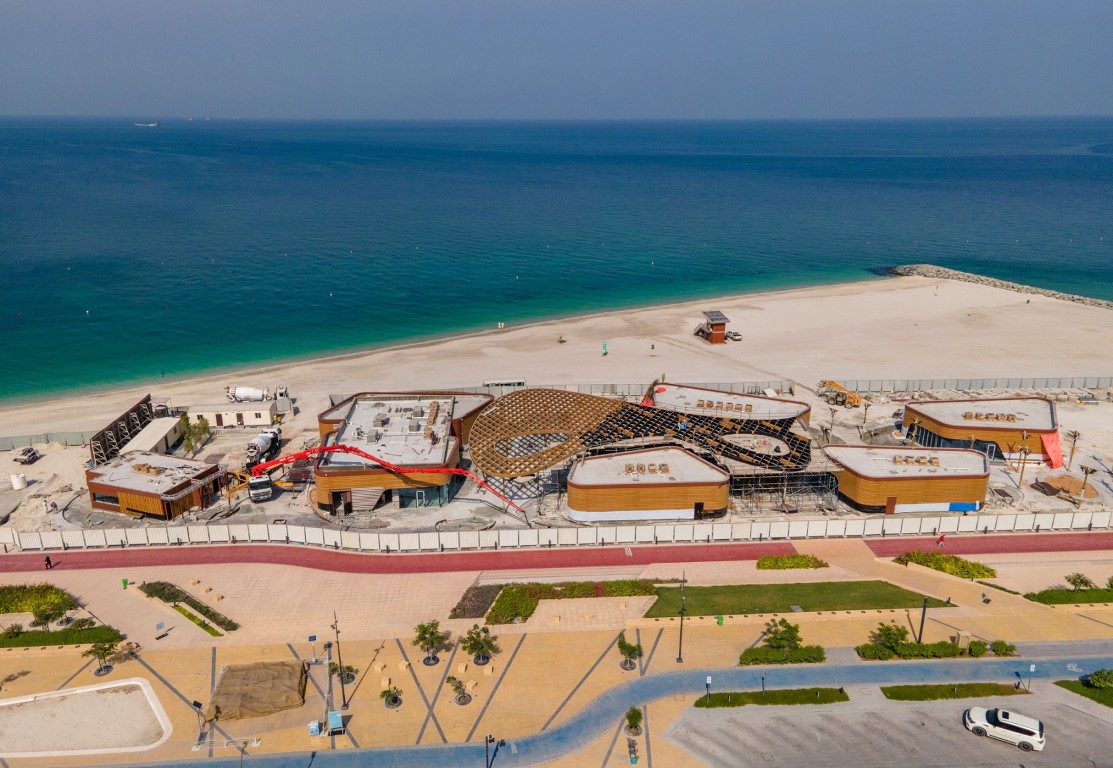
Al Hira Beach in Sharjah is now 95 percent complete and is due to open early 2022.
Spearheaded by the Sharjah Investment and Development Authority (Shurooq), the emirate continues to progress as one of the most family-friendly tourism destinations, as well as one of the most environmentally-friendly.
Led by Shurooq, the AED87 million (US$23.6 million) Al Hira Beach project will include children’s playgrounds, restaurants, cafes and retail outlets.
Al Hira Beach extends over a 3.5 kilometre stretch across the shoreline overlooking the Arabian Gulf and is Shurooq’s largest beach development project to date.
Marwan bin Jassim Al Sarkal, executive chairman of Shurooq, said the Al Hira Beach project will offer new investment opportunities that support Shurooq’s efforts to transform the emirate into a vibrant hub through the development of diversified tourism and leisure destinations for residents and visitors.
He added: “The project aims to encourage social interaction and offers parents and children safe and world-class amenities to enhance their wellbeing. Al Hira Beach will also boost the hospitality and retail sectors and support the diversification of Sharjah’s economy.”
As well as Al Hira Beach, a AED110 million (US$29.9 million) Al Luluyah Beach project is also in the pipeline.
Why Sharjah is one of the Middle East’s top eco-tourism spots
Shurooq has been refining its offerings to promote the emirate of Sharjah and boost sustainability across the hospitality sector. Here’s a look at some of its top projects.
Al Faya Retreat
Falling within Shurooq’s Sharjah Collection is Al Faya Retreat, an environmentally-friendly desert resort. The destination necessitates the use of glass bottles, tree planting initiatives and various recycling practices to boost sustainability. Across the road from the retreat, its café uses locally-sourced products to create experiences for guests.
The Kingfisher Retreat
Also in the same portfolio, The Kingfisher Retreat has announced plans to open a turtle rehabilitation centre. It will tie up with the Environment and Protected Areas Authority (EPAA) in the emirate and continuously work to preserve crucial nearby habitats.
It has further improved visitor experiences with a host of sustainable initiatives to minimise its impact on the ecosystem. Kingfisher Retreat is a car-free zone and bases its waste management plans on the principles of reduce, reuse, and recycle. An organic garden, bird water pond, turtle meeting point, nature walks, and beach cleaning activities are other eco highlights.
Al Badayer Retreat
Completing the Sharjah Collection is Al Badayer Retreat. The destination draws inspiration from Emirati desert living. The resort offers desert-camping and dune experiences through 21 service rooms, 10 tents and a range of leisure activities.
The Chedi Al Bait, Sharjah
Home to 53 rooms and suites, The Chedi Al Bait Sharjah, is built on the foundations of 19th century coral stone houses. The five-star hotel uses traditional Emirati architectural cues, featuring Arabic-style furniture and decorations.
Beyond its tribute to the vernacular architecture of the region, the hotel has rolled out a range of sustainability initiatives. For one, it has done away with plastic, opting instead for steel straws, glass bottles, biodegradable bin bags and metal room keys.
Moreover, it recycles all its glass, cardboard, and kitchen oil as part of a zero-waste policy, the hotel also turns all organic and non-organic food waste into compost. Motion sensors for lighting help avoid unnecessary use of energy and optimises air-conditioning depending on occupancy. There is also an electric car charging station both for in-house guests and other visitors.