

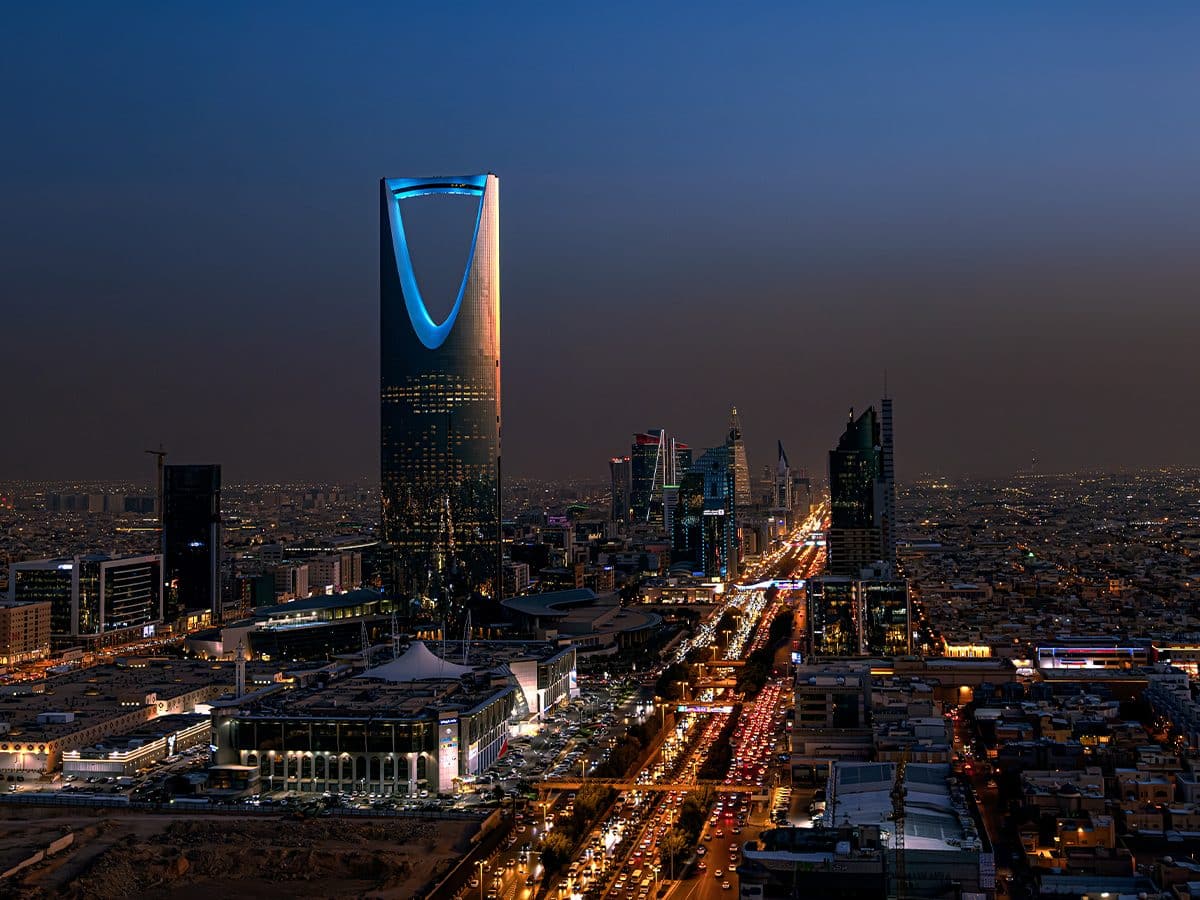
Saudi Arabia’s real estate market continues to be supported by underlying demand drivers, despite recent geopolitical developments, according to Knight Frank’s Destination Saudi 2026 report.
The report states that population growth, capital inflows, business expansion and inward migration remain key factors sustaining demand across the Kingdom’s property sectors.
It also identifies US$6.3 billion of private global capital that is ready to enter the market as geopolitical conditions stabilise.
Faisal Durrani, Partner and Head of Research, MENA, at Knight Frank, says: “Notwithstanding the human and economic costs of the Middle East conflict, GCC governments have moved swiftly to demonstrate a heightened level of security and resilience, showcasing their defensive capabilities to reinforce the long-term stability the region has maintained for decades. Consumer confidence in Saudi Arabia is underpinned by strong structural demand drivers of population growth, capital inflows, business expansion and inward migration.
“More importantly, long-term loyalty and confidence of expats in GCC governments have been shaped by decades of investment in public wellbeing and residents’ welfare. As such, we do not expect long-term demand from non-resident investors to weaken but instead expect a temporary hiatus while the conflict resolves itself.”
Durrani highlights that the main risk to the market lies in a prolonged escalation that could disrupt travel flows, capital mobility or business relocation decisions. He says: “Near-term investment activity may also slow as investors reassess their geopolitical risk tolerances. The underlying structural drivers supporting the Saudi real estate market remain intact, however.”

Alongside these conditions, regulatory reform is reshaping market access. On 22 January 2026, Saudi Arabia introduced legislation allowing non-resident international investors to purchase property in the Kingdom for the first time. The law opens 170 designated geographic areas to foreign ownership, including key markets such as Riyadh, Jeddah, Makkah and Madinah.
Durrani adds: “The timing of the international, non-resident real estate ownership law is significant as many property sectors in the Kingdom are showing signs of approaching new market highs. The change in the non-resident international buyer rules is already creating substantive demand for real estate in the Kingdom. Indeed, prior to the start of the conflict, we identified US$1.5bn of global private capital that is targeting the residential market, while a further US$3.4bn is circling the branded residential sector.”
Susan Amawi, general manager, KSA, at Knight Frank, links current market conditions to affordability pressures following rapid growth in the housing sector.
She says: “Affordability issues stemming from a supercharged housing market have resulted in a 55 percent decline in transaction volumes in Riyadh over the last 12 months, while the total value of home sales in the capital have dipped 48 percent over the same period.”
Knight Frank’s analysis indicates that Riyadh will require more than 305,000 additional homes by 2034 to meet population growth. Amawi adds: “This is why we believe the new ownership law could inject fresh capital, boost liquidity and attract a diverse international investor base.”
To assess international demand, Knight Frank expanded its research from the 2024 Destination Saudi report, surveying 1,550 respondents across Algeria, Egypt, India, Malaysia, the United Kingdom and the United States.
The study includes 752 expatriates based in Saudi Arabia and the UAE and was completed prior to the current regional conflict.
Hospitality demand shapes pipeline

The hospitality sector continues to expand, supported by domestic travel demand and long-term tourism targets.
Saudi Arabia aims to attract 150 million visitors annually by 2030, having surpassed 100 million visitors in 2023. Knight Frank attributes this growth primarily to domestic travel volumes.
To support this demand, plans are in place to deliver approximately 358,000 additional hotel rooms across the Kingdom over the next five to ten years. Of these, 250,000 rooms are located in Makkah and Madinah.
Knight Frank’s analysis indicates that this pipeline will increase the share of four- and five-star hotels from 60 percent of existing stock to 67 percent by 2030.
Harmen De Jong, regional partner – head of consulting, MENA, says: “Notwithstanding the current travel disruption across the region, demand from pilgrims for hotel accommodation is unlikely to abate in the medium to long term, given the intangible and structurally inelastic religious, spiritual and cultural links between the global Muslim community and the Holy cities of Makkah and Madinah. With plans to boost the Umrah and Hajj pilgrim quotas, the 250,000-room hotel development pipeline cannot come soon enough for Islam’s holiest cities.”
Knight Frank notes that while the expansion of higher-end hotels supports international tourism objectives, it also raises affordability considerations for domestic travellers, who continue to underpin overall demand.
The report highlights an opportunity to redirect investment towards secondary and tertiary cities, where land values may support the development of midscale and budget accommodation.
This approach could help balance supply across segments while maintaining accessibility for domestic travellers, alongside continued expansion of higher-category hotels in primary destinations.
Branded residences gain investor attention
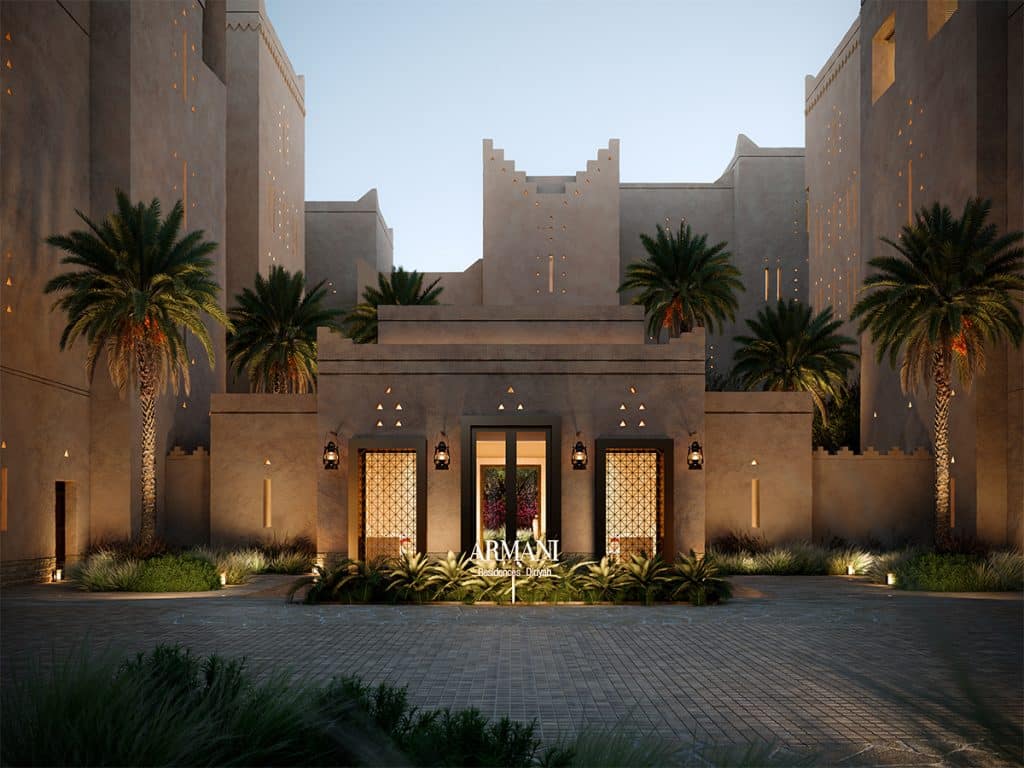
Branded residences have emerged as a key investment segment within Saudi Arabia’s real estate market, with Knight Frank identifying US$3.4 billion of global private capital targeting the sector.
The report finds that 77 percent of high-net-worth individuals are interested in purchasing a branded home in the Kingdom. Demand is particularly strong among buyers from Egypt (95 percent), Algeria (91 percent) and India (90 percent). Among expatriates based in Saudi Arabia, interest is highest in Madinah (100 percent), followed by Makkah (83 percent) and Dammam (79 percent).
Although the market remains in its early stages, current supply stands at approximately 1,685 units, with a further 1,900 units in development. Key locations include Diriyah Gate and Jeddah, where international brands are being introduced across residential developments.
Buyer budgets vary across income groups. While 44 percent of potential purchasers are working within a budget of up to US$1 million, 6 percent indicate a willingness to spend more than US$20 million. Among individuals with a net worth exceeding US$3 million, 27 percent are prepared to commit more than US$20 million to a branded residence.
The general manager, Amawi, says: “Saudi Arabia is emerging as one of the most dynamic growth markets for branded residences in the GCC. Leading global brands, including Raffles, Ritz-Carlton, Armani, Aman, SLS, Trump and Jumeirah, are being introduced in prime destinations such as The Red Sea, Jeddah and Diriyah Gate in Riyadh. With the new international ownership regulations now in effect, we expect demand to extend beyond domestic buyers to include a broader pool of international purchasers.”

Knight Frank notes, however, that international buyer expectations may not always align with current pricing levels. While some investor groups are positioned to access ultra-high-value properties, a significant share of demand remains concentrated below US$1 million. This creates a gap between available product and buyer expectations, particularly in higher-value branded developments.
Amawi adds: “Clearly there are groups of international buyers that can afford ultra luxury branded residences, but as the Kingdom is a relatively new property market on the global stage, confidence and budgets will build with time, unlocking even higher budgets as the market matures and developers establish reputations for quality branded homes.”
Retail and F&B drive investor interest

The retail sector has been identified as the most attractive commercial segment for investors, supported by rising consumer spending and evolving demand patterns.
Consumer spending in Saudi Arabia increased by 10.7 percent year-on-year in 2025 to reach SAR1.57 trillion, with more than 3.4 million square metres of retail space expected to be delivered by 2028. As a result, 37 percent of investors identify retail as their preferred commercial asset class.
Jonathan Pagett, partner – head of retail advisory, MENA, says: “Saudi Arabia’s retail market is undergoing a structural shift, with growth increasingly driven by experience-led destinations, omnichannel delivery and stronger local brand participation.
“As digital penetration deepens and consumer behaviour evolves, successful retail environments will be those that integrate physical space, convenience and cultural relevance within mixed-use settings.”
Demographics continue to play a central role in shaping the sector. Approximately 45 percent of the population is aged below 25, while 63 percent is under 30. This is influencing demand for retail formats that extend beyond traditional shopping and incorporate lifestyle, wellness, education and entertainment components.
Pagett says: “This consumer group has very specific retail expectations, which is why we have witnessed a surge in lifestyle retail developments, centred on wellness, education and entertainment.”

The food and beverage segment remains a key contributor to retail performance. In 2025, it accounted for 15 percent of all point-of-sale transactions, with total spending reaching SAR105.5 billion across restaurants and cafés.
This reflects the increasing importance of experiential destinations, supported by government-backed initiatives. Saudi Entertainment Ventures, a Public Investment Fund subsidiary, is planning to develop approximately 570,000 square metres of entertainment space nationwide, with an investment value exceeding US$4.7 billion.
Demand for retail space remains strong across major markets. Occupancy levels in Riyadh average 93 percent, supported by developments such as The Avenues and Cenomi Jawharat Al Riyadh. Jeddah records occupancy of 88 percent, while the Dammam Metropolitan Area reaches 94 percent.
Pagett says: “Riyadh’s retail stock is forecast to grow by approximately 40 percent in the medium term… Should all the promised stock materialise on time, the capital will boast 5.85 million sqm of retail space by 2028.”
He adds that Jeddah’s retail stock is expected to increase by 20 percent to 3.57 million square metres, while the Dammam Metropolitan Area is forecast to expand by 43 percent to 2 million square metres over the same period.
Beyond hospitality and F&B
Beyond these segments, Knight Frank notes that demand across the wider real estate market continues to be supported by population growth, capital inflows and business expansion, despite near-term geopolitical uncertainty.
While investment activity may pause as risk is reassessed, the report highlights that long-term demand from both domestic and international investors remains in place. Research conducted across 1,550 respondents globally also indicates sustained interest in Saudi Arabia’s property market, with regulatory changes, including the introduction of non-resident ownership, expected to support future capital inflows and market participation.