


Red Sea Global (RSG) has promised the gigaproject will be entirely disability friendly.
The developer, backed by Saudi Arabia’s sovereign wealth fund, will add ramps and accessible rooms at all of its hotels, but also offer adaptive diving experiences and make sure that people with disabilities can stay in the “more challenging” accommodations, such as the Desert Rock mountain resort.
RSG group CEO John Pagano said: “If we are truly going to do better for people and the planet, we can’t leave anyone behind. There are approximately 1.3 billion disabled people globally. It is not only totally inexcusable for our industry to exclude so many people, but commercially short-sighted.”
According to the European Network for Accessible Tourism estimate, the global economy loses US$150bn each year by not acknowledging the spending power and sheer scale of accessible tourism.
Pagano added: “We pledge to pursue a total commitment to accessible tourism from day one. As a visionary developer, we have the chance to build in accessibility from the ground up, creating exceptional experiences for every visitor to treasure, regardless of their physical or cognitive ability.”
Red Sea will cap its annual visitor figure at 1.5 million a year. Taking World Health Organisation’s figure that one in six people are disabled, that means the Red Sea could welcome around 250,000 disabled people a year. The same estimation would equal around 83,000 disabled people at Amaala, which will have an annual cap of 500,000 visitors.

After being unveiled in 2017, The Red Sea gigaproject said it would focus on ‘regenerative tourism’, sparking conversation around the future of travel and its capabilities in improving environments rather than destroying them. Today, billions of dollars are being pumped into such regenerative missions, including Red Sea, Amaala and others around the world.
Real standards for accessibility
Many have promised action in the world of accessible travel, without making any tangible processes. Red Sea Global, however, will now require all its employees, consultants and partners to follow the UN-backed standard, ISO 21902 – Accessible Tourism for All, throughout their work.
The standard means every contractor at RSG’s destinations must ensure guest experiences take a universally inclusive approach. This commitment includes using new technologies – such as smart mobility and logistics – to enhance luxury tourism experiences for people with disabilities and their families, who have historically been underserved by the global industry.
What sets ISO 21902 apart is that it does not focus solely on disabilities to do with mobility or wheelchair use, but a much broader spectrum. It specifies operating procedures for those with hearing issues, sight impairments, autism, chronic pain, and more.
The Red Sea and Amaala will incorporate and continually improve inclusive infrastructure as well, aware that this will very much be a learning process.
Red Sea Global’s accessible activities and experiences

Guests with a disability who take part in activities will be provided with adaptive equipment and partnered with specially trained instructors. Guests enjoying watersports will benefit from specialist sailing equipment including kayaks and stand-up paddle boards. Through RSG’s diving subsidiary, Galaxea, PADI-certified adaptive support divers will be trained to cater for those diving with disabilities and special needs.
Safe travel
Red Sea Global will operate seaplanes at the destination under the global standard of ‘Passenger Acceptance’, making bespoke provisions for guests with disabilities to mitigate boarding challenges. Before arrival, there will be trained handlers at the Red Sea International to enable the safe transportation of wheelchairs and specialist equipment.
Mindful handling of equipment is especially important, as many disabled travellers will be able to recount stories of equipment being damaged. In the US for 2019, around 30 wheelchairs and scooters were damaged, delayed or stolen every day.
Disabilities and mental health
Red Sea Global is also creating wellbeing programmes for families and caregivers of people with disabilities, providing opportunities and experiences that support mental wellbeing and allow for a sense of personal and shared achievement.
To support parents, and especially the parents of children with special needs, RSG’s adventure sports subsidiary, Akun, will offer a set of adventures and activities for parents that can help build wellbeing and mental strength.

Rosanna Chopra, executive director, destination development at Red Sea Global, said: “The unique needs of people with disabilities have been widely overlooked by the global tourism industry to date. It’s vital that we use our platform as a leading regenerative tourism developer – and a cornerstone of the Kingdom’s Vision 2030 transformation – to shine a spotlight on these issues, if we are to create a truly pioneering industry that caters to all.”
Inclusive employment at Red Sea Global
Lastly, in line with the guidelines set out in the ISO 21902 standard, this accessible tourism initiative will extend to all aspects of RSG’s ecosystem, further benefitting employees, local communities and partners.
To ensure the active participation of people with disabilities in the future of the tourism industry in the Kingdom and beyond, RSG will continue to work with its hospitality and leisure partners to invest in opportunities for staff and potential talent, regardless of their physical, cognitive, or sensory needs.
Physiotherapy and medicine at Amaala

Phase One of Amaala is focused on the Triple Bay masterplan, and will be ready to welcome first guests in 2024.
With wellness at the forefront, Amaala has already laid out plans for a range of physiotherapy centres in its hotels. Both Clinique La Prairie and Jayasom hotels will employ physios, and have other “medical-grade” facilities to treat fatigue, anxiety, digestive disorders, insomnia, diabetes and more.
An end to ‘Disability Tax’
The Red Sea destination is on track to welcome its first guests this year when the first three hotels and phase one of the Red Sea International airport open. Upon full completion in 2030, it will comprise 50 resorts, offering up to 8,000 hotel rooms and more than 1,000 residential properties across 22 islands and six inland sites.
Among these will be The St. Regis Red Sea and Nujuma, a Ritz-Carlton Reserve, both set to open this year.
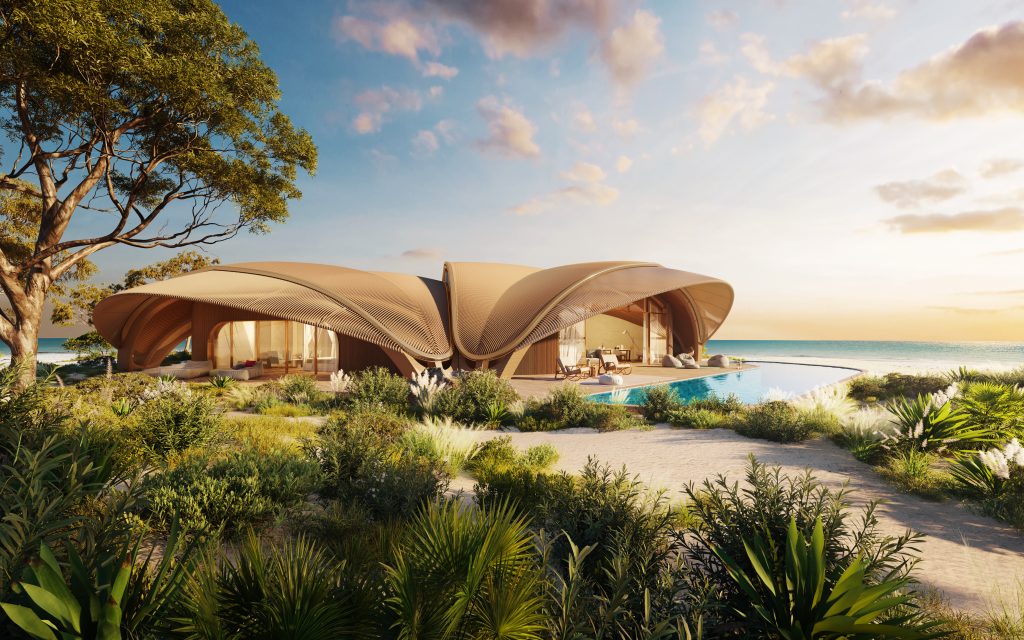
Tony Coveney, multi-property general manager said that both his hotels – and all others in the Marriott stable – will align with RSG’s new vision for accessible travel.
Coveney said: “One of our core values is “Putting People First,” which is reflected in our approach to supporting equal equity for all, irrespective of their special needs or disabilities. At Marriott, we believe that by prioritising the needs and concerns of our guests, associates, and partners, we create a more welcoming and inclusive environment where everyone can thrive and succeed. Our commitment to equal equity is an embodiment of our core values, and we will continue to uphold these values as we work to promote accessibility and accommodation across our global enterprise.”
A known issue in the hotel world has been properties charging disabled people ‘extra’ for a more spacious and accessible room.
One such instance was shared at Skift Global Forum East in Dubai last year, when disability rights activist Tanzila Khan shared her experience staying in hotels.

Khan emphasised the importance for industry leaders to actively eliminate what she termed the “disability tax” while shaping the future of travel.
Illustrating her point, Khan recounted a personal experience of travelling to Egypt with two of her friends who also use wheelchairs. They were compelled to upgrade their accommodations and incur additional expenses to secure an accessible room that could adequately accommodate them.