


In 2021, Hotelier Middle East labeled Kerten Hospitality the “disruptor” of the region’s hotel market.
Two years on and things have changed, Kerten has gone from disrupting things to leading the charge. Kerten has become one of Saudi Arabia’s most trusted names – the mixed-use operator has been entrusted by Saudi Arabia’s Ministry of Tourism to deploy more than a dozen new projects across the Kingdom within a SAR.15bn (aprox. US$400 million) combined investment you’d typically only see agreed for the international operators.
The company is part of the ultra-exclusive pack of operators in AlUla with a Cloud7 project, joining the likes of Accor’s Banyan Tree and the smash-hit Habitas.
In July 2023, Kerten became one of the first operators chosen for NEOM’s Oxagon project, where it will open a House Residence property.
Pipelined for AlUla is Dar Tantora by The House Hotel, created by repurposing mud-brick buildings around AlUla’s Old Town village. Boasting just 30 keys, the property – like others in AlUla – promises to leave the area better than it found it and provide employment opportunities to locals.
As part of the project, local artisans are being trained and then entrusted to restore the buildings. Such is the commitment of the hotel’s operator, Kerten Hospitality, which tries to use its hotels to “enrich” the local area and its inhabitants.
The Collective
The group will enter additional premier locations still, promised CEO Marloes Knippenberg, who is hyper-focused on growing the Saudi portfolio, which is now clustered and known as “The Collective.”
Announcing the government-backed portfolio in May 2023, Knippenberg said: “The Collective aims to accelerate the activation of unique assets across the Kingdom from Asir to Yanbu and Jeddah to Riyadh, Hail and Al-Jawf, and will provide investors with increasing confidence to enter the thriving hospitality market, and enhance cooperation in line with the national tourism strategy.”
Trusted by governments, allowed into the country’s most cherished and prestigious locations, and growing faster than ever, Knippenberg sat with Hotelier Middle East to reflect on how much has changed in just a few short years.
“People are convinced”
She reflected: “These days, people are convinced. People see projects open. They meet our team, they can read our reviews. A lot has changed over the last couple of years. We’re no longer a small start-up. The first time we got started in Saudi Arabia, it was when the Vision was announced.
“We’ve been developing as the country has been developing.”
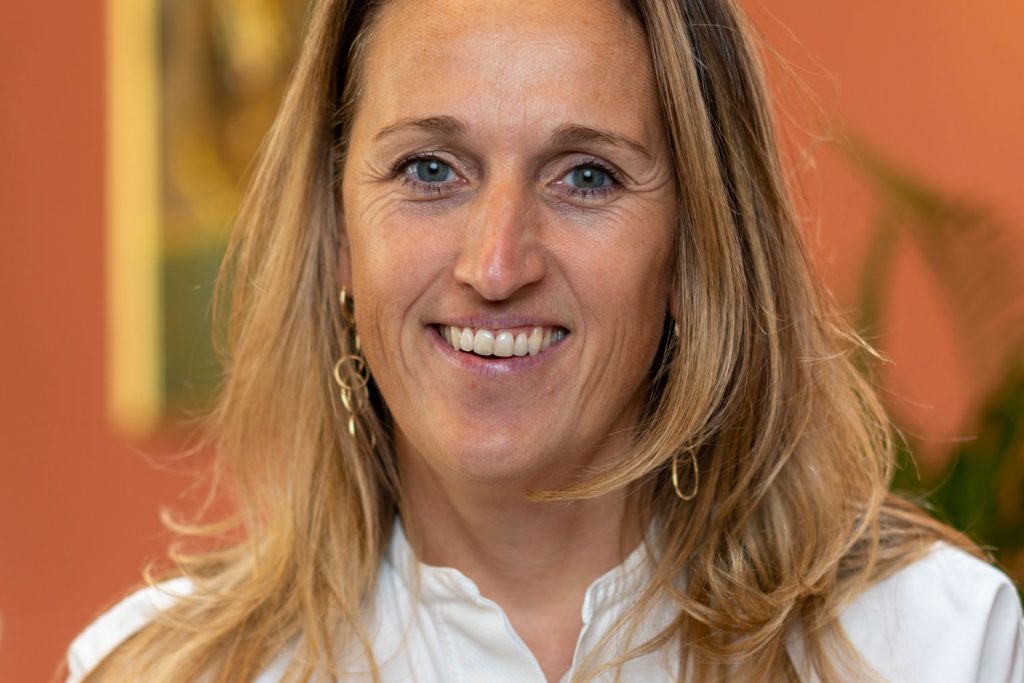
Creating meaningful relationships in the Kingdom before it became ‘the thing’ to do, Knippenberg said that trust and understanding of her company is at an all-time high.
“We’ve grown simultaneously in a way, and it’s helped us forge meaningful relationships along the way. It hasn’t been a case of us ‘jumping on’ projects just to get in Saudi. We have amazing relationships in Saudi. We’ve become a trusted partner,” she said.
A shared vision
In addition to being in Saudi Arabia for years, Kerten has benefitted from its alignment to the goals of the Saudi Vision 2030. Many of the aspirations of the Saudi Vision are quite literally written into how Kerten conducts business. From the company’s ardent support of environmentalism, to the value it places on local culture, Kerten has found a way to scale itself in a sustainable way.
Knippenberg explained: “As an organisation, we’ve created a foundation of processes. We’ve process-mapped creativity. Other operators have processes for technical services, what we do differently, we spend a lot of time on bringing each of our divisions into the creative process. We integrate sustainability into our operations, that’s how you make sustainability commercially viable.
“Each of our projects has a champion. That allows us to scale bespoke. That’s why we’re growing as we are. Our focus has always been to develop each location individually, rather than following strict guidelines each time.”

Yet another way Kerten is mirroring the targets of the Kingdom is in its market appeal. Much like how the Saudi Vision wants to facilitate a healthy mix of international and domestic appeal, Kerten’s new wave of KSA projects are doing the same.
Kerten Hospitality’s market spread
The CEO explained: “When you look at Saudi travellers today, they are international by default. The country has created curiosity around the world. All the new things coming into the country attract an international audience. Wherever you go, you see a mix of a local and international audience.
“Our products create a canvas where the two can come together. These products have to be attractive for an international audience to want to visit, while also giving a sense of location and place for the local traveller. For the local traveller, it has to be a modern approach to what they are used to [in the Kingdom].
“Success for us to be number one in Saudi Arabia when it comes to having a lifestyle portfolio.”