


Grand Hyatt The Red Sea is to be the anchor for the entire destination, according to Hyatt’s regional vice president of development for the Middle East and Africa Ludwig Bouldoukian.
The resort was unveiled alongside eight others for The Red Sea Project. It will join the likes of Marriott’s St. Regis and EDITION brands; Accor’s SLS and Raffles; and IHG’s InterContinental and Six Senses. All of the resorts introduced in this tranche are undeniably luxurious, with the majority of operators choosing their very most opulent brands for the project.
Grand Hyatt The Red Sea is accessible
Hyatt however went down a different route. Certainly, Grand Hyatt is luxurious, but Bouldoukian explained the brand was chosen over the likes of Park Hyatt for its accessibility to more travellers. This, he said, is one of the reasons the resort is poised to anchor the entire destination.
He told Hotelier Middle East: “The Grand Hyatt on the Red Sea is the biggest hotel on the development in terms of rooms. It will be the anchor of the entire Red Sea Project. The aim is to make the Grand Hyatt the epicentre for all the guests of the other hotels to come and use us to move around the island.
“What The Red Sea Project wants is to give their guests choices. The Grand Hyatt has always been known as a big hotel where families can enjoy their time, while business people can come and hold their events. It’s a wide brand with a lot of offerings.
“Look, when you’re talking about a big resort, Park Hyatt is not the one. Park Hyatt is an ultra-luxury experience but to do that, you need a smaller property. Grand Hyatts are certainly known for their luxury, but they are naturally larger than Park Hyatt properties.”

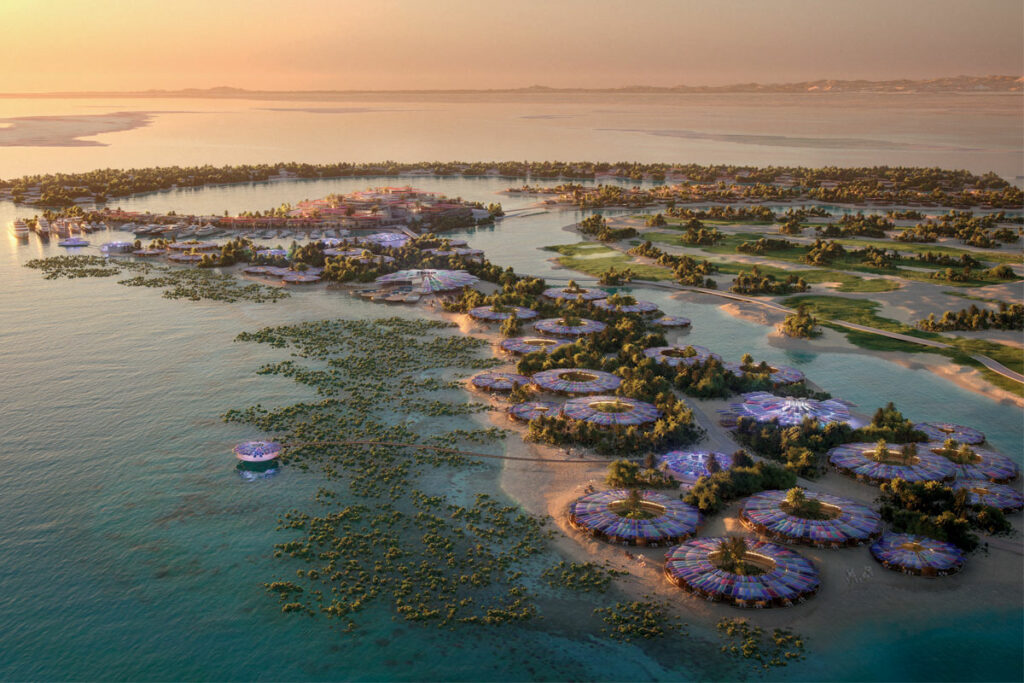
The property will have 430 keys, making it the largest of the 11 hotels slated for the island. It will also have “world-class” F&B outlets, and access to wider amenities such as a marina and a golf course.
Shurayah Island is the “gateway” to the Red Sea Project according to developers. The Red Sea Development Company (TRSDC). It is one of the largest islands within the project and is located close to the soon-to-be-developed Red Sea International Airport.
A non-competitive approach
Bouldoukian added: “It’s no fun just to stay in one place the whole time, the Red Sea Project will give guests the choice to explore all the hotels. There’s multiple F&B outlets, lots of fun things to do too. The aim is not only to attract families and young people, but also the corporate side, that’s why our resort has a conference centre.

“We know that our guests will also want to visit the other hotels and experience what they have to offer. We want to keep the Red Sea Project fluid. We want to be the anchor that attracts people to the whole destination.”
Built for sustainability
As an anchor for the destination, naturally, the Grand Hyatt must uphold all the tenants of The Red Sea. That it is say it will be one of Hyatt’s most sustainable and environmentally-conscious properties not just in the Gulf but the whole globe.
For Bouldoukian, the ambitions of The Red Sea Project, which include using entirely renewable energy and its own glass bottling plant, have inspired him as a development head.
He said: “Hyatt wanted to be part of this unique project – it’s something that’s never been done before. We’re creating a space where guests can contribute to the environment while staying at one of the Red Sea Project properties, ours included.
“Saudi Arabia has been thinking about the future, it’s not about mass tourism, it’s about luxuriousness. It’s not just the perfect location, it’s a way for guests to contribute to nature and discover natural environments.
“That’s the vision of The Red Sea Project. Our part to play in that is upholding the sustainability goal, while also helping to attract international tourists to the destination.
“From a sustainability perspective and its potential for driving Saudi Arabia tourism, it could become the anchor hotel [Grand Hyatt The Red Sea] for Saudi Arabia and beyond. It’s beautiful, it’s sustainable and a lot of people are already amazed by it.
A regenerative approach
Looking ahead, the development VP has had his eyes opened to the potential for regenerative tourism. Echoing the words of TRSDC CEO John Pagano, Bouldoukian agreed that simply being sustainable is no longer enough.
He added: “We’re so excited because of its sustainability. We haven’t seen a property of that size achieve carbon neutrality yet. When you say carbon neutral, that just means you’re not producing. But since 1992, there has been an increase of 60 percent in C02 emissions. So when you talk about carbon neutrality, it’s not true, you need to be removing the carbon we’ve already put into the world.
“Removing that CO2 is the next step for the industry, and something the Red Sea Project resort will look at. The Red Sea Project is opening the eyes of developers in terms of more sustainable ways of creating.”
The Red Sea Project’s first phase of development is on track for completion by the end of 2023. This involves a total of 16 hotels set to offer 3,000 hotel rooms across five islands and two inland sites. TRSDC expects to announce additional international hotel brand partnerships in the coming months.
Upon completion in 2030, the site will host 50 hotels offering up to 8,000 hotel rooms and approximately 1,000 residential properties across 22 islands and six inland sites. “The Red Sea Project has the opportunity to become the next Maldives, even better maybe. It’s closer, it’s more sustainable, and there’s a lot of curiosity around it,” concluded Bouldoukian.