


Before a heritage hotel can open its doors or even renew its licence, it has to tick off a list of non-negotiables issued by Saudi Arabia’s Ministry of Tourism.
These aren’t just operational basics; they’re a blueprint for cultural alignment, structural integrity and guest-facing functionality. This first article in our three-part breakdown unpacks the core requirements that determine whether a property qualifies for classification.
From regulatory paperwork and façade visibility to accessibility and reception setup, the focus here is on foundational elements that shape how heritage is translated into service. Some elements are mandatory, others optional — but together, they define how tradition meets compliance in today’s hospitality landscape in Saudi.
Under the Ministry of Tourism’s classification system, heritage hotels must meet all mandatory requirements in full and score at least 203 optional points — 25 percent of the 812-point total. The mandatory items are fixed and cover every operational area. The optional points, however, give properties room to build on the basics through service upgrades, spatial enhancements, or experience-driven additions that push the overall standard higher.
This section accounts for 39 mandatory points and offers up to 164 optional points related to licensing, external infrastructure, guest reception, and basic operational logistics.
General operational compliance
Mandatory: 5

Heritage hotels must first demonstrate that they hold all valid licences and certificates required for operation. This includes general business permits as well as classification and operating licences from the Ministry of Tourism.
For properties renewing their status, a signboard must be placed at the main entrance, clearly displaying the accommodation type, classification grade and a scannable QR code linked to official details.
Pricing must be transparent and bilingual. Each hotel is expected to publish its rate list in both Arabic and English, with visibility at the front desk and on the website. Rates must reflect actual rack pricing, with all taxes and additional charges either included or clearly itemised.
To qualify, the property must be housed in a heritage structure or located within a designated cultural heritage zone, as confirmed by the Ministry of Culture.
In addition, every hotel is required to offer region-specific Saudi experiences — whether through local rituals, traditional attire, scent, food, or music, depending on the location.
Architecture and exterior design
Mandatory: 5 | Optional: 2 points

The hotel’s name must be displayed on the exterior in both Arabic and English and remain visible at night.
The façade should be clean, structurally sound and well-maintained — any visible damage or hazards to guests or staff will not be accepted.
The entrance must be marked and designed to stand apart, with proper lighting in place to support guest safety.
Pedestrian entry points must be lit to a minimum of 150 lux.
If the main entrance isn’t accessible, hotels are required to install clear directional signage guiding guests to an accessible alternative.
Properties looking to earn additional points may choose to install solar-powered garden lighting — this feature contributes two optional points to the classification score.
Cleanliness and structural maintenance
Mandatory: 2
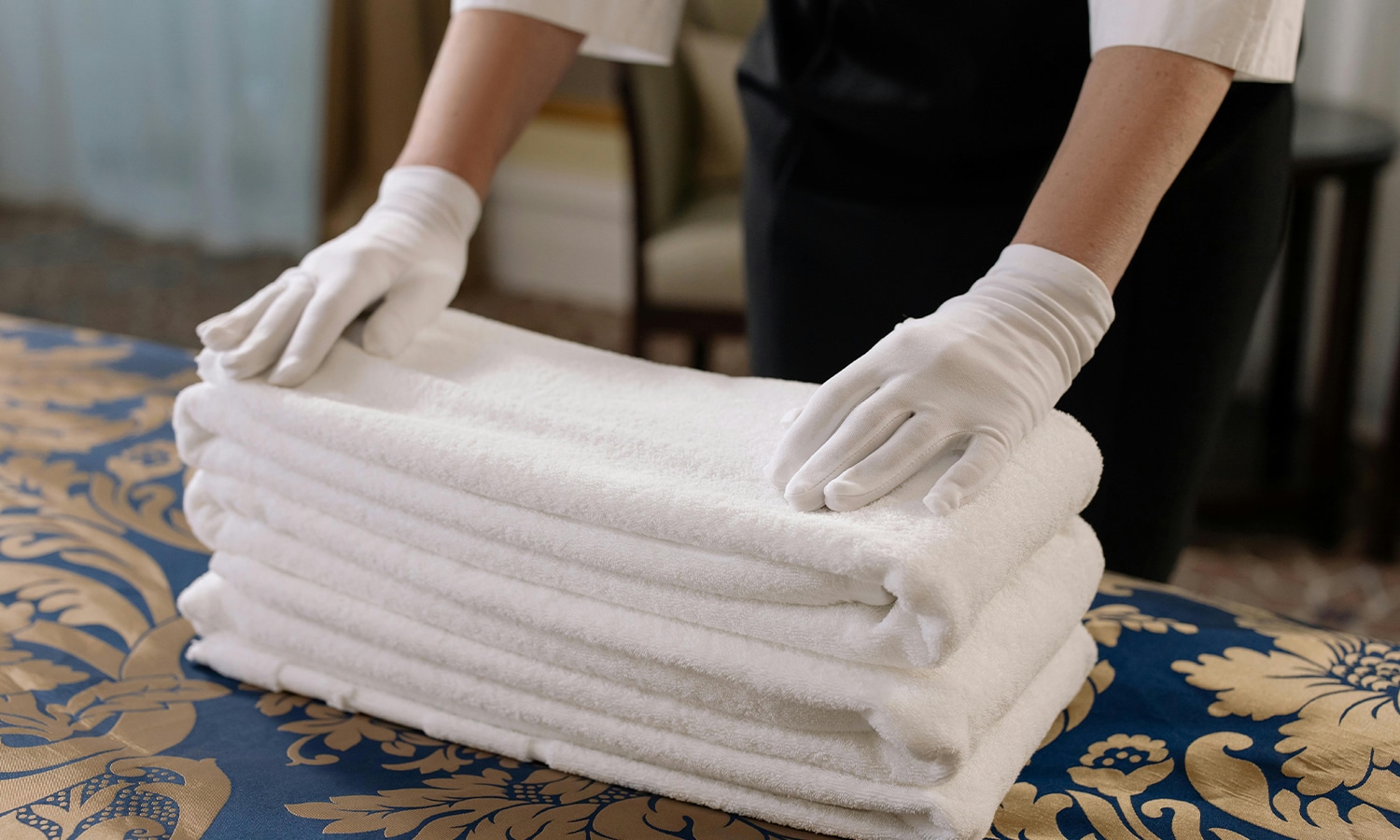
Public areas must be kept to a high standard of cleanliness, with records maintained and available for inspection.
Fixtures must be intact, functional and free from visible damage.
Structural and interior conservation isn’t optional — it’s a baseline requirement that anchors the entire heritage classification framework.
Staff presentation and identification
Mandatory: 1
All staff members are required to wear either a designated uniform or traditional Saudi attire.
Name tags must be worn at all times and must clearly indicate the employee’s position in both Arabic and English. This applies to all guest-facing roles and is essential to meet both cultural and professional standards.
Vehicle access and parking facilities
Mandatory: 2 | Optional: 21 points
Accessible parking is a mandatory requirement.
Each property must provide at least one marked parking space for every room designated for guests with special needs.
These spaces must follow set standards — a minimum width of 350cm and length of 500cm — with surfaces designed to be smooth and free from obstructions.
Additional points can be earned through expanded parking provisions. Properties offering standard parking for 30 percent, 50 percent, or 80 percent of total rooms can receive one, three or five optional points, respectively.
A dedicated bus parking area earns 1 point.
Providing an indoor garage — either on-site or nearby — with valet service in place adds 10 points.
Installing charging stations for electric vehicles, including cars and bikes, contributes another three optional points to the classification total.
Elevators and accessibility systems
Mandatory: 4 | Optional: 10 points
For buildings with more than two floors, at least one elevator must be installed. The elevator must be accessible and meet specific requirements: a minimum cabin size of 110 by 140 centimetres, visual and sound indicators,
Braille signage and a door design that contrasts in colour from the interior.
Every elevator must also include bilingual signage in Arabic and English, showing floor numbers and directing guests to key areas such as reception, restaurants and spa facilities.
Hotels looking to increase their score can install an additional elevator to earn 10 optional points. If all rooms and public areas for guests with special needs are located on the ground floor, the accessibility lift requirement becomes optional.
Corridors, stairwells and ramps
Mandatory: 2 | Optional: 6 points

Ramps are a mandatory requirement.
They must follow specific technical standards: a usable width of at least 120 centimetres, a slope no steeper than six degrees and clear side markings to signal level changes and prevent tripping.
These criteria apply to all guest-accessible areas and are non-negotiable for classification.
In corridors and stairwells, floors must be covered with resilient, sound-absorbing materials that are easy to maintain — options like parquet, wood, or marble are acceptable.
Motion sensor lighting in these areas adds two optional points, while compliant floor finishes earn another two points.
Staircases must have at least one handrail installed.
Directional signage and floor numbers must be clearly visible near elevators and throughout guest pathways.
Service logistics and internal operations
Mandatory: 4 | Optional: 15 points
Properties with more than two floors are encouraged to install a dedicated service elevator for staff use — this earns five optional points toward the classification score.
A separate supplier entrance is mandatory for hotels with more than twenty rooms.
Staff must enter through an access point that is not shared with guests; this can be the supplier entrance, but never the main hotel entrance.
Housekeeping storage rooms must be available on every floor, unless there are fewer than ten rooms per level. In such cases, one shared storage room across multiple floors is acceptable.
While not mandatory, offering an in-house laundry service contributes 10 optional points and supports operational independence.
Reception and lobby infrastructure
Mandatory: 14 | Optional: 83 points

All hotels must operate an automated guest registration system integrated with the Ministry of Tourism’s reporting platform.
The reception area must include accessible power sockets, suitable seating, and a check-in counter designed to ensure guest privacy. A defibrillator must be available on site and a fully stocked first aid kit must meet Saudi Red Crescent standards.
The lobby must serve traditional Saudi coffee and dates and the indoor temperature must be maintained between 20°C and 24°C.
Bilingual signage is required across all public areas, and each shift must include at least one bilingual staff member.
Guest luggage must be stored in a dedicated, secure space, and bellboys must be available to assist during arrival and departure.
A formal, documented process must be in place to handle guest complaints and respond to public feedback.
To increase their score, properties may offer the following optional features:
| Optional | Points |
| Extended reception hours | 3 |
| Self-check-in and check-out systems | 10 |
| Concierge services | 10 |
| Valet parking (listed on hotel website) | 10 |
| VIP protocol measures | 25 |
| Designated doormen | 5 |
| Saudi traditional welcome with documented policy | 20 |