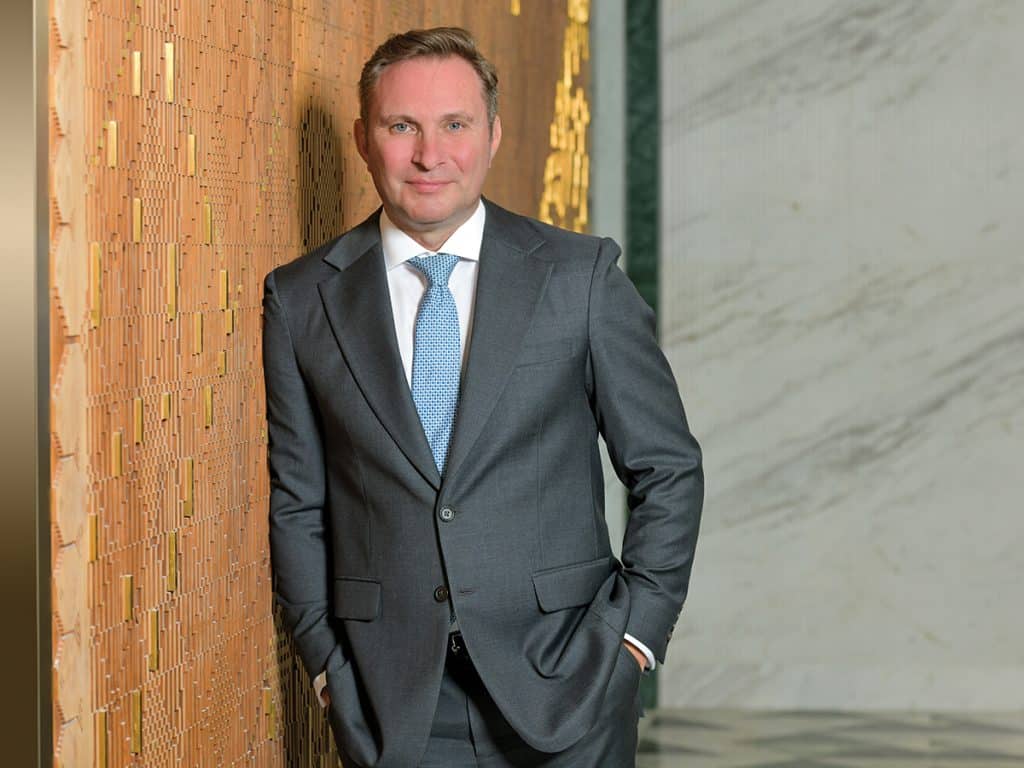
Operating a hotel at full occupancy is one thing. Sustaining it for an entire month in Makkah during Ramadan is another.
At Swissôtel Makkah, 1,487 rooms and more than 2,000 daily check-ins and check-outs form part of a system that does not experience ‘peak season’ in the traditional sense. It operates under permanent pressure.
Faisal Alhothaliy, director of operations, breaks down what that reality actually demands – from decision structures and movement control to risk mitigation and revenue discipline in a market where there is little room for error.
Why does this matter? Because as Saudi Arabia’s holy cities continue to scale, the operational frameworks behind sustained sell-out conditions are setting a benchmark not only within the Kingdom, but across high-demand destinations in the wider GCC.
Here is what operating at constant capacity really looks like.
When peak season never ends

Alhothaliy says: “Operating at full occupancy for an entire month, particularly during Ramadan, is not about managing a surge. It is about building an operating model designed for endurance, not spikes, safeguarding safety, service and stability at scale.”
At Swissôtel Makkah, the pressure is structural. The property does not move in and out of peak. It remains there.
He notes: “Preparation begins months in advance. Workforce modelling is recalibrated, shift rotations are adjusted to protect performance and wellbeing, and contingency planning is reinforced across departments. Leadership focus shifts from reacting to issues to anticipating them.
“Accor has been operating in the Holy City for decades, and that institutional experience shapes how we lead. The systems we apply today are not improvised. They are refined through years of operating during Ramadan and peak pilgrimage seasons.”
When demand runs at maximum every day, decision-making must be structured. Alhothaliy focuses on defining decision boundaries clearly for department heads, distributing authority deliberately across departments.
He explains: “When leaders know exactly where they can act and where escalation is required, we eliminate unnecessary approvals and avoid escalation fatigue. Clear authority enables confident, fast, human decision-making.
“This approach protects both execution and morale. Sustained performance in Makkah is not achieved by centralising control. It is achieved by distributing responsibility with discipline. The objective remains simple: calm leadership and controlled execution, even when the environment is operating at full capacity.
“Under uninterrupted peak demand, my own leadership style becomes more visible and more consistent. My role is to absorb pressure so it does not cascade through the organisation. When teams feel stable, guests feel safe, and in the holy cities, that responsibility carries even greater weight.”
Moving thousands, without losing control

Alhothaliy explains: “In Makkah, guest flow is spiritual as much as it is operational. Movement is shaped by prayer times, rituals and emotion, not just logistics, so our planning is built around the rhythm of the Holy City.
“Operating here during Ramadan carries a profound responsibility. We are not simply managing occupancy; we are safeguarding the well-being, dignity and spiritual focus of thousands of guests every day.”
Outlining the structure behind that responsibility, he shares: “We operate with clearly defined SOPs designed specifically for high-density periods. Elevator programming is strategically managed, group arrivals are handled through designated check-in areas away from the main lobby, and guest circulation is mapped to prevent congestion during peak prayer, arrival and departure times.
“Trained team members are positioned 24/7 across lobbies and entrances to guide guests calmly and respectfully, preserving dignity even at moments of peak intensity. These procedures are regularly and randomly reviewed to share best practices and continuously improve efficiency.”
When occupancy does not drop, coordination becomes constant rather than reactive.
Alhothaliy adds: “Planning and scheduling begin months in advance. They are structured around prayer rhythms and peak rituals, with every department operating in sync. Clear decision frameworks prevent bottlenecks, while real-time monitoring allows immediate course correction.
“We maintain close daily alignment between front office, security, engineering and housekeeping through structured briefings, clear role ownership and live communication channels. Daily executive briefings align rooms, F&B, engineering, security and front office under a unified operational command. Clear escalation frameworks ensure that decisions are made quickly, without unnecessary hierarchy slowing execution.
“Beyond daily operations, we conduct monthly and quarterly cross-departmental reviews to analyse outcomes, identify pressure points, and build better solutions. This continuous review process allows us to refine our methodologies, maximise efficiency, and consistently improve the guest experience even during peak demand.
“When demand never pauses, coordination becomes our strongest asset. Guests should never feel the scale of the operation behind them.”
Standards when there is no downtime

Alhothaliy says: “At Swissôtel, quality is built through disciplined habit. Clear brand standards are reinforced daily, structured audits run continuously throughout the month, and unannounced spot checks ensure alignment across all departments.
“Leadership presence on the floor is essential. Visible executives and department heads allow immediate coaching, correction and reinforcement, preventing small gaps from becoming systemic issues.”
According to Alhothaliy, in an environment where operational downtime does not exist, standards cannot depend on momentum. They must be procedural.
Meanwhile, he notes that protecting consistency also requires protecting people.
He adds: “If standards create structure, people create performance. Systems alone are not enough. Sustained performance depends on how well we protect our teams.
“During peak demand, my focus shifts from managing tasks to protecting energy, morale and unity. We structure shifts intelligently, build recovery time into rotations, and empower department heads with clear decision boundaries to reduce escalation fatigue.
“We also anticipate predictable risks, housekeeping bottlenecks, elevator congestion, safety pressures and system strain, and mitigate them through drills, redundancy planning and strong cross-department coordination.
“In Ramadan operations, endurance is not about pushing harder. It is about leading smarter. When teams feel supported and structured, consistency becomes sustainable.”
Where the real risks sit

Alhothaliy says: “At constant peak occupancy, the greatest risks typically sit in housekeeping turnaround and room readiness, vertical transportation capacity, guest safety and medical response, as well as infrastructure and system reliability.
“These are mitigated through redundancy planning, preventive maintenance and scenario-based preparedness, rather than reactive problem-solving.”
In a market where there is little room for recovery, preparation becomes structural rather than optional.
Alhothaliy adds: “In Makkah, we regularly prepare for high-impact scenarios such as system and power outages or unexpected arrival surges. Teams are structured and trained, roles are clear, and decisions are pre-aligned. Preparation reduces stress and ensures confident execution when it matters most.”
He concludes: “The outcome is operational stability that guests may not see, but certainly feel, through consistent service delivery and sustained guest satisfaction. It’s reflected in the high score of guest experience score we enjoy, YOY growth in our guests’ bookings through our channels and the positive reviews we enjoy on our different platforms.”
Yield, trust and the limits of overbooking

Alhothaliy says: “In Makkah during sustained peak occupancy, revenue management shifts from pure optimisation to disciplined risk control. It becomes a balance between protecting performance and safeguarding guest experience.
“For owners, precise forecasting and controlled capacity management protect long-term asset value and profitability. For guests, those same decisions must preserve dignity, safety and service quality.”
In a market defined by pilgrimage flows and external variables, overbooking requires caution.
He explains: “Overbooking in Makkah is handled with extreme care. We rely on accurate data, seasonality experience and turnover ratios, with pre-agreed solutions. If we cannot handle it respectfully, we do not risk it. Brand trust comes first.”
“Revenue decisions are made in close coordination with the operations team to ensure staffing, room readiness and guest flow remain controlled. Numbers guide us, but responsibility defines the limit.”
The hotel closely tracks no-show trends through detailed historical reporting, analysing arrival timing behaviour and external factors that may influence travel patterns. This data enables disciplined overbooking within clearly defined thresholds.
Alhothaliy adds: “We are fortunate to operate within a complex where we can leverage inventory from sister hotels. By understanding no-show patterns, our revenue team can forecast further out with the goal of 100 percent occupancy.”