

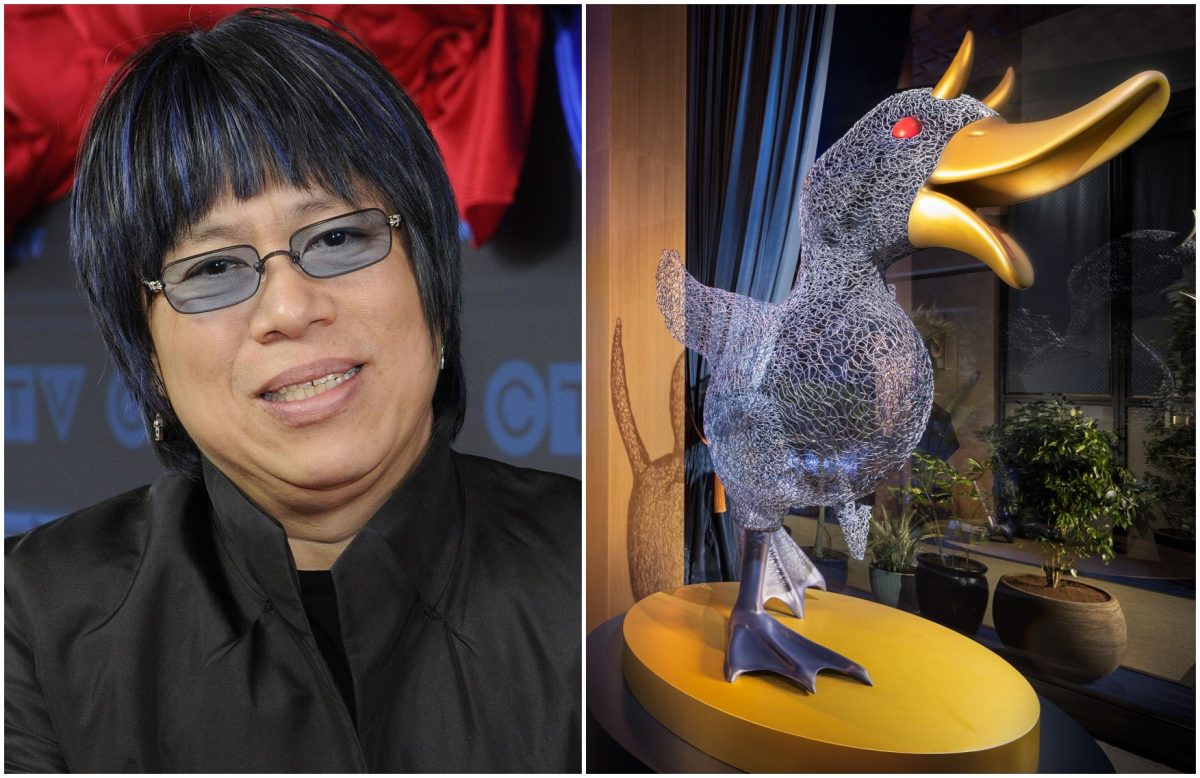
Alvin Leung has made his big debut in Dubai with the launch of Demon Duck, a new concept restaurant that brings a creative twist to Chinese and Asian classics. Located at Caesars Palace Dubai, Demon Duck joins the resort’s repertoire of dining destinations.
Alvin Leung spoke to Caterer Middle East about his latest launch, his career history and how he taught himself how to cook.
He said: “I’ve had Dubai on my radar for a few years now, ever since it started to become known as a culinary wonder world. I decided to launch things now because the opportunity with Caesars Palace Dubai arose, but also because I’ve always been interested in the idea of opening restaurants in new regions with people I know and trust.
Demon Duck exists because of trust

“Anthony Costa, regional president at Caesars Palace Dubai, was someone I knew from Hong Kong and I knew I could trust him. With the popularity of Chinese food and international travel slowly bouncing back, it felt like a great opportunity and the perfect time to present my debut concept here.
“From all my experience in running restaurants in China, North America, the UK and the far east, what I learned is that partnership is the most important – because when you expand into new countries, you’re dependent on the partners – financially and for everyday operations.”
According to Leung, diners coming to Demon Duck should expect the unexpected. He said: “The aim with Demon Duck is to bring a creative spin to much-loved Chinese comfort classics along with a Hong Kong-style speakeasy bar featuring a beverage menu inspired by the city’s iconic streets and districts. I want to give my diners an experience, one that combines the flavours of age-old Chinese dishes with pan-Asian and Middle Eastern influences that will wow and leave them wanting to come back for more.

“You also have to look at the availability of ingredients, chefs, and local talent, and adapt to what is available. It’s easy to replicate what is being done in Hong Kong, but this would come at a tremendous expense and ultimately may not work out. It is important to use local talent and local ingredients to run and sustain the business economically and ensure the success of the concept.”
Leung says that Chinese food can be adapted to suit a variety of taste preferences. The chef created a unique approach to Chinese cuisine, combining heritage recipes passed down through generations with modern-day ingredients and cooking techniques, giving guests something new to be excited about.
He said: “In the case of Demon Duck, I had to adapt flavours a little bit to suit local tastes and preferences. For example, in Europe, they prefer more salt, in the far east, they prefer less salt and more sugar, and in Dubai, people enjoy a bit more intensity of flavour. I have tried to use some of the local cultural influences, several dishes like our aromatic pineapple shawarma, demon hummus and other twists on Middle Eastern comforts are on the menu.”
He added: “Demon Duck is filled with playfully creative and innovative dishes that are fun yet comforting for guests. Some of our signature highlights include the slow-roasted Peking duck, creative versions of shrimp on toast and black and white Dover sole, and an inventive sweet twist on a Middle Eastern staple with Aromatic pineapple shawarma.”
Being instagrammable isn’t everything

One look at Demon Duck and it’s clear the venue is eccentric. With red-eyed ducks all across the venue, one of them the size of a small hippo, accented with quirky depictions of duck art by Hong Kong-based photographer, Mark Chung on the walls to playful graffiti and Middle Eastern-inspired mosaic patterns on Monica Tsang designed crockery, millennials and gen z are a clear target at the new restaurant. Leung said: “Social media plays a big part in the formula for success, but its easy come and easy go. In order for it to not be an easy go, you need substance, and values are very important, which connect people to your brand and make them feel that it is a worthwhile experience.
“Social media can do a lot of good as well as damage, hence creating that emotional connect and delivering on expectations is very important. People are smart enough to not believe everything they see on the internet. The higher you climb, the harder you can fall – so it’s important to meet peoples’ expectations, stay authentic and be substantial.”
Experience over education
Leung told Caterer that he always loved to cook as a child. “I recall the first dish I ever made was a version of spaghetti bolognese,” he added. “I was 10 years old at that time, and in those days, there was no internet, no cookbook, and no recipe to refer to. I conjured up this dish based on what I saw on TV or maybe copying what my dad did and to make it different, I added some curry powder to it – although not a spectacular dish, it was sufficient at my age, and I received many good compliments.”
Later during his university years, Leung worked as a waiter and during this time, he began to observe the life of the chef at the restaurant. “I was about 23 years old at the time, and I began to dream and visualise what it would be like to be a chef, which at that time was definitely unattainable to me as I was heading to Hong Kong to tend to our family business. This was in 1986 and I did not start my career as a chef until 2003.”
Leung opened his first restaurant at the age of 42. He said: “I had never worked in the kitchen of a restaurant, and I never went to culinary school. So, I like to say, I started from the top and worked my way down. The first time I worked as a chef, I owned the restaurant, which is not the conventional route. Unlike other chefs, I didn’t start my career as a dishwasher.”
Leung also never had any mentors. “I am self-taught, I never went to culinary school, and I never worked under anybody. I grew up in an era without the help of the internet, so my inspiration came from cooking shows on TV. I cook because I think cooking is fun, because this is how it was presented on TV Shows I used to watch, and I found inspiration in that. From real-life people, I am deeply inspired by Ferran Adrià’s creativity, his bravery, his ability to use the best products at low cost, and the heart he injects into his culinary style.”