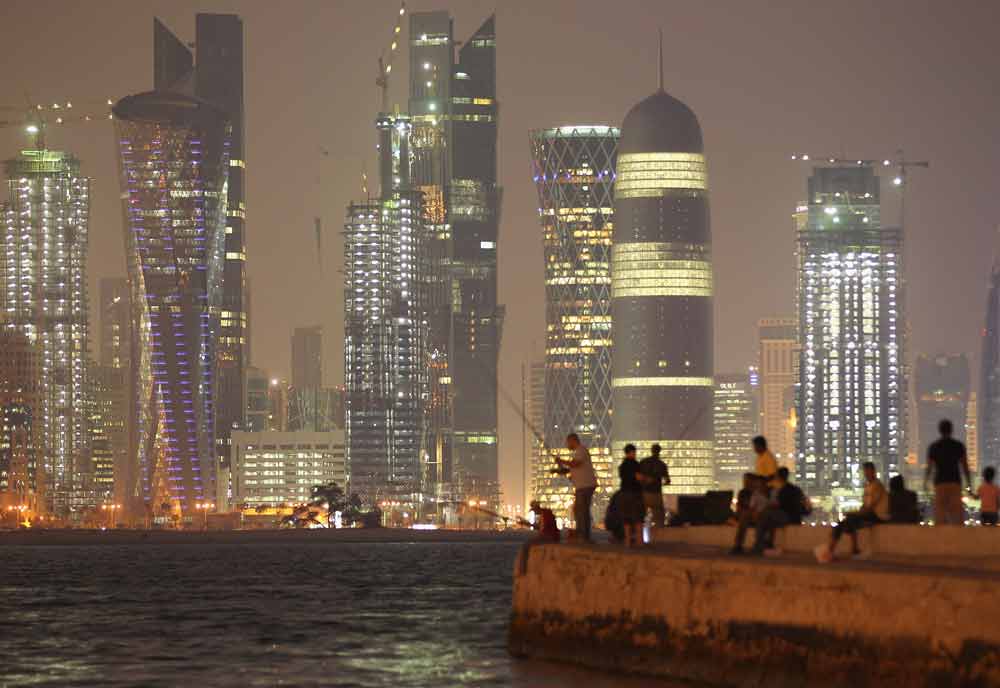
Shangri-La’s vice president, sales and marketing EMEA, India & Indian Ocean, Rob Weeden, explains why the Asian hotel group is expanding into Qatar and eyeing Saudi Arabia for future projects
The opening of a new sales office in Dubai in 2012 and the appointment of Australian rugby enthusiast, Rob Weeden, as vice president sales & marketing EMEA, India & Indian Ocean suggests that Hong Kong-based Shangri-La Hotels is ready to play ball in the Middle East.
“We have a large enough portfolio now with the development of new properties to have me based here in Dubai,” comments Weeden, who has been tasked with heading up the company’s brand direction in the region. “To run things out of Hong Kong would mean I would have a nine- or 10-hour flight to get over here. Dubai is at the centre of everything now. This region is becoming more and more important and if you’re not here, you’re not in the game.”
Having been with Shangri-La for 16 years already, most recently as general manager of mid-range Traders, Kuala Lumpur, Weeden was part of the company when the first Middle East property, Shangri-La Dubai opened in 2003. Ten years and five Middle East hotels later, Shangri-La is now ready for two more properties in Qatar with Shangri-La Doha and Traders Doha set to open their doors in quarter four of this year.
Weeden comments: “The location just above the [City Centre] mall is ideal and I think visitors to Doha plus the local residents are going to love it.” He describes the company’s move into Qatar as “a logical progression”, referring to the country’s recent increase in investment.
“The country is spending a lot,” Weeden explains. “It’s gearing up for the World Cup so they are very active with their airline and convention business. Doha is a growth area, you’re starting to see a lot of corporate and leisure guests going there.”
Developed by Al Rayyan Tourism Investment Company, the 272-key Shangri-La Hotel, Doha will include 46 suites, and 42 serviced apartments. The food and beverage offering will feature a Middle Eastern food souk and a Latin American restaurant.
Recreation facilities are to include Shangri-La’s signature spa, Chi, The Spa at Shangri-La, while MICE guests will be catered to with a 840m2 ballroom and complementary function rooms.
Just 300 metres away, the mid-range Traders Hotel, Doha will have 238 guest rooms including 44 suites, Traders Club rooms and 84 serviced apartments with fully fitted kitchenettes.
A sushi and noodle restaurant, steak house, and deli will make up the F&B offering, while leisure facilities are to comprise a health club and spa with indoor swimming pool and sun deck.
Having a Traders Hotel placed just 300m from a Shangri-La Hotel is not a new model for the company, however, and according to Weeden “it helps with staffing, procurement, and housekeeping.”
The same set up exists in Dubai and Abu Dhabi; Shangri-La Hotel, Dubai opened in 2003, and Traders Hotel, Dubai in July 2004. In the capital, Shangri-La’s Qaryat Al Beri Hotel opened in September 2007 and Trader’s Hotel Abu Dhabi in August 2009. Oman is the exception, however, with a Shangri-La resort, Barr Al Jissah Resort and Spa, which opened in Muscat in February 2006.
Future Growth
Expansion in the Middle East doesn’t stop with this year’s Doha properties. The 288-key Shangri-La Saadiyat Island is set to open in Abu Dhabi in the near future, however, no confirmed opening date has been announced yet. Additionally, according to Weeden, the company has its sights set on another Dubai property.
“It’s no secret that we’d like to have more properties in Dubai,” he says. “We’re in downtown, we’re in Deira, and it would be great to have something near the beach resorts.”
Weeden says there could be opportunity for Traders, particularly as Dubai Department of Tourism and Commerce Marketing looks to diversify the market.
“If you look at Dubai, there are incentives from the government to launch more four-star and mid-market properties and Traders fits that mould very well. Dubai is a stopover destination but not everyone has a Shangri-La budget,” says Weeden.
Saudi Arabia is also “on the radar”, he continues, saying that the country is “an incredible location for Shangri-La”.
“We’d like to have some properties in Riyadh, Jeddah and Makkah. The discussions we’ve had so far have been very positive. We’re working with people and companies that know the infrastructure required in Saudi Arabia and I’m sure we’ll put together a very nice collection there,” he comments, although nothing has been confirmed yet.
In addition to Middle East openings, Weeden is excited by Shangri-La’s global pipeline, with properties planned for Paris, Istanbul, the Maldives, the much-anticipated first UK opening in London’s The Shard in May — owned by the Qatari Foundation — as well as expansion throughout China, which Weeden explains, “is where Shangri-La’s strength lies”.
Despite ambitious plans for growth, Weeden explains that location, inventory size, food and beverage facilities as well as the right partners are key deciding factors for new projects.
“Given that we are a family company it’s important that we get the right fit. You won’t find a Shangri-La that is a cookie cutter chain, going out and throwing logos on buildings,” Weeden asserts with a grin.