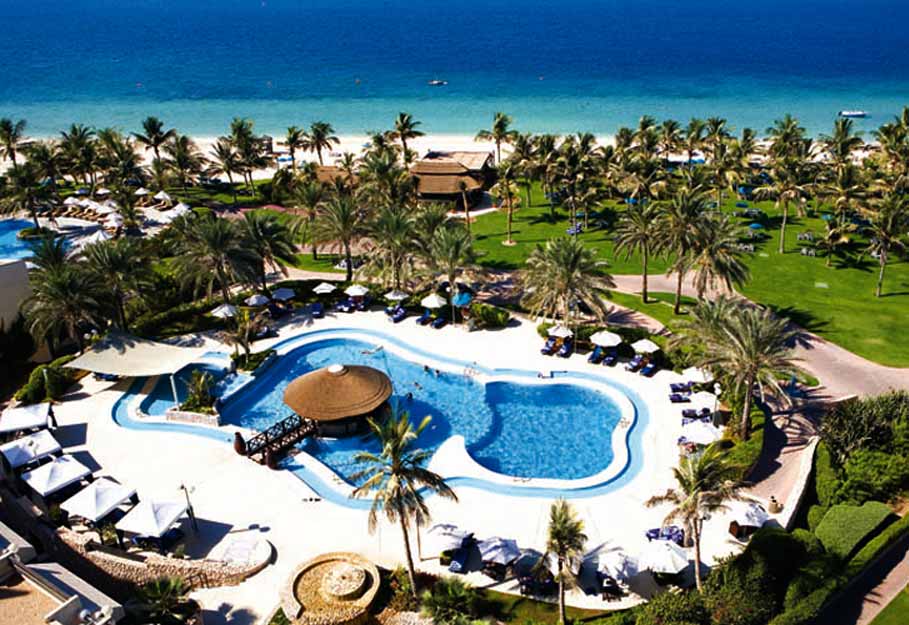
Nicolas Smalberger, executive chef at Jebel Ali Golf Resort, Dubai tells Caterer Middle East why buying herbs and veg may soon become a thing of the past
While ingredient costs continue to rise worldwide, one way of tackling it is to just produce your own – grow the veg you use that is. But in an arid desert region, is this easier said than done?
Not always believes Jebel Ali Golf Resort’s executive chef Nicolas Smalberger, whose outlets have been using the veg grown in the hotel’s own garden patch for more than 10 years.
A solution devised by late chef general manager Mark Bettsworth after finding that the kitchen was generating substantial amounts of natural waste, the garden was a way of re-using waste and slashing the cost of buying herbs and some vegetables which could easily be grown in an area which was not being utilised.
“Rosemary, thyme, lavender, coriander, parsley, chives, chillies – beautiful little chillies we grow right here as well as cherry tomatoes which are gorgeous.
When you eat a tomato like this, you find it’s got a completely different taste to one you’d buy in a shop,” says South African native Smalberger.
Changing Mindsets
And while re-using the waste to grow the veg does not produce revolutionary amounts of new produce it is a start.
“It’s not big enough to sustain the entire resort but it’s big enough to sustain certain areas of the resort, for example, the Italian restaurant,” says Smalberger.
But the biggest benefit, he says, has been educating the guests and getting them involved.
“The funny thing is that I’ve asked kids ‘do you know what fresh parsley is?’ and they say ‘it’s the little packet you buy in the shop.’ They don’t even know where it’s coming from. They don’t know it grows in the ground.
We live in a day and age where it’s convenient to go to the shop and buy already pre-blanched, pre-oiled, pre-cut, pre-peeled packets of food and you just stick it in the microwave, so when they see fresh things growing it’s like ‘wow we’ve never actually seen it before’.”
As well as external guests, it’s been great for chefs and F&B staff around the hotel to understand what it takes to grow the ingredients they use every day. Many have “no idea what it takes to sustain a small garden in Dubai,” he tells us. Naturally, one of the biggest challenges is the climate.
AT A GLANCE: Top tips for running a greenhouse
• Plant the seed or baby plant and leave in the greenhouse for 14 days.
• Ensure daily weeding of garden and water the garden for 30 minutes each day using the irrigation system. You cannot water directly as the plants will die.
• The greenhouse ground must be aerated.
• Give your plant constant love care and attention
• Monitor growth regularly – you often find that things like basil when they grow substantially in the greenhouse – can be replanted in shaded areas outdoors.
Sun Protection & Money
“Summer is tough as everything stops growing. If you have rosemary or a thyme bush or a basil bush, what you’ll find is that when the heat starts kicking in it is only the stem that keeps on growing, and not any leaves.
This means that it is going into survival mode. It’s not producing, it’s just surviving. This makes it very, very tough.”
During peak summer months of July to September, Smalberger says he finds himself buying more herbs than he does outside of this period because of the low production rates. Fruits are a struggle to grow because they require a tropical climate – “here we have a desert climate,” explains Smalberger.
For other items like the cherry tomatoes and chillies, there is the possibility that they continue to grow – however their growth requires rigorous maintenance and they are sheltered within a specially tailored greenhouse.
“Our chef de partie Gawdat Mohamed Ali Hassan works 12 hours a day in his capacity as a chef. However from 6am to 1pm he is in the garden every single day, planting and weeding and monitoring the growth of his plants.
He even buys seeds out of his own pocket – I’ve never seen anyone as passionate about plants as this guy,” says Smalberger.
Of course there are cost implications of having such a system in place. The irrigation for example is quite pricey.
“I think in Dubai they cost like AED2 for a little baby head, and you need like 2,000 of them for the garden,” he says.
But the cost saving is just as substantial: “The cost of herbs in Dubai is extremely expensive; you pay through your ears for it. Especially when you’re looking at stuff that you don’t find every day like lemon verbena and other specialised herbs – it’s very difficult to get them.
Sometimes you have to wait for two weeks or 10 days and by the time they come they are completely destroyed. It really does save on the cost. The challenge for us is to supply our 10 or 11 restaurants plus the banqueting so we need a lot to grow. To be able to get those volumes every day is a challenge,” says Smalberger.
The savings are visible when considering the external catering events the hotel does for up to 3000 people. Most of the herbs it requires for its operation can be grown in-house.
There is an aesthetic appeal to the garden too, explains Smalberger. Italian outlet La Traviata’s terrace overlooks the garden and diners can see boxes of rosemary, thyme and basil, “it’s quite nice,” comments Smalberger. And that’s what prompts many to enquire about the garden.
Future-Proofing
“The guests love to just go there. People even contact you from outside saying can we please come work in the garden. We had a Sheikh plant one tree as well a month ago.
It’s nice if we do the small little plants and the herbs, especially for children who come back after one month, six months, one year, and their names are there and they can see how their plant is growing. It’s very exciting for them.
“I’ve had people call and say ‘we really want to contribute to your garden’. A family came with their kids and they worked in there for an hour or two.
It was quite hot but the kids loved it. For us it is just nice to be able to go in there and grab whatever fresh herbs you want. It gives so much flavour to the food. When you buy them in the shop it’s not the same.”
When asked whether he’d encourage all hotels in the region to back a campaign like this, his response was simple: “Abso-freaking-lutely.”
People have no idea what it takes to sustain it. It’s about changing mindsets. I think we’ll get to a point in life, where if they world doesn’t end tomorrow – if the world keeps on going – it will be very difficult to find anything fresh if we don’t do this,” concludes Smalberger.