In last month’s feature on staffing, Hotelier revealed that the hospitality industry in the region was suffering from a shortage of qualified colleagues, due to improving economies in source markets and the growing number of properties in the Middle East.
Hospitality schools should, logically, offer some recompense to this problem — but a recent study by Hospitality Graduate Recruitment (HGR) has revealed that more than 40% of hospitality graduates choose not to enter the industry.
HGR managing director Jeff Ross suggests there are a number of students who study for a hospitality degree without any intention of entering the industry, which may account for a portion of the 41% of graduates pursuing alternative employment.
But this still leaves a significant number of students who either lose interest in, or become disillusioned with, the hospitality industry as a potential career choice.
With this in mind, it is up to hotel companies to ensure that they offer graduates an attractive career path to retain the industry’s future leaders.
Lack of opportunity
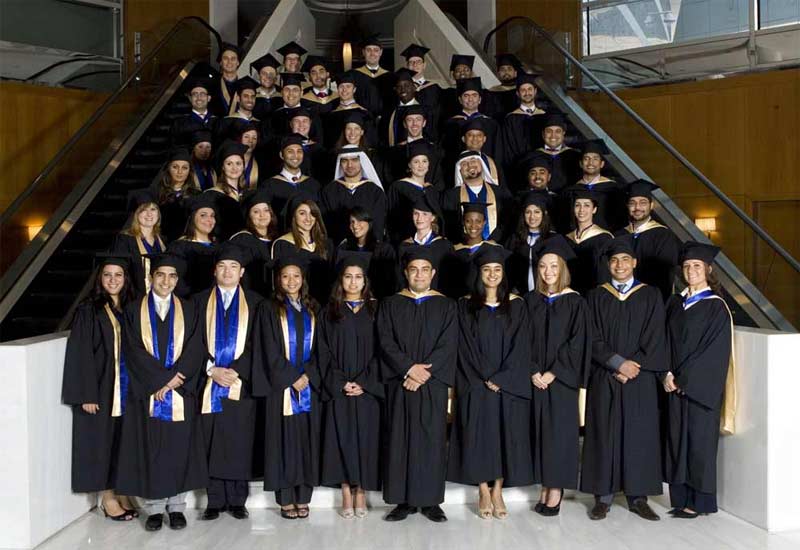
Honeida Saleh, a recent graduate of Sagesse University, with the academic certification of Ecole hôtelière de Lausanne, said that there was a lack of opportunity in the industry — and that finding a suitable entry position was a challenge.
“Hotels are not doing enough to encourage students to stay in this industry. When I was applying to hotels for a post-graduation job, I got a lot of rejections.
They almost all replied that I don’t have enough experience. If everyone would say I have too little experience then I would never get the experience I need! Starting salaries are not enough and training is not being conducted as it should,” she explained.
Giving graduates an opportunity to begin their careers is of the utmost importance, and providing entry level positions for recent graduates — which differentiate them from colleagues who have not studied the industry — is key for recruitment.
Leonard Cseh, programme leader for Hospitality and Culinary Arts at the University of Derby says hotels should shoulder some of the responsibility: “More needs to be done to make graduates aware of the abilities and skills needed by the industry.
“This needs to be through a proactive and combined approach from industry and academics beginning on the very first day of their studies and reinforced throughout,” he adds.
Essam Abouda, Hilton Worldwide vice president operations, Arabian Peninsula and Indian Ocean says that hotels must do more to reach out to recent graduates.
“I think the industry should target all students, not just university graduates,” he says.
“I might be biased, but hospitality is a great career choice — it is an interesting mix of management and service, providing new recruits with an immense opportunity for growth and travel, as well as the scope to interact with a cross-section of people. Although it can be challenging, there is never a dull moment.
“It is important to reach out to students at an early stage so when they are making education choices they know which path to choose to help them enter into the industry. Each company is doing their bit, but I’m sure we could do more as an industry to spearhead this,” Abouda adds.
Engaging with hospitality schools is one way of ensuring that graduates have opportunities to begin their career in the industry.
Pascal Eppink, general manager, Banyan Tree Al Wadi explains: “We are very actively engaged with several hotel schools in Europe and in the Far East. Every semester they send us new students.
“We also visit some of the schools to do presentations for the graduates to explain our philosophy and then subsequently run interviews. From the moment that they arrive they are being mentored.”
Career development
Even if hotel school graduates do make it into the industry, there is no guarantee that they will stay there.
“What will make it hard [in the industry, long-term] is the competition; even maybe the long sought promotion that one doesn’t get. The hardest would be if I lose my motivation. Maybe then I wouldn’t stay in the industry anymore,” recent graduate Saleh says.
In order to encourage graduates to stay in the industry — utilising the skills they have, and benefiting the industry with a greater level of expertise — hotel companies must ensure they are offering graduates the best possible career path, with graduate schemes or training programmes specifically aimed at that level.
Jumeirah is one company that has recognised the need to help graduates move up in the industry.
Alan Simpson, director of recruitment, Jumeirah says: “A range of resources are available to develop, train and retain these colleagues as they progress through the company.
“Leaders, managers and colleagues within the organisation act as guides, mentors and models for developing leadership competencies. Internal and external training courses and extensive learning opportunities are at the disposal of the graduates in addition to an unrivalled package of employment benefits.
This combined with extensive professional development initiatives provides new colleagues with ample opportunity for career progression within Jumeirah,” he adds.
Hotel company Starwood has also taken great pains to ensure graduates are engaged, developing the Vita Futura programme, which The Westin Dubai and Le Méridien Mina Seyahi complex general manager J.Stewart Selbie says “is geared towards graduates and ensures that we develop them and keep them within Starwood”.
“The programme was designed by two Starwood management trainees, with an aspiration to create a programme that no other company could match,” he explains.
“They believed that the best learning and the best training could only be achieved through the creative participation of the graduates themselves. Vita Futura is a programme that you design to suit your career desires. It allows you to share your experiences with other Vita Futura trainees and benefit from the knowledge and expertise of Starwood leaders across the globe.”
Four Seasons SVP Simon Casson explains that his company regularly took on graduates: “We have a corporate management training programme — we recruit from most of the top hotel schools in the world. At any one time we have three or four management trainees on property with us, going through training programmes, leading them within a 12-18 months time period to take on an assistant manager role.”
Despite Four Seasons’ work with hotel schools, a large company taking on only four graduates at a time still leaves a number of graduates who are likely to be without job prospects.
But hoteliers maintained that graduates must take the initiative to put themselves in line for promotions and career development.
“Career progression is based upon performance — and rightly so,” says Hilton’s Abouda.
“This means anyone who applies themselves, works hard and is committed to develop in their career has the opportunity to do so. Graduates are always keen to gain a variety of experience which we are well placed to give them and they tend to make the most of travel opportunities that present themselves,” he added.