

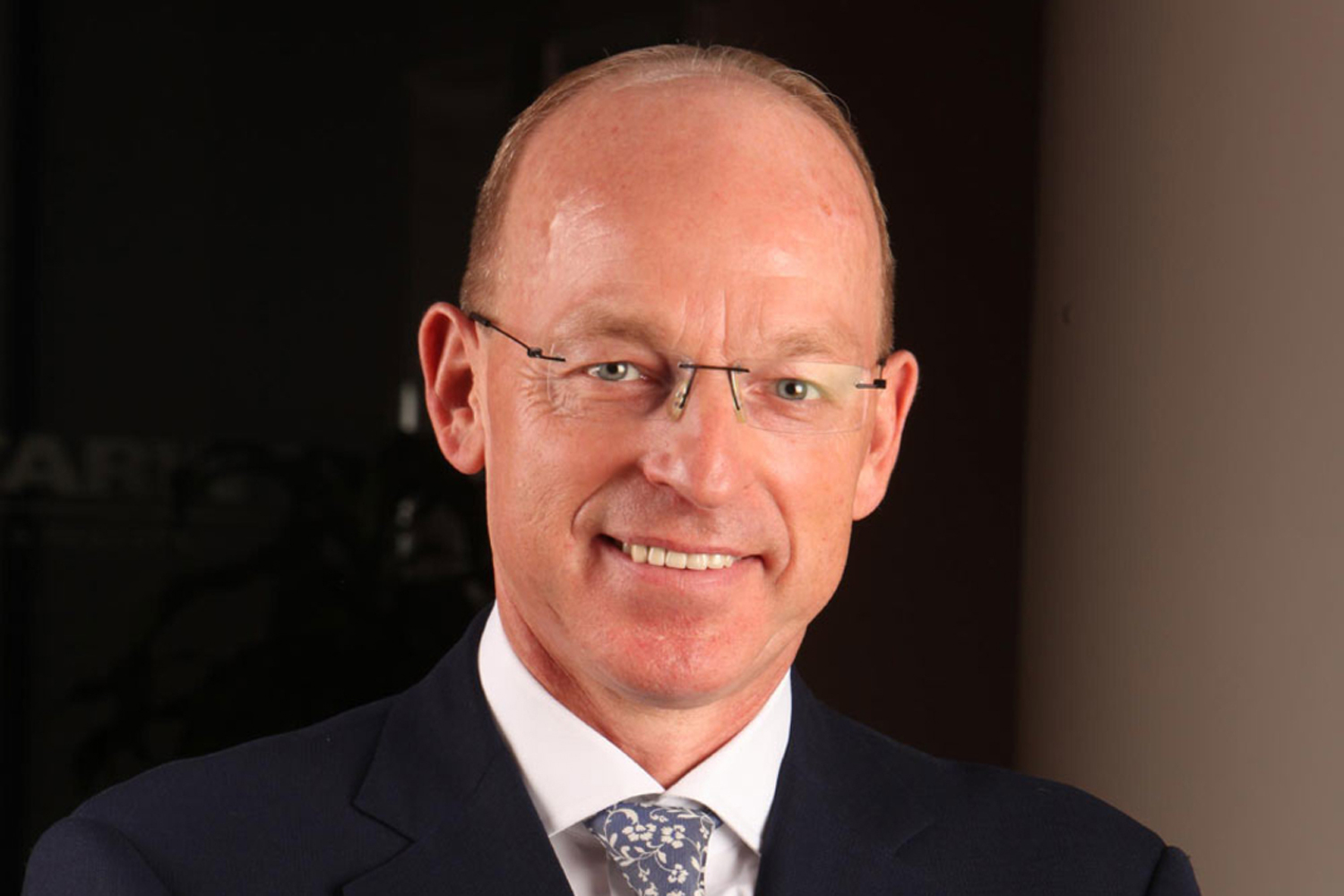
Usually when we’re interviewing the region’s top hoteliers there’s a charming story about the moment they knew they were going to work in a hotel. It’s fascinating to hear the tales of these industry titans as children, becoming obsessed with the inner workings of the hotels they visit. So, it seemed like a good place to start our chat with Guido De Wilde, Marriott’s chief operating officer in the Middle East. With a CV that stretches back more than 30 years, covering Sheraton, Starwood Hotels & Resorts and now Marriott International, hotels have been in his blood for decades.
But, unlike most, it wasn’t a burning desire to work in hospitality that led him to this point. He says: “I never thought I was going to work in the hospitality sector at all. I didn’t go to hotel school, I don’t have a hospitality management degree, nor did I hold summer jobs at bars or restaurants in my teens.
“Instead, I studied linguistics at university, specialising in Scandinavian studies. I became fluent in Norwegian and Swedish, and one weekend my mother showed me a job opening which required fluency in two Scandinavian languages.”

That job opening happened to be at Sheraton Worldwide Reservations, which was looking for reservation sales agent fluent in two Scandinavian languages, as well as Dutch, French and English. De Wilde applied and, in 1983, he found himself in the hospitality industry.
He continues: “I was making reservations and interacting with people. I was suddenly connected to the world and learning about destinations I had never heard of before – like Waikiki.”
A year later, the Belgian was stationed in the Middle East after Sheraton opened a reservations office in Bahrain. Fast forward another four years and De Wilde moved to Morocco, to be part of the pre-opening team at Sheraton Casablanca. His language skills played a part once more, with French being a necessity this time around. It was to be the first time he had worked in a hotel.
“It was a risk for Sheraton,” he says. “But they trusted me. It was a move that stuck with me throughout my career and influenced my management style. I like to take risks on people.
“We’ve promoted people into GM positions who weren’t always the obvious pick, because I’ve seen their talent, their potential, and I believe in nurturing that.”
After more roles around the world, in 1996 De Wilde became a general manager, moving to Sheraton Lisbon, his first GM position. It was another chance to step up, and to make mistakes along the way. He says: “If you work in a culture whereby making a mistake or failing is not an issue, it is an incredible learning experience, and so I’ve been fortunate in my career to work for people who take a risk on me, people who allowed me to fail, who allowed me to make mistakes, and who allowed me the permission to then ask for forgiveness.”
In 2006 De Wilde moved to Dubai, entrusted with setting up the US hotel group’s presence in the emirate. Ten years later Marriott International took over Starwood. In the merger, De Wilde was made COO for the Middle East.
He says: “I was blown away with how well Marriott handled the integration process. It was a monumental task and not all of it was easy. Workforce integration is always a challenge – you need to let a lot of talent go. You can’t have two CFOs, two CEOs and two managing directors in the one company.
“The Starwood systems were not kept, simply because the Marriott portfolio was, and remains to be, much larger. Starwood systems couldn’t absorb all that. By the end of 2017, all the Starwood hotels were successfully put into the Marriott system. It was a rapid and efficient process. Reservations, revenue management, HR, applications, everything was migrated over.
“At its core, Marriott has a family culture, it was founded as a family business after all. I’ll never forget this the first time I shook hands with Bill Marriott – a person who embodies all of Marriott’s values, practices and culture.”
De Wilde says Marriott’s five core values – People First, Embrace Change, Act with Integrity, Pursue Excellence and Serve Our World – are integral to the company’s continued success.
“It’s important to do good for the local community,” he adds. “It’s crucial to empower the youth of today and it’s fundamental to promote diversity and inclusion. Marriott has been working tirelessly to facilitate nationalisation targets in Arab states such as KSA, Bahrain and Egypt. The group has also been an ardent supporter of female leadership in the industry, bringing more women into GM positions and nurturing the development of our female workforce.”
That’s all very commendable of course, but this year those plans and many others were brought to a temporary closure of many properties. Marriott acted quickly to get new protocols in place, to make sure it was ready for the resumption of business.
De Wilde says: “For Marriott, our priority was cleanliness. Health is already at the centre of hospitality and many peoples’ lives, but mindful cleanliness perhaps wasn’t on the same level. “What changed is the demand for cleanliness, where people expected hotels to have strict protocols to keep them safe. Of course, the group always had a commitment to being clean, so we had a foundation to start with, but suddenly this was elevated to the extreme at the advent of the pandemic.
“Hospitality is the business of bringing people together – seeing people hug and seeing professionals shake hands. So it wasn’t easy when we were forced to take these things away from our business. The first thing that happened is that we were forced to close hotels, initially closing more than 60 percent of properties in this part of the world. Fast-forward to now and 97 percent of our portfolio in the region is back up and running, proving the effectiveness of our measures.”
Marriott established a Cleanliness Council to standardise measures and introduced a ‘reopening toolkit’ for general managers, laying out exactly what was needed, step-by-step, before the properties could reopen. When hotels could reopen, there was a plan in place. “Very quickly we realised the path to recovery during the pandemic was the domestic market and we knew this domestic market would be leisure driven rather than business driven, so staycations became the obvious choice for much needed income,” the COO says.
“Secondly, F&B marketing was crucial to attracting people into our restaurants. Eighty percent of Marriott’s F&B business comes from the local market and communities rather than directly from hotel guests. The Middle East has a very developed restaurant culture, where everybody loves going out and having a great culinary experience.
“The third step to recovery was [loyalty programme] Marriott Bonvoy. For Marriott’s most loyal guests, we needed to introduce campaigns to get them staying in our hotels on the weekends and dining in our F&B venues, all during a pandemic.
“Week by week, Marriott leaders would look at consumer sentiment and how guests were behaving during the height of the virus. We would anticipate how we thought guests would behave and adjusted our plans accordingly.
“As we speak today, 90 percent of people are only venturing out for essential travel, leading Marriott to rethink how it can fill rooms.
“It was paramount that our sales teams stayed in close contact with their corporate accounts during the economic downturn so that these relationships are nurtured once the pandemic subsides. In my opinion, that nurturing has paid off very well and many of our clients trust us more than ever before.”
Looking into the future, Marriott is further enhancing its existing partnerships. De Wilde adds: “My priority in everything I do is maintaining a solid relationship with the owners and always keeping in mind their interests.
“That means Marriott needs to remain committed to its commercial recovery, taking into account operational efficiency, cost management, and all the other concerns an owner will have. In 2021 it will be no different, we need to keep our owners optimistic and happy. By extension, it is imperative all of this feeds into boosting guest satisfaction and meeting expectations. Every general manager I speak to, I tell them to be guest obsessed.”
Staff wellbeing is also imperative, he says. “Their development, learning and mental health remained top of Marriott’s list. The group understood people couldn’t be with their families and we needed to make sure our workforce were safe and happy in such difficult times. Mental health consideration has certainly increased this year for Marriott and that’s very important.”
The future is bright for Marriott in terms of hotel opening in the next few years – something the pandemic has done little to affect. De Wilde says: “We have 146 operating hotels, with 86 in the pipeline and more to come. We see a significant opportunity in the conversion market, as well as the branded residential sector. I see so much growth opportunity in that space.
“Geographically, Saudi Arabia, Egypt and Turkey are witnessing impressive growth. Saudi Arabia in particular is an amazing canvas for Marriott and its suite of brands. Currently, 33 percent of the regional portfolio is luxury, but in the UAE this has already started to shift towards more affordable segments of the market. In the country, 73 percent of the pipeline is premium and select service. There will be two more Alofts, three Elements and various branded residences in the UAE, all next year.
“[Another reason why] we’re so optimistic for the Middle East is because all the countries are working day and night to create reasons for people to come in. The authorities are constantly looking at how to bring in more expats to Dubai, the wider UAE and other GCC states. For example, by allowing people to retire in Dubai, authorities literally created a new market for hoteliers to tap into almost overnight.
“Dubai has presented the travel and hospitality sectors with a gift, where it is readying itself to welcome a younger generation of travellers. From leading the way in terms of technology, to vaccination drives, to even the Abraham Accords, this emirate could not be doing more for the industry in terms of rebuilding confidence and creating opportunities.
“I know our hospitality industry has a bright future and that is thanks to the innovations our authorities are constantly striving to implement.
“The Arab market has very sophisticated travellers. They know the brands hotels offer and what differs between each. This means it’s vital Marriott stays on top of the game, because Arab travellers know exactly where to look if you don’t satisfy them from the very start.”
Of course, De Wilde should know after moving to the region more than 30 years ago to help service the growing needs of those Middle Eastern travellers.
Hospitality may not have been in the young linguist’s mind back in his school days, but speaking to De Wilde now, with his depth and breadth of knowledge of the industry and passion for its future, Marriott, and hotels in general are all the better for having him around.

