


The Arabian Hospitality Investment Conference (AHIC) has concluded. Over the course of three days, some of the region’s – and the world’s – most powerful hoteliers came together to hash out details, spark innovation and drive recovery.
The editorial teams at Hotelier Middle East and sister publication Arabian Business have worked around the clock to bring readers industry-leading exclusives and interviews from the event.
Read on for some of the biggest stories from both teams.
More talent needed in Saudi Arabia to reach tourism goals

During the event, Haitham Mattar, managing director, India, Middle East and Africa, IHG, admitted that Saudisation was the company’s “biggest challenge”.
He clarified: “It’s not because the hotel industry doesn’t want Saudis, it’s actually us not making hotels interesting enough for the young Saudis.
“We talk about young Saudis being so entrepreneurial and they’ve got some great innovative ideas. But as an industry, how do we bring them into our lobbies with their innovation, their ideas. And how do we make our industry attractive enough for them, providing that authentic culture, heritage and history experiences across all touchpoints of the customer journey.”
Mahmoud Abdulhadi, deputy minister, Investment Attraction, Ministry of Tourism of Saudi Arabia, said: “We are hospitable. Travel and tourism is not new to us, we have traditionally been hosting pilgrims for over 1,400 years. It is something that we are genuinely good at, we just need to make sure people realise that this is not just our habit, our tradition, but it’s more of a career choice, a business opportunity.
“How we’re going to support that in the background is by making sure we are creating the right training programmes through our human capital development programmes. We are partnering up with international institutes to come and provide training in the kingdom.
“We’ve got a lot of effort being put into that because we realise if our target to create one million additional jobs is to be met, we have to have a specially trained population in order to do that.”
Guy Hutchinson says Rotana has had a profitable 18 months

With a generation-defining pandemic to overcome, just about every major hotel group reported hefty losses last year. Struggling to fill rooms, with the domestic market unable to recoup international losses, hospitality took a multi-billion-dollar hit.
But UAE hotel group Rotana has seemed to buck that trend. President and CEO Guy Hutchinson tells Hotelier Middle East many of his hotels broke even or saw profits last year.
He said: “At the end of this year, 100 percent of our hotels will see pre-pandemic performances. We are rebuilding our business quicker than many. For developers, seeing that recovery will mean they’re satisfied with us.
“Having gone through the last 18 months, and seeing where we are now, I have nothing to lose sleep over.
“One of the best learning experiences for me has been in reinforcing the Rotana core values. We have a strong localised focus. We weren’t worried about each region, we were focused on what’s happening on Sheikh Zayed Road right now, as an example.”
Industry must work together on sustainability, says Sebastian Bazin
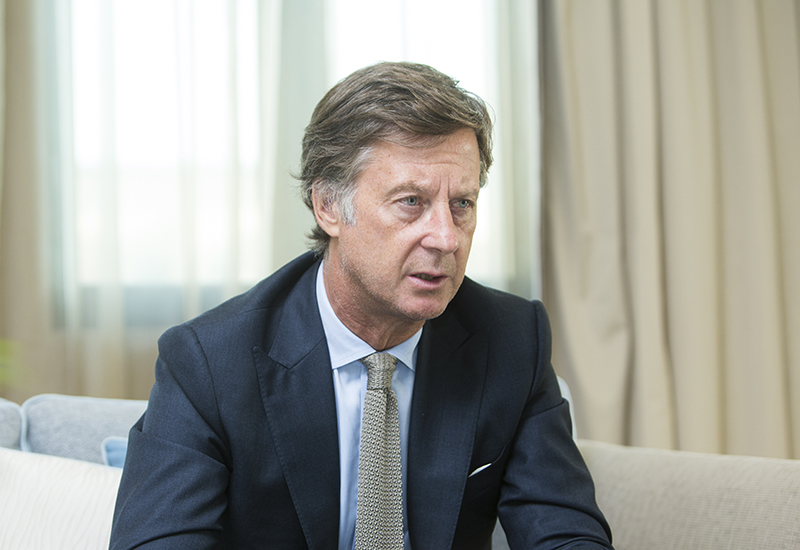
Accor chairman and CEO, Sebastien Bazin, says sustainability, vaccine rollout and the return of business travel are key factors driving the hospitality industry’s recovery.
Bazin revealed that Accor will be joining the Sustainable Hospitality Alliance to further strengthen its sustainability and ESG efforts.
The alliance, whose members make up 25 percent of the global hotel industry by rooms and includes 14 world-leading hotel companies, aims to use the industry’s collective power to address and tackle key challenges affecting the sector and its people.
“We believe working together as an industry on sustainability makes us stronger and is the most effective way in finding new ways to contributing positively to the environment and the local communities globally,” said Bazin.
Commenting on the key to the sector’s recovery, Accor’s CEO said: “Vaccination rollout is the solution for all of us to get back on our feet.”
IHG CEO inspired by positivity in Middle East hospitality

When you handle 1,100 hotels, it can be difficult to notice the little things. But during just a few days in Dubai, IHG Hotels and Resorts EMEAA CEO Kenneth Macpherson has noticed the positivity across the Middle East. In fact, he has been inspired by it.
Flying over from London for AHIC 2021, he spoke to Hotelier Middle East for the first time in three years.
He told us: “[In the Middle East], I’ve really admired the resilience here and the pace at which the teams have been able to bring back that spirit of hospitality. It is impressive. There is a positivity in the Middle East and a belief in recovery which is fabulous.
“You can see it here [at AHIC], we’re talking about what’s next and we’re talking about recovery.
“Where I’m staying right now – the InterContinental Dubai Festival City – my first conversations were around how proud they were with their performance. It’s really a testament to the government, the optimism they have has extended to the people.”
Why the ‘glass is half full’ for Marriott International’s COO

Marriott International’s COO for the MIddle East, Sandeep Walia has said there are reasons to see the ‘glass half full’ as the hotel industry rebounds.
Speaking to Arabian Business at AHIC, he said: “We all know our industry was hit the hardest, be it hotels or airlines, and we [at Marriott] were no exception. The fortunate part for us in this region is that a lot of the countries have already opened up and there is pent-up demand.”
“The UAE was way ahead on that curve in opening up and Turkey came up later… As we have seen these countries open up, we have also seen the pent-up demand in terms of people coming to these countries. So that gives us a clear indication that things are here to grow and people are here to travel.”
Middle East is ‘laboratory of innovation’, says Accor heads
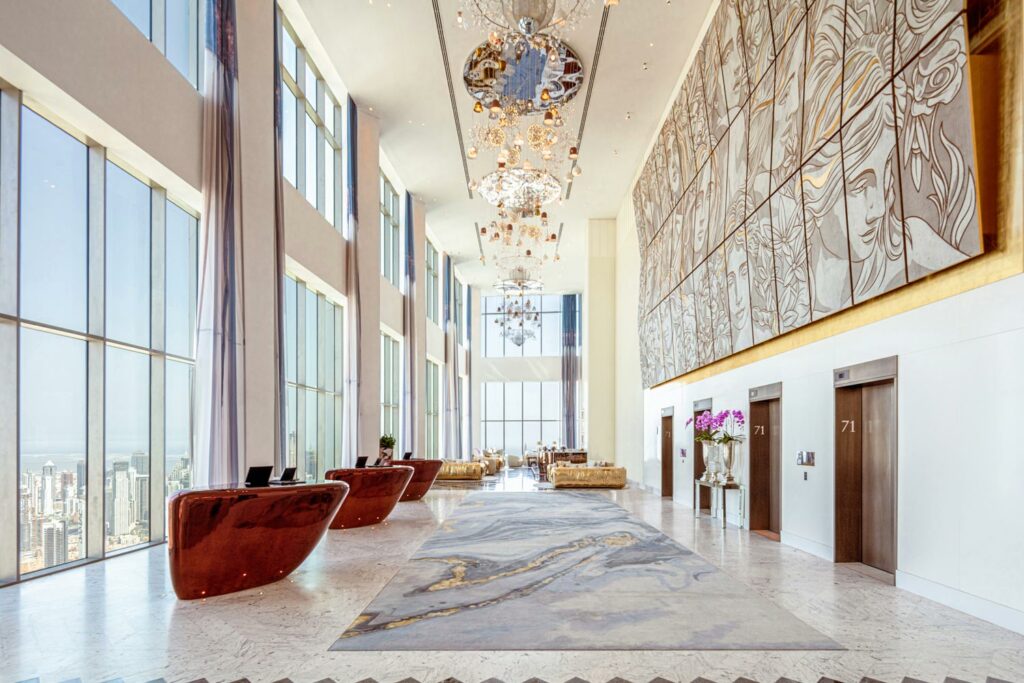
According to Accor, it opens approximately one hotel a day, with 1,200 hotels in the pipeline and more than 210,000 rooms. One of the driving forces behind Accor’s rapid expansionary efforts is Agnes Roquefort, the chief development officer. Describing herself as the “orchestra conductor” for the group, she handles 150 developers across the globe.
“For Accor, the Middle East and the wider IME [India and the Middle East], is an area for growth and a kind of laboratory as well in terms of luxury, resort and lifestyle offerings. So what happens for Accor in this region is a good representation for the group’s shifts and priorities in other regions. We were very much focused on economy and midscale previously, and now it’s more and more towards the premium and lifestyle resorts. What’s happening here is a very good indicator of our global development strategy,” she told Hotelier Middle East at AHIC 2021.
According to Roquefort, the focus on luxury properties and resorts in the Middle East is something that will move to other continents. She said: “Not only is the region a laboratory for Accor’s innovation, but also a demonstration of the evolution of the market. In the Middle East, Africa and Turkey, we are very strong on resorts and all-inclusive and so that inspires the rest of the group. Now we want to spread out these brands out of the Middle East and into Europe, North America and Asia.”
Red Sea Development considers own ‘hyper-luxury’ resort brand
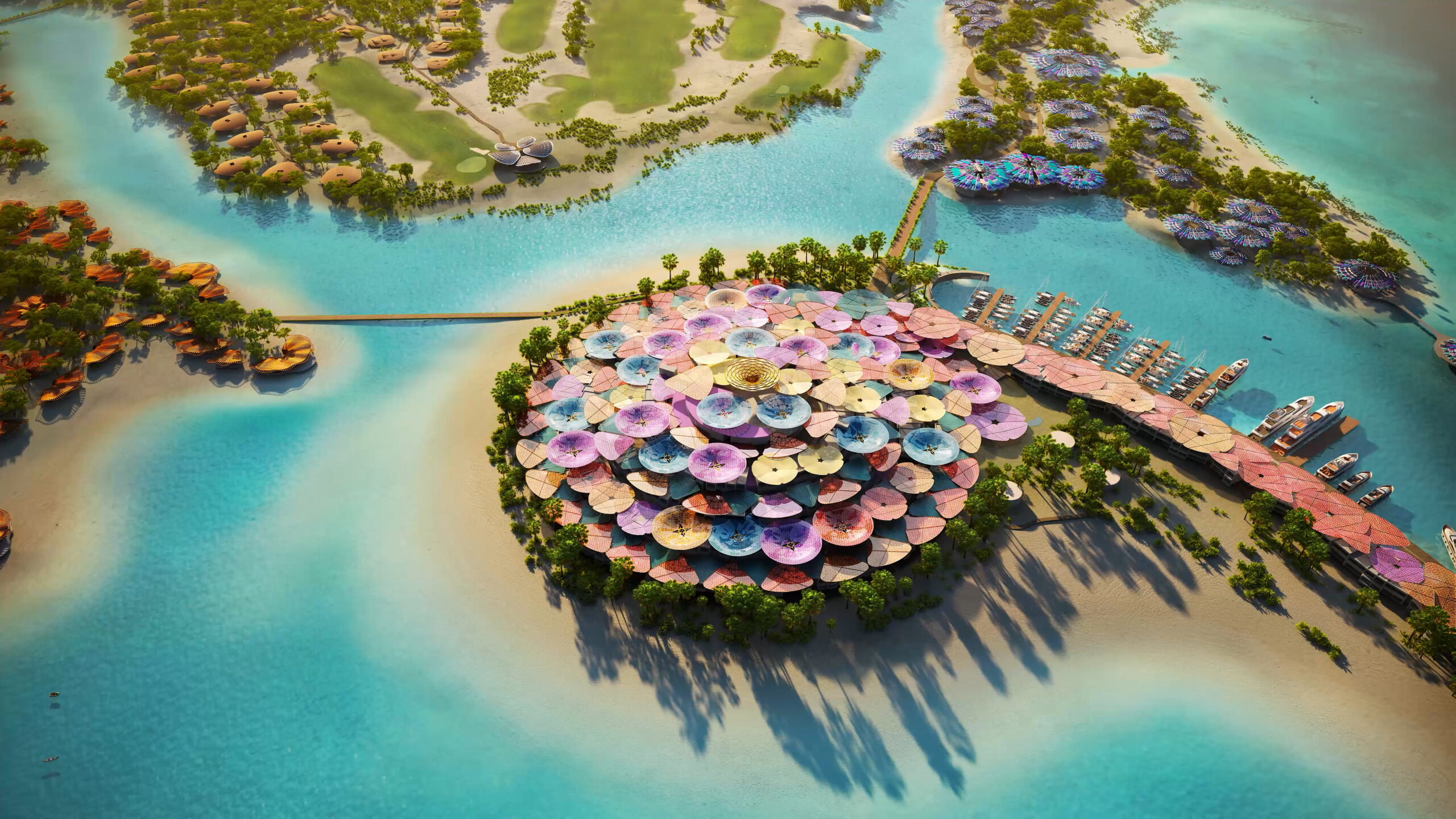
The Red Sea Development Company CEO John Pagano revealed the potential for a boutique resort brand launched by the company itself.
He revealed: “There are elements of the project, however, that don’t necessarily fit into any one hotel brand. Brands have their own standards, but since we [TRSDC] are designing something that has never been designed before, it’s needed in some instances for us to create our own separate one-offs than to try and force a brand into something.”
These one-offs will make up a very small portion of the destination – just 10 percent of the projects said Pagano.
He continued: “The Red Sea Project is about positioning itself towards the upper end of the luxury spectrum, but we have a broad distribution. 40 percent of our products will be in the four-star and four-star-plus segment, 50 percent in the five-star traditional luxury and 10 percent in the hyper-luxury space.
“This 10 percent will be very boutique and probably not branded to be honest. With that 10 percent, some we might brand ourselves.
Jumeirah Group returning as “leading authority on F&B in Dubai”, says CEO

Jumeirah Group CEO Jose Silva has said his company is once again becoming a “leading authority on food and beverage in Dubai.”
‘Dining – elevating the experience’ is one of Jumeirah’s three core brand pillars and the CEO is looking to make that commitment well known.
Speaking to Hotelier Middle East at AHIC 2021, the hospitality leader said: “Jumeirah was once the leading authority on food and beverage in Dubai, and I believe we are once again asserting that position. Of course, 20 years ago when we first were founded, dining looked very different. If you look at DIFC, the vibrancy of those kinds of restaurants didn’t exist 20 years ago. Today, we have to compete with those private sector [independent] dining venues.”
Jumeirah hotels house successful venues such as Shimmers and Kayto which are being exported to the Maldives, as well as Burj Al Arab Jumeirah’s immensely successful SAL concept. From 2018 to February this year, the Dubai hospitality group’s F&B division was led by chief culinary officer Michael Ellis.
Previously global director of Michelin Restaurant and Hotel Guides, Ellis has since left Jumeirah for a new role.
Silva continued: “When a hotel creates a restaurant that competes with the league of the Zumas and Coyas of the world, that’s when a hotel can remain current and relevant.”