

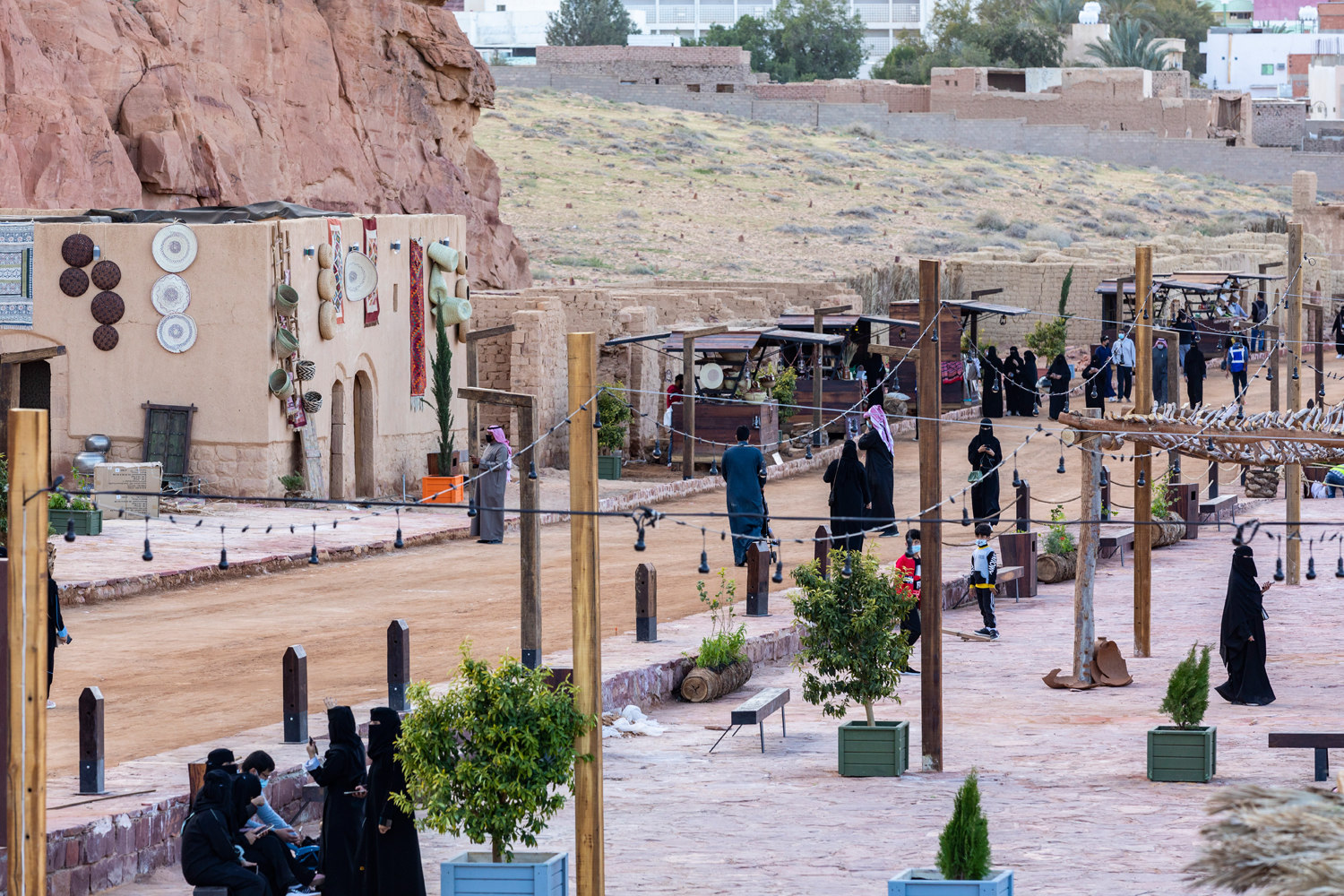
The Royal Commission for AlUla (RCU) has reopened the AlUla Old Town following an extensive three-year restoration period to preserve the culturally-significant site.
AlUla Old Town is estimated to have been established in the 12th century and was inhabited all the way up to the 1980s before residents left the area for more modern housing. Located within the AlUla Valley, more than 900 properties have been within the Old Town, including 400 shops and various town squares. Residents used stone blocks, mud bricks and date palm trunks to build the town, which is shown to have a winding, almost maze-like layout from above.
The residents of AlUla Old Town had oasis ‘summer homes’ and farming properties, where they tended groves, gardens and fields, which provided foods including dates, cereal crops, fruits and vegetables. The fertility resulted in AlUla being described as a “land of milk and honey” into the early 20th century.
With public baths, butchers and walled cemeteries outside the town, AlUla Old Town is credited as progressing the area’s wider agriculture and water management.
For more than 40 years, only former residents were allowed to visit the Old Town, though RCU stepped in in 2017 to restore the historical town. The restoration has focused on studying the materials used; conserving the homes found within the town; and restoring two key mosques and streets.
Now reopened to travellers and former residents alike, attractions include the suq on the incense road, a handicraft pavilion teaching arts and crafts of the area, four F&B venues, the Tantora Plaza and Sundial, and the two restored mosques.
“AlUla Old Town is an important chapter in AlUla’s journey through time. The site is key to the understanding, continuity, and evolution of the historic routes for trade and pilgrimage that made AlUla such a significant destination until the 20th century as it is for visitors again today,” said Phillip Jones, chief destination management and marketing officer, RCU.
Cultural heritage conservation manager Michael Jones said there is still more work to be done.
“The team has been working on conserving the southern and eastern areas of AlUla Old Town and applying conservation best practice, experimenting with different mud brick and plasters and creating guidelines for best practice in conservation of earthen architecture in AlUla. The guidelines are in the final stages of preparation, but there is more yet to be done on the interiors of the houses along the street near the mosques, as well as the rest of Old Town.”
Saudi Culture and heritage site AlUla is hoping to attract more than 90,000 visitors this year thanks to a new campaign aimed at the domestic market.
Within 15 years’ time, AlUla is aiming to welcome more than 2.5 million visitors annually. The site is constantly being updated with new experiences and facilities, which RCU expect to help generate 67,000 new jobs. (https://dev.hoteliermiddleeast.com/travel/122766-saudia-signs-sar4m-deal…)