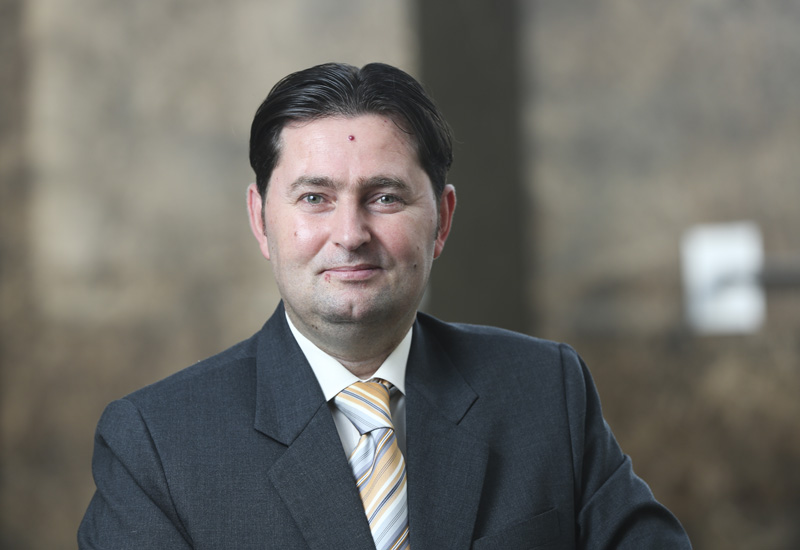
Wael El Behi has a reputation for developing successful hospitality teams in both Tunisia and the United Arab Emirates, so much so that he now has 13 properties under his belt, and the close attention of many hotel owners.
“I started my hospitality career in my home country of Tunisia back in 1993 as a reservation clerk after finishing my studies. I worked for a local hotel chain, but in a big property with 425 rooms, centrally located in Tunis. After making my way up the ranks, I moved to Corinthia Hotels International and opened three resorts across Tunisia. One of the general managers I worked very closely with at that time moved to Dubai; one day I received a call from him out-of-the-blue, he said: ‘So Wael, are you ready to come to the UAE?’ I told him ‘Yes, I am ready!’”
El Behi arrived in the United Arab Emirates in 2002, as director of sales and marketing in Safir Deira (now Coral Deira Dubai), the first four-star dry hotel in the area. “From there I had the opportunity to move to Abu Dhabi, to work in the same capacity with Mafraq Hotel. I stayed with them for about two years, but you see, after arriving into the UAE for a life in Dubai, I had certain longings to return. I then had the opportunity to join Coral Hotel International, so I came back to work as executive assistant manager at Coral Deira Dubai.”
El Behi then progressed as general manager through a number of Dubai hotels including Coral Boutique Villas, Coral Hotels international, Suha Hotel Apartments, Auris Hotel Management, Ramada Downtown, Hawthorn Suites by Wyndham, before joining First Central Hotel Suites in February 2016.”
Commenting on the large number of positions he has held in hotpitality, El Behi adds: “In the end it’s all about your contribution to the industry – this experience in different hotels has helped me develop my skills, I select the right people to work for too.” He adds: “When you work with an international brand everything is done systematically, so in the end your role is to execute the orders. But if you are in a small company, you feel eager to contribute and develop new practices, you have more freedom and this will help you become a better manager.
El Behi admits he rarely stays still for more than a few years: “It’s all about career, about getting to the next step. A hotel manager is a hotel manager, sometimes you need to be stable in your career for two to three years to really prove yourself in a role, but I believe hospitality is always the same philosophy, but in different locations.”
BARSHA HEIGHTS
El Behi joined First Central Hotel Suites having previously spent close to five years with R Holding, the owners of Ramada Downtown Dubai, where he worked for two years and Hawthorn Suites by Wyndham JBR and stayed almost three years. “I think my mission was completed there and I needed a new challenge. What attracted me to First Central Hotel Suites was the large room inventory and this is exciting and challenging mission to accomplish for me and my team.”
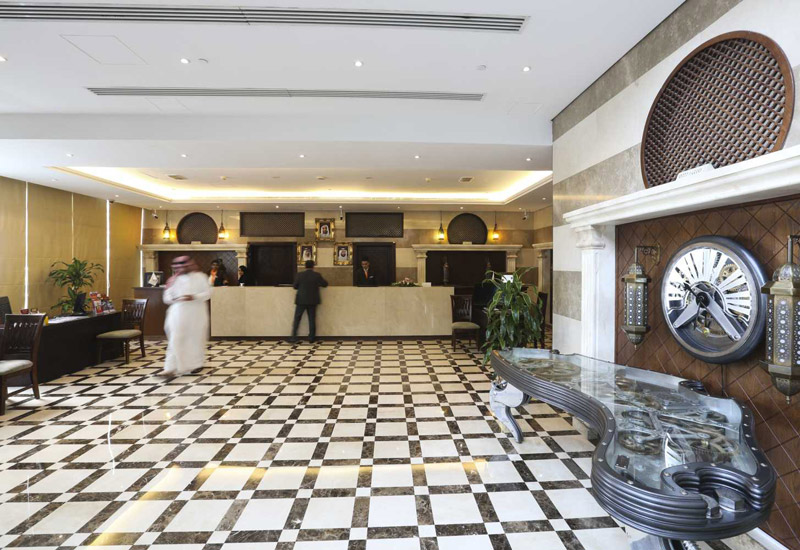
First Central Hotel Suites is located in Barsha Heights (formerly a part of TECOM until June 2016), offering 524 apartments and rooms, 24-hour front desk, gym, separate male and female saunas and a rooftop pool with views across Dubai.
“When First Central Hotel Suites opened in late 2011, TECOM was completely different – certainly with less hotels and rooms.”
Re-naming TECOM to Barsha Heights was the right thing to do, says El Behi, “Barsha Heights is known for its close connection to Mall of the Emirates – it’s an extension of a very popular area, so it’s more appealing to the tourist – it now looks and sounds less like a business district, and more like a community.”
On the topic of source markets, El Behi says the hotel attracts a diverse mix, with the top nations including UK, GCC (predominantly KSA), CIS (predominantly Russia) and others from central Europe (Germany, France and Italy) the wider Middle East region, including Egypt and Levant and the subcontinent too.
BIG CHALLENGES
Having completed his first six months with First Central Hotel Suites, El Behi points to what he believes is the biggest challenge in the mid-market sector: budgeting. “Of course, in any property you have a budget, the challenge is working on is how to fund special projects in this sector. For example, our online reputation was not too good, largely because our Wi-Fi was not free, of course this is expensive, but we decided to offer it free of charge. This was a major challenge, but by taking action we fixed a lot of our online reputation issues.”
El Behi points out another key challenge he is making a priority: “I am in the process of introducing LED lighting in all areas of the hotel. This is an important challenge. It will cost us in the short-term, but in the long-run it will reduce our expenses. This is just one step on list of green initiatives – there’s more to come, as we set an objective to be Green Key-certified.”
El Behi notes that he also proactively set up a committee to work hand in hand to achieve these green initiatives. “This is a process, it requires an on-going commitment, and I plan to become Green Key-certified in six to 12 months.”
His LED lighting project has already been approved by the committee, and will require changing 10,000 bulbs, at a cost in the region of US $68,000 (AED 250,000) to $82,000 (AED 300,000).
On overcoming the challenges budgeting can present in such projects, he notes: “As we do not have a dedicated sustainability budget, we need to fund this from operational budget – that’s why it will take up to 12 months to complete, moving one floor at a time.”
MILLENNIALS
With a décor that El Behi enthusiastically describes as: ‘all Arabian inspired’, he believes there is space for a successful crossover between traditional and modern design in the mid-market, capable of appealing to both local guests and millennial travellers, but it requires hard work. “There is space to meet all different needs here; people do want to see something different, be it contemporary or traditional; this is an urban and modern location, but with a cultural touch, guests love this.”
He comments on improving the appeal of First Central Hotel Suites for the millennial market by making the décor more vibrant than its present traditional design: “There is a balance between the two extremes, crossing over from tradition with more modern design is complementary, it’s absolutely a unique selling point, bringing the two worlds together; shortly we will move forward with our interior designers.” El Behi says he is in the process of budgeting for soft renovations too, noting the need for new furniture, fixtures and equipment (FF&E) in line with the expectations of the younger traveller: “This all needs to be done to make the hotel brighter and more appealing to our guests expectations.”
ONLINE REVIEWS
On the same topic of guest expectations, El Behi highlights his belief in the importance of online reviews by demonstrating the progress he has made with First Central Hotel Suite’s TripAdvisor ranking. “When I started this job, we were ranked in the top 270 hotels on TripAdvisor, now we are in top 180, my objective is to be in top 100.” He continues: “With this online objective in mind, we have decided recently to implement new hotel quality management software to help us interact internally in a better way, and respond quicker and more effectively.” When asked about the future importance of TripAdvisor to the mid-market, El Behi commented: “This is not an option anymore, it is mandatory – I doubt any general manager, director or owner will disconnect himself from the digital life of their hotel. TripAdvisor is the backbone of the hotel reputation. As they say: garbage in garbage out; you need to make sure you are involved in your hotel’s reputation on TripAdvisor.”
He continues: “You need to set goals and evaluate their progress; in the end, you may face some negative feedback – but this should not be more than 10%, and it should be handled while in the hotel, to ensure guests check-out in a good mood.”
He adds: “Most challenging moving forward is how to get the property to a consistent level, especially with all the new properties coming in the area. How competitive we can be in a changing market? This is where I am focused moving forward.”
SOCIAL MEDIA
In speaking of online reputations, El Behi does highlight concerns surrounding social media activity at his hotel. “Our existing website is not the right channel or showcase for our property; this is why we are completely revamping it. Once the website is ready we will look into social media too. I am happy with our Facebook activity, but we are not focusing that much on Twitter at present.”
To overcome these challenges, El Behi says: “We have now in place a marketing executive to handle digital and social media – so we will move progressively from here.” He adds: “Currently we notice guests chose to book through online travel agents, rather than our own website, this is why we need to focus more commercial activities to become attractive and competitive, thus keeping business and avoid paying third-party commission. It is very important topic and we are tackling it; 40% to 50% of our business nowadays is coming online and it’s evolving.”
LOOKING TO 2020
El Behi’s unwavering belief in the mid-market hospitality sector shapes his outlook on almost every aspect of his work; this includes the opportunities Dubai Expo 2020 holds for his hotel and the wider sector. “I always see it from a positive point of view; more hotels, more rooms and more guests. We are expecting 20 million plus [guests] by 2020 – just look at Dubai’s events, infrastructure and airlines: they will come.”
Speaking about what will make one mid-sector hotel more successful than another, El Behi claims this is easy: “What will make the difference from one hotel to another is service and value for money. I don’t have a Burj Al Arab hotel, but I do have guests who are happy.” He continues: “The real challenge is for small independent hotels that are not managed properly, without proper budgets, targets and manning; they will vanish or be taken over.”
He concludes: “We are not reinventing the wheel, we are not going to eat profits from other properties either, but we need to make sure we maintain our share of guests as we move forward. What happens out there in the market will not have an impact on us; there is room for improvement for everyone and a new hotel opening up isn’t a threat, we just need to maintain standards and develop our offering wherever possible.”
BREXIT AND THE MID-MARKET
“It is too early to comment on the Brexit scenario, but I believe it will settle.
In the short-term we can now see the impact on currency, but in the long-run UK is still a part of Europe, and it is already summer so our expectations are low. By the winter I don’t think we’ll notice much change either.”
GREEN KEY certification: AN ECO-LABEL FOR LEISURE ORGANISATIONS
Green Key certification pursues four overall goals:
• Environmental education for sustainable development of the staff, management, guests and the stakeholders.
• Lowering of the environmental footprint of the
overall establishment
• Reduction of costs due to a reduction in consumption
• Utilising the Green Key award in the marketing strategy with the promotion of the label and the facilities awarded