Products
Jafferjee Brothers
Jaf Tea is the flagship trademark of Jafferjee Brothers, a family-owned company based in Sri Lanka that has over 70 years of experience in tea selection. It only uses single origin teas for its brands and markets Jaf Tea (focused on the premium segment of the market) and Te Reval (focused on the luxury segment of the market) in over 30 countries. The company offers a variety of black, flavoured black, green, flavoured green, oolong, flavoured oolong and white teas. Its teas are offered in loose leaf form as well as in tea bags. It also sells a collection of accoutrements specially designed for foodservice segment.
Avantcha
Dubai-headquartered Avantcha offers 130 tea blends for delivery to Bahrain, Egypt, Jordan, Kuwait, Lebanon, Oman, Qatar and Saudi Arabia via its website. It works with organic certified international tea growers and its repacking unit in Jebel Ali, is organic certified by a German accredited certification body. Avantcha supplies several restaurants and cafés across the region, including The Spa at the Address Hotel (Dubai Marina); Baker & Spice (all locations); Paper Fig Desserts (Sharjah); Ratios Coffee (Sharjah), The Sum Of Us (Dubai); Tom & Serg (Dubai); Hamptons Café & Restaurant (Dubai); and Bubo Barcelona (Dubai).
News
Tea industry in Sri Lanka to celebrate 150 year milestone
The Sri Lankan tea industry, which produces the world famous Ceylon tea, is gearing up to celebrate the 150th anniversary of commercial plantation, which began in 1867 during the British colonial era. More than 10% of the Indian Ocean island’s population is directly or indirectly employed by this industry. The industry is one of the largest contributors to the country’s economy and the revenue collected from the export of Ceylon tea each year covers the nation’s entire food import bill of 21 million people per annum.
Two of the country’s GDP and 65% of the agricultural export revenue comes from the industry. Fifteen percent of the nation’s total foreign exchange earnings, now touching $11bn is contributed to the government by the tea industry.
Hakkasan Dubai & Abu Dhabi introduce afternoon tea
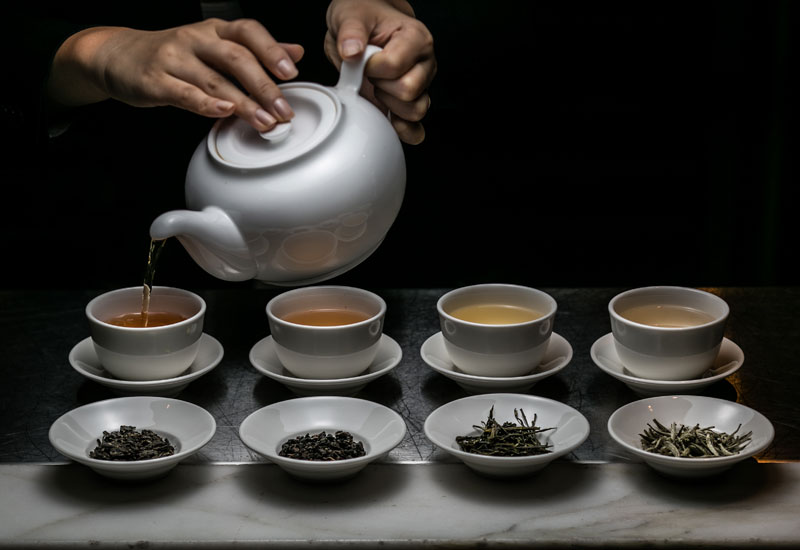
Hakkasan Dubai and Hakkasan Abu Dhabi have launched an afternoon tea, blending the art and culinary heritage of tea in China with the British tradition of high tea. The new menu, available from 3pm to 6pm, offers a selection of teas, sweet treats — including macarons — and dim sum. Every Saturday at Hakkasan Dubai and daily at Hakkasan Abu Dhabi, guests can choose from two infusions of Hakkasan’s Chinese and Taiwanese teas, presented alongside a selection of sweet and savoury small plates.
The menu includes items such as fried mushroom and foie gras dumplings (Hakkasan Dubai) and chicken taro croquettes (Hakkasan Abu Dhabi). The packages include the option to upgrade to add a glass of bubbly.
Olivier Gasselin, head of wine for the Middle East and Asia, Hakkasan Middle East and Shanghai, tells Caterer: “Afternoon tea is something we are focusing on as we believe it can appeal to a very large number of people. It is hugely popular with an Asian crowd in particular, but attracts the interest of the local community, as well as the expat one.”
Continuing, Gasselin adds: “It can highlight the enormous effort made in sourcing the best product at Hakkasan, while also showcasing our food and the way tea in our outlets complements our menu items. While tasting our tea selection, quite different taste profiles develop, from the floral or grassy character, to a fruity element, a nutty one, sometimes an earthy or undergrowth aroma.”
Operations
While being a delicate product, requiring sommeliers and suppliers to have a high level of knowledge and awareness, tea is universally popular. We spoke to some experts to ask them the following questions about tea
How popular is tea in the Middle East and what type of tea is preferred here?
Tea is prevalent in most cultures and, in the Middle East, culturally, it is a focal point for social gatherings. Padmanabhan Iyer, head of horeca, Baqer Mohebi tea states that it is widely consumed across in the region across various demographics, and notes changing preferences.
“Over the past decade, the growing awareness of the health benefits involved in tea drinking has led to an increase in its consumption. While the Middle East population has historically been black tea drinkers, there has been growing demand for green tea and other popular flavours, such as sencha and matcha tea,” he reports.
Karina Abzalova, head of marketing, Newby Teas UAE, agrees, saying that tea is the most popular drink, after water, globally and in the Middle East but does not share the view that there is a great deal of interest in ‘unusual’ teas. “Here, 95% of people drink black tea, and hardly 5% would venture [into] infusions and tisanes, like chamomile and peppermint,” she states.
Marina and Markus Zbinden, co-founders of Avantcha, echo Abzalova’s assertion about tea’s popularity but say they see a growing interest in flavoured teas. “Generally the unflavoured strong cup of black tea is preferred, but green tea due to its health benefits, flavoured teas and speciality teas are fast gaining popularity,” they comment.
Another tea expert is Olivier Gasselin, head of wine for the Middle East and Asia, Hakkasan Middle East and Shanghai. He says tea has “a very positive image globally” due to health benefits and notes “an open-mindedness on all aspects of the food and drink culture” in the Middle East.
He also sees increasing demand for tea in general; on a regional level, with tea houses opening up in Dubai and Abu Dhabi “often boasting exceptional selections of black tea or aromatic ones”.
Gasselin reports that the classic teas are the most popular, commenting that Sri Lankan and Indian teas are “the most renowned”, such as the classic Assam, Darjeeling or Earl Grey varieties. Although, with the number of Asian themed F&B outlets around the UAE in particular, Gasselin says that Chinese and Taiwanese teas are taking a bigger slice of the market.
How much creativity does tea as an ingredient allow?
Given the variety of flavours available, tea is an appealing ingredient in the preparation of various sweet and savoury dishes as well as beverages. Markus Zbinden reports: “Tea is incredibly versatile, purely because of the wide array of tea varieties, with sweet, sour, smoky, fruity, etc flavours. We use tea in preparing soups, salads, marinating steaks, using tea leaves in pepper grinders, desserts and beverages.”
Gasselin concurs, sharing Hakkasan’s key uses: “It offers many opportunities to experiment and create. For example, we smoke a Wagyu beef ribs dish with jasmine tea). Our pastry chefs are baking some fabulous macarons flavoured with green tea, and I can easily imagine our imaginative team of mixologists developing some cocktail with a tea element, either as a variation of a classic drink or a completely new one.”
Are there any precautions required when storing and handling tea that could affect the flavour or quality?
Care needs to be taken as each flavour of tea has its own brewing time that ensures the right flavour and consistency, Iyer tells Caterer.
“If a particular flavour is brewed for too long or not enough time, it can radically change the flavour, colour and its aroma,” he remarks. “Other things to consider include always using a clean tea pot that is used exclusively for tea. A tea pot used for tea and coffee can also influence the taste of your favourite ‘cuppa’.”
Abzalova points out that “tea has three enemies”, namely heat, humidity and contamination, because teas are absorbent and fibrous, and contain natural moisture. “This moisture establishes the character and value of the tea. If tea is not preserved in the shortest time from its production, the heat will dry the moisture. And if not packed appropriately, atmospherical pollution will contaminate the tea; 99,9% of the packers of tea have neither the facility, nor the clear understanding of the concept of preservation. Well packed and stored tea can last for 100 years,” she reveals.
To counteract operational issues, Gasselin advises keeping tea in a dry store and, as with most dry goods, avoiding humidity. He also makes the point that brewing time is critical.
“As for any drink containing tannins (drying sensation on your gums if you brew a tea too long), we have mastered and trained our staff in scrupulously timing the brewing process. Each of our tea has got a specific brew time, in order to get the most out of the teas we are offering. Oolong teas and dark teas tend to brew longer, while more delicate varieties just require a short brew,” he shares. He says that Hakkasan rotates its stock of tea, as there is a use-by date indicated on different products — “usually two years” — but notes that this “varies from the type of tea, to the origin” due to different fermentation and drying processes.
In terms of storage, Avantcha recommends avoiding glass containers “because it will affect the quality of the tea” with Markus adding that tea is best kept in an airtight container “away from sunlight, humidity and other strong competing flavours”.
What are the sourcing challenges, if any?
Marina tells Caterer that the biggest challenge in the speciality tea business is the fact that some teas are only harvested once a year. She reveals: “Some of the rare white teas for example are only harvested on three to five days per year. If a company wants to offer those teas all year round, they need to be purchased in that small window.”
Gasselin states that sourcing can be difficult if you rely solely on the local supply. He comments: “Only our Indian and Sri Lankan teas are sourced locally, whereas all of our Chinese and Taiwanese teas are imported. Our selection is based on a rigorous tasting made at Hakkasan’s sister Michelin-starred restaurant Yauatcha, which boasts over 100 varieties of teas, coming from all the classic tea growing regions of China and Taiwan, such as Fujian, Yunan, Hunan and Sechuan.
“We carefully monitor stock levels when importing, and ensure there is a rotation of the bags. We usually import quantities for a year, and with the fact that we currently have three outlets in the region, it is also convenient to share our stocks.”
Iyer says that tea for all major brands is sourced from a variety of tea auctions across the world, meaning that the key issue is getting the best tea ingredients from these auctions to consistently create the same blend of tea flavours “despite the changes in taste of the raw ingredients which may occur due to various factors, such as prevailing weather conditions”.
“Our customers are accustomed to certain flavour profiles and consistency in that flavour is what sets us apart from the others. Year after year we source our teas from the best tea estates and have the most highly trained tea tasters working us to ensure consistency in the flavour of the teas we produce,” Iyer adds.
Top trends
Something special
Avantcha co-founder Markus Zbinden says a trend he has noticed is consumers wanting to drink high-quality speciality teas “even for their daily cups”.
In the kitchen
It is common in the region, or on a more global scope, to use tea as flavouring for food or drinks, reports Gasselin: “One aspect we have experimented with recently is to try and challenge our teas with our Cantonese food and its multiple flavours (mild, savoury, sweet and spicy) in our traditional food and beverage harmony tasting. This exercise is used for all our beverages to ensure any drink served to our guests can sustain and marry perfectly our different dishes.”
Health benefits
Many consumers believe that tea varieties like black tea and green tea increase metabolism and may have other health benefits. Matcha was already on people’s radar last year and will likely only grow in popularity. Zbinden tells Caterer: “An ongoing trend is the very versatile matcha, powdered green tea. Its health benefits are attracting even ‘tea strangers’.”
Ethics and provenance
Mufaddal Jafferjee, manager, Jafferjee Brothers Tea Division, says: “The trend in tea, like many other food products, is a desire on the part of consumers to seek out authentic brands. By authentic we mean brands with a real identity and story. Consumers increasingly want to know more about the provenance of the product — where it comes from and how it is made. They want their food to be ecologically grown and ethically sourced.”
Seeking something more
Jafferjee says today’s consumers are looking for “fresh and satisfying experiences” over purely purchasing premium products. “We see this trend strongly in the travel industry with fashion brands such as Armani and Bulgari opening their own hotels. Even in tea, brands today are increasingly opening their own stores and cafes to give a more immersive experience to their customers. These stores allow the customer to become acquainted with a wider variety of teas and to partake in the lifestyle tea. Learning to select the correct tea accoutrement for the tea type or as well as the art of pairing tea with foods,” he shares.