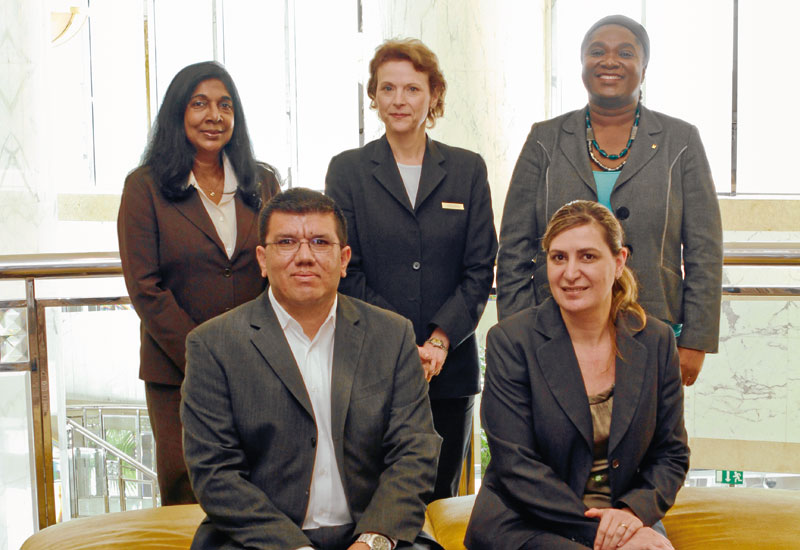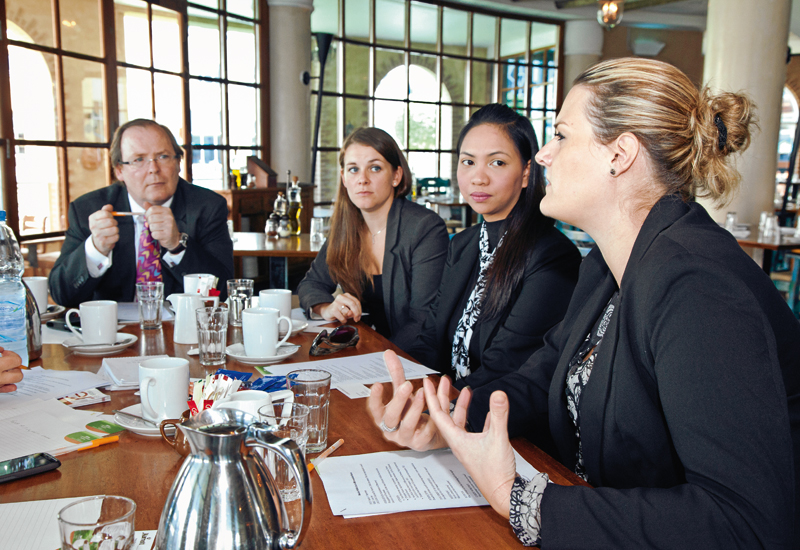
Four UAE-based human resources managers met at the Courtyard by Marriott in Dubai to discuss changing roles and the growing challenge of recruitment
It is clear from this month’s roundtable debate that the role of the human resources team in the Middle East hotel industry has changed significantly over recent years. No longer seen as an “administrator” or “auditor”, the HR manager is becoming an increasingly integral part of a hotel’s long-term business strategy.
Yet, in spite of the emergence of new responsibilities, the massive task of recruitment still falls in the human resources remit and our HR managers are consumed with the year-round challenge of attracting and retaining the right staff.
It seems that employee expectations are at an all-time high and many traditional source markets have closed up due to growing economies, making working in their home countries more attractive to potential staff members.
Then there’s the ongoing challenge of Emiratisation, something that is on the agenda for hoteliers, but it’s tough to meet targets.
Here, four UAE hotel human resources representatives take some time out from revolutionising the workforce to get a few issues off their chests.
How has the role of human resources in the Middle East hotel industry evolved over recent years?
Anne Oberdoerster: The HR manager has become much more of a business partner in the last few years. Eight or nine years ago, we were conceived as the ones filling in the papers, and ensuring people have their visas and accommodation.
We were more like social-welfare workers than an important part of the business. While all of these duties are still part of our function, we’re conceived nowadays as having a strategic value. We’re still not quite where we would like to be but we’re heading in that direction.
When I joined a small Rotana property in Dubai eight years ago, the purchasing manager was also in charge of HR. The thought process was that someone who could get good deals on a thousand toilet rolls could get you the right employees.
Christopher Watson: There used to be more of a personnel focus; a lot of admin, processing and you were kind of an audit taker where as now – particularly in this region – the function has become important to the hotel’s long-term strategy. You have to be much more creative. Today, the HR manager partners with the general manager, they are part of the corporate office.
Anne-Marie Pathak: As a result of the downturn, many organisations have been restructured and HR has come into its own and shown the strength it has. These are strengths in recruitment, and attracting and retaining staff. It’s also more important than ever to ensure we’re recruiting in the right amounts so that in a emerging downturn we don’t have to make large-scale redundancies, we can relocate staff to other properties.
What has driven this change in the role of the HR manager?
CW: Change has been driven by the fact that people’s expectations are evolving and as it’s getting harder to recruit, HR is key. You’re looking at different ways of remunerating people: employee benefits, pension schemes, share schemes and employee welfare. Everybody wants to be a better employer – it’s a fact of life.
Why is it getting harder to recruit staff and how are you dealing with this emerging challenge?
CW: A number of factors have changed over the past five to 10 years. One of the biggest challenges that didn’t exist 10 years ago is recruitment. It has always been a challenge to retain people in this part of the world, but now it’s not only retention, it is attraction.
The traditional source markets like China, the Philippines, Thailand and India are no longer such big pools for us because those economies have grown and now the people living in those countries can earn as much working there as they can earn working here.
When we go interviewing for hostesses, frontline food and beverage staff, or housekeeping staff, it’s harder and harder to find them so we’re going to new countries such as Vietnam, Cambodia, Burma, South America and Nepal.
What are the difficulties in targeting these new source markets?
Shery Cruz: The main challenge is English. High standards of English are expected in this region and problems can arise in teaching English as well as a general understanding of what hospitality is.
We ask other staff members to help the new recruits, we tell them not to speak in their first language, speak slowly and help each other.
CW: A few years ago you could contact the usual source agencies and they would provide you with the staff, but now I recommend going into a country. We had a recruitment trip to Indonesia and we interviewed 80 people, we hired 10. Out of that 10, eight might arrive at the hotel – their commitment to you is zero – then maybe only six of them will actually make it through the first three months.
AMP: You’re lucky if you have an international hotel in a source market as they can lead the recruitment for you, which is a massive advantage. They know what culture you’re looking for in terms of who’s going to fit in.
Do you continue to work with agencies even though they’re struggling to provide the staff?
CW: You have to be creative and less loyal to partners. You need three or four and we rely on them less.
Do you face the same challenges when recruiting higher-ranking staff?
CW: Business has changed. It’s getting harder to recruit at all levels. We’re looking for a different skill set. You’re looking for general managers who are more creative; who are able to think out of the box; who have experience of working in a tough market.
The same goes for the department heads as the F&B landscape has also changed. You need more creative F&B directors and chefs who are not only good cooks, but who are also good managers, good organisers, and who can control the payroll.
AO: People skills are a lot more important than they used to be.
Are you currently recruiting?
AO: It is a year-round exercise. Recruitment never stops as there are always people coming and going in this industry.
CW: We’re all recruiting as we’re all opening new hotels and the expat life isn’t for everyone, many of your staff will make the decision to go back to their home countries at some point. They come here to make money then move back home.
AMP: If you ask anyone how long they plan to stay here in the UAE most will be set on a fixed date at which they eventually plan to return to their home.
CW: Sometimes you can accommodate staff wanting to move, we had a GM who wanted to go back to Europe so we were able to transfer him to one of our Europe hotels.
How are you approaching the task of Emiratisation within your workforces?
CW: Emiratisation is top of our agenda. It’s still a challenge as traditionally the public sector has been much more attractive for nationals. Our industry is still a very 24/7 one so it’s difficult for us to compete on a level playing field, but the authorities are driving nationalisation.
It’s about changing the perception of the industry in the UAE, hospitality has been very important to the success of the country, and the industry has opportunities for travel and job satisfaction – you’ve got to sell it to the UAE nationals.
AO: Emiratisation is an ongoing focus as there are a large number of government incentives and bodies pushing for it. We’ve got a UAE national as a chairman so for him recruitment of GCC nationals is a major focus too. We have a nationalisation programme in place and it’s not only about attracting nationals, it’s retaining them.
How are you tackling the Middle East’s age-old problem of retention across all staff?
Sherie Cruz: Providing comfort and stability is important, this includes job security and the quality of supplied accommodation.
CW: Before the financial crisis, staff would move jobs for 50 dirhams, but since then opportunities have been fewer and employees are starting to value stability and their current employer. Job security has become a top priority.
AMP: People have long careers at Marriott, we’ve kept people for more than 50 years. I’ve worked in seven hotels in 10 years, so you’re always having new experiences and it suits the company and me. Also, because we’re an international company, we have to offer competitive packages.
When we’re employing, we don’t just get the right person for the job we’re employing for, we get the right person for the next role that job will lead onto. Marriot is a hands-on hotel chain.
We have awards in Washington every year where Mr Marriott presents the award. Spending time with the Marriott family, and that ethos, goes down well in this part of the world. A lot of staff come from the Philippines and countries with strong family-led cultures, they greatly appreciate working within a family environment.
AO: If a person is really engaged with a company, and they feel comfortable, valued and taken care of, they will remain there, but only if they have an opportunity to grow and develop.
What is the most common reason for employees leaving the company?
AO: Here in the UAE, you have a lot of people who will go because of better job opportunities. Sometimes it is just a better position and we may not have yet considered them for the same role, and of course monetary reasons.
In this part of the world you still have a lot of people wanting to grow rapidly – too fast! People are not as willing to settle down they just want to run down their career paths without even looking left or right.
CW: The quality of your boss and a lack of training and development. In this part of the world it is very money driven, but it’s starting to swing the other way towards security and stability, good companies with good training and development programmes, good facilities, these are the things that will make a difference for colleagues.
Do you try to persuade individuals who have said they are leaving to stay?
CW: When they come to resign it’s too late. If they say they’re going, let them go and hope they’ll keep in touch.
Hopefully your HR manager or general manager will foster such a good relationship with the key people that they will come to you with any problems before it comes to saying they’re leaving. Regular appraisals, a six-month review, an annual review and highlighting what the staff member’s next move is provides the necessary levels of comfort for them.
AO: I’m not into talking people into staying put; you need to act before it gets to that point.
AMP: Identify the talent pipeline, which team members are in the succession plans, and look after these people. Use development plans to say this is where you want to be and these are the areas you need to work on to get there, but there has to be a partnership in place so the staff member helps themself too.
With more and more hotels opening in the UAE, how do you keep your existing staff competitive against their other peers in the market?
CW: We encourage creativity. The general manager role, for example, has become harder in international companies because demands are greater.
We need someone who is creative as well as a business manager. General managers were more like hosts 10 years ago. There was less of a focus on marketing, revenue management and IT, we even expect our general managers to be human resources managers.
AO: It’s more difficult convincing existing staff to be more creative than finding new employees with a creative edge.
Rotana is starting a new general manager development programme from October.
We might have some very good general managers doing their jobs and we’re not questioning that they’re capable, but in order to stay competitive there might be different angles and different things to look into so we can definitely improve different areas.
How have employees’ expectations of what benefits they should get from their jobs changed?
CW: One of the critical questions when hiring, especially for supervisor level and above, is “what’s my next move”.
AMP: It goes back to a feeling of security; the world is changing rapidly so you want to be with a company that will allow you to grow.
SC: Those with experience working in the UAE hotel industry have much bigger expectations of the job packages offered. They ask about recreation facilities provided with accommodation and how many people are living in a room, and often you have to give them what they ask for so they will accept the job offer.
Have these increased demands regarding accommodation driven up the quality of existing staff quarters?
CW: At our employee accommodation in Abu Dhabi we’re offering free Wi-Fi internet, which means staff can speak to their families, it makes a huge difference, but it isn’t standard yet. Accommodation may not always be in the centre of town, so it’s about what shuttle service you’re going to offer, access to a gym and so on, staff generally don’t want to go out and spend money.
SC: Internet is very important because it allows employees to connect with their families regularly.
AO: We have internet rooms. Everyone knows by now that accommodation is a very important factor for people. Staff are asking for a high standard of living.
CW: In terms of accommodation, there is now a common benchmark, we’re not where we want to be as a company or industry yet, but we’re always improving.