

F&B outlets, food importers and retailers will be required to train specialised food handling workers by the end of 2011 as Dubai Municipality moves to further tighten food safety.
A ‘Person in Charge’ will have to be appointed under government regulations due to come into force at the beginning of 2011.
Under the new rules customised training programs have been designed for specific industries.
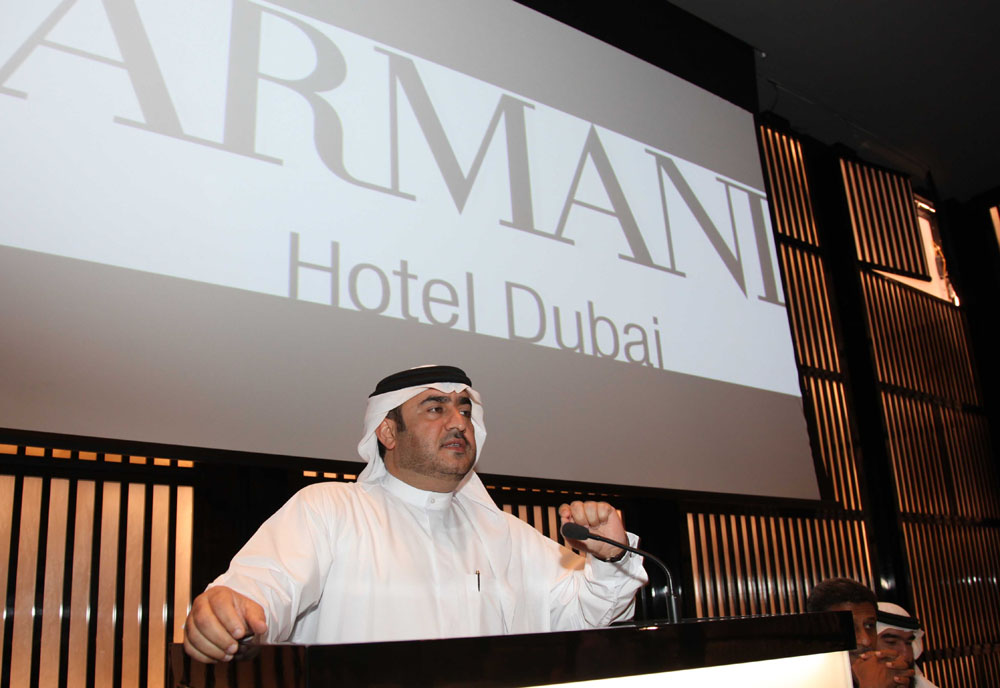
The move was announced by Khalid Mohammed Sharif, Director of Food Control Department in Dubai Municipality ay a press conference held at the Armani Hotel, Burj Khalifa.
“The PIC can be the owner of the business or a designated person, such as a shift leader, chef, kitchen manager or similar individual who is always present and involved in the work site and has direct authority, control or supervision over employees who engage in the storage, preparation, display, or service of foods,” he said.
Sharif said that the government was taking the step to clamp down on “irresponsible” outlets and to help prevent illness and financial loss as a result.
“From a regulator’s point of view, the food inspectors find it difficult to communicate with the food business when there is no designated person or point of contact. This often leads to a lot of confusion about what is the right thing to do when it comes to food safety,” he said.
“Unless there is a responsible person present in the facility, inspectors cannot provide recommended corrective actions for the violations found during the inspections.”
In 2009, 2.8 million metric tonnes of food was imported to Dubai and about 0.5 Million Tonnes were rejected at our ports, the press conference was told.
Kahlif said it was the duty of both businesses and government to ensure that food eaten in Dubai is of a safe standard across all outlets.
Uwe Micheel, director of kitchens, Radisson Blu Hotel, Dubai Deira Creek, said that large outlets had already voluntarilty implemented similar schemes as normal practice.
“The Radisson Blu Hotel, Dubai Deira Creek is already HACCP certified and was actually amongst the first hotels in Dubai to do so, approximately three and a half years ago. I personally see the PIC as the next step and HACCP, being a crucial part of the food safety and hygiene process.”
Micheel predicted that it may cause headaches for smaller establishments with bad records.
“I completely agree with and support this programme, as I believe it is essential to have responsible individuals that take ownership in personally ensuring maximum food safety.
“I am not saying that independent restaurants or smaller operations don’t have food safety and hygiene procedures in place, however, there was a lot of room for improvement in that area for these establishments, but I think people are taking more and more responsibility and operators are more aware.
“By implementing the PIC, the only additional change that could occur is the additional cost for training employees and relevant staff, however, this has been carefully studied and has been communicated and discussed with hotels and F&B operators this year in order for things to be forecasted, prepared and ready for the coming year,” Micheel said.