

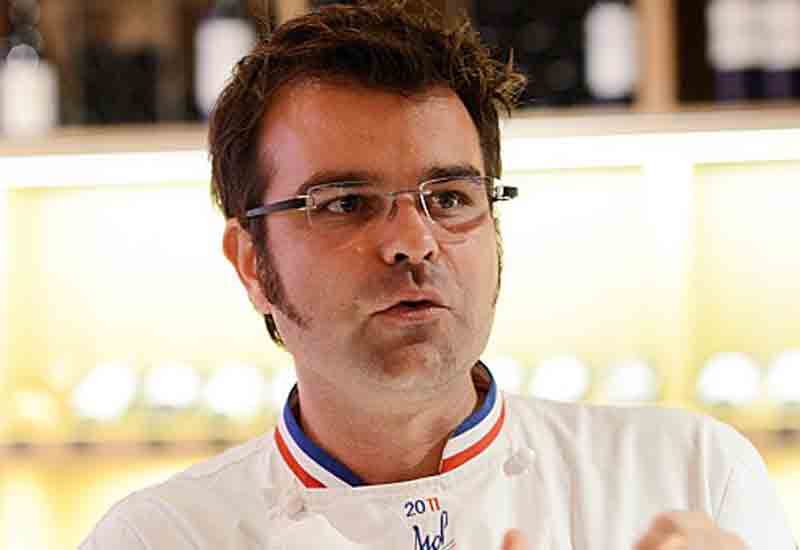
In part two of Hotelier Middle East’s series of weird and wonderful cheese facts, professional cheese monger, trainer and consultant Francois Robin shares 12 unique stories about the production and history of cheese.
Voted best French cheese monger in 2011, Robin is currently working to promote French and European cheese in the Middle East.
He returns to Dubai tonight for a dine around cheese dinner, organised in collaboration with European Cheeses and Dubai-based food blogger Samantha Wood (FooDiva). Read on for Robin’s favourite cheese facts.
Francois Robin:
1. “Cheese can be made with milk coming from cows, goats and sheep, but also from most other mammals, including camels and lamas. Although no one has tried to milk a whale yet!”
2. “France has the widest variety of cheese making techniques of any country in the world. It also has the largest production of fine cheeses today.”
3. “You need an average of 10 litres of milk to make a kilo of French Camembert de Normandie. You need 17 litres of milk to make a kilo of Italian Parmigiano Reggiano.”
Article continues on next page…
Francois Robin:
4. “French Mimolette cheese has a natural rind, which looks like the surface of the moon. Natural (and harmless) mites live on the surface of this cheese, which gives it an enriched taste.”
5. “If you eat a cheese that is too strong for you in flavour, adding a bite of dates or apple will add some sweetness, which will solve this problem.”
6. “The oldest protected cheese product in the world is the French Roquefort. It is a blue cheese known worldwide for its strength. It was officially registered in 1925.”
Article continues on next page…
Francois Robin:
7. “Some cheeses can be aged for up to 10 years, including some high quality mountain varieties of Italian cheese.”
8. “In 1815, after the fall of Napoleon, French minister Talleyrand organised a cheese contest as part of a diplomatic meeting to Vienna in Austria. The winner was the French Brie de Meaux, named ‘King of Cheeses.’”
9. “The largest variety of cheese is the French Emmental. This variety can weigh up to 100kg per wheel.”
Article continues on next page…
Francois Robin:
10. “Man has been making cheese since at least 5000 BC. Archaeologists have found evidence of cheese making, using clay moulds, in Northern Iran.”
11. “France is home to many cheese making schools and cheese monger competitions.”
12. “The French eat cheese almost every day, for lunch and dinner, between the main course and the dessert. However, no one will blame you if you like it as an appetiser or for breakfast.”

