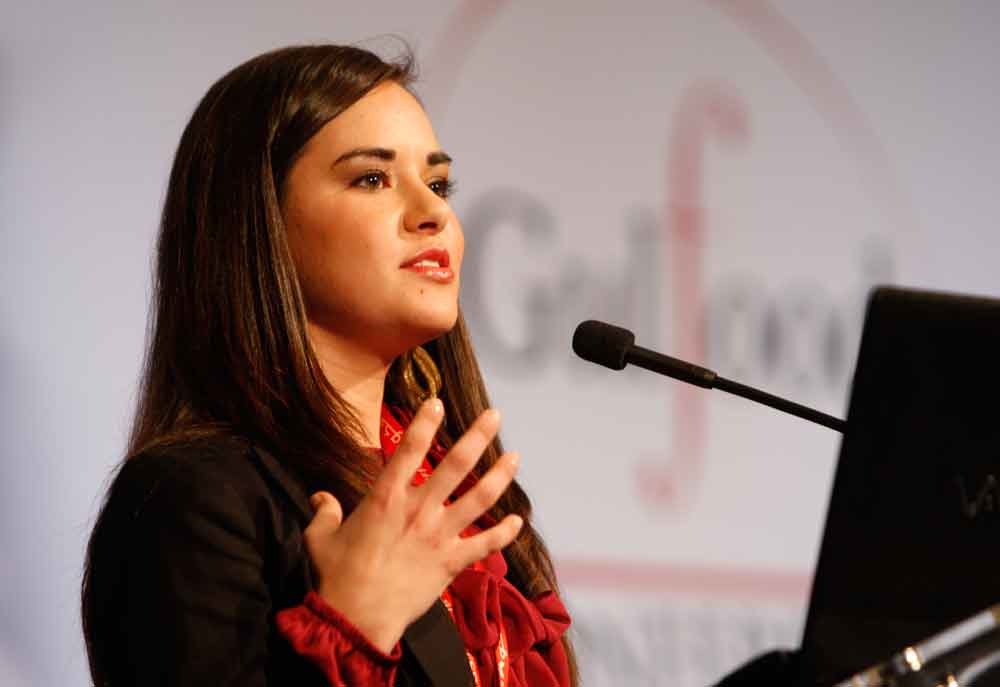
These six executive chefs are responsible for a phenomenal 85 restaurants and bars between them. Despite the wide variety of outlets they manage, they reveal one collective aim; to serve food of a consistently high quality that gives the guest value for money every time they dine
Getting to know you: Hotelier’s expert panel
Michel Jost
Executive chef
The Yas Viceroy Hotel, Abu Dhabi
Michel Jost grew up with his grandparents’ restaurant in the family, igniting his passion for food. He undertook training in Geneva, then went to South Africa, Majorca, Spain, Greece and has recently moved to Abu Dhabi. At The Yas Viceroy Hotel, Jost is responsible for 10 restaurants and bars.
David Contreras
Executive chef
The Westin Abu Dhabi Golf Resort & Spa
David Contreras has spent the past seven years working in Dubai and the past year in Abu Dhabi, where he opened The Westin Abu Dhabi Golf Resort & Spa in November 2011, his first executive chef posting, in charge of six outlets. In Dubai, Contreras worked with Hilton, with MJs steakhouse at Al Qasr, Madinat Jumeirah and then The Address Downtown. Prior to moving to the UAE, he worked in Mexico with Hyatt and before that, spent five years in Argentina.
Emmanuel Pauliat
Executive chef
Crowne Plaza Dubai
Emmanuel Pauliat has been working in the Gulf for the past decade, previously in Oman, Egypt and Kuwait and now in his current role in Dubai for the past two years. He has also worked in eastern Europe and trained in France at a one-star Michelin restaurant for nine years. At Crowne Plaza Dubai, Pauliat is in charge of 12 outlets and is currently involved in a large renovation and F&B project.
Stephane Buchholzer
Complex executive chef
The Westin and Le Méridien Mina Seyahi
Stephane Buchholzer has experience from across the globe; he trained in France in one- and two-Michelin star restaurants, went to work in New York, then came back to Europe, and did some consulting in Austria. He has been based in Dubai for the past seven and a half years and is responsible for 21 outlets across Starwood’s two-hotel complex. Le Méridien will be closing this month for a refurbishment, and Buchholzer will be creating three new restaurant concepts there.
Lloyd Cremer
Executive chef
JW Marriott Dubai
Being a chef is the only thing Lloyd Cremer has ever wanted to do and just this month he was promoted to the role of executive chef at JW Marriott Dubai, in charge of 14 outlets and a large outside catering business. He has worked in the Gulf for four years and held previous positions at Fairmont Southamption in Bermuda and Fairmont Heliopolis in Cairo.
Pierrick Cizeron
Executive chef
Le Méridien Dubai
Again, being a chef was the job Pierrick Cizeron always wanted to do. Previously he has worked around the world, in England, Monaco and also in Dubai from 1998 to 2003. He then went to Paris for three years and seized the opportunity to return to Dubai in 2006. At Le Méridien Dubai, Cizeron is in charge of 22 outlets.
This month’s roundtable gathered executive chefs from some of the UAE’s top hotels, together responsible for a whopping 85 restaurants and bars. Sat on the beautiful Bussola terrace at Westin Dubai, we discussed a range of issues and ideas, from recruitment and suppliers to events catering and MasterChef.
But one theme permeated the entire debate — the desire to get back to basics and source quality ingredients, prepared, cooked and presented in simple yet creative ways. And no matter how much produce costs escalate, the chefs were adamant this must not impact guest experience.
Over the past year, the UAE has experienced a surge in the growth and popularity of standalone restaurants, with new dining hubs such as DIFC in Dubai emerging. How does this impact hotels’ restaurant business?
Emmanuel Pauliat: I believe competition is good because it makes all of us grow and try to be better and try to improve ourselves.
Stephane Buchholzer: It’s good to have competition in the market to lift up the quality. I think the problem with hotel restaurants is they’re driven like supermarkets, it’s a range of standard food, standard products that are sellable to the mass market.
The fact that we have standalone restaurants enter that are licensed, like in DIFC, means you raise the bar to something — they’re doing something different, they push the hotels to realise they can do something better in order to compete.
I see the difference between when I arrived in Dubai seven years ago and today, at most of the hotels in Dubai I think the food was below average and it’s changed a lot over the years.
Seven years ago everything was driven by the price and over the last seven years people are a lot more demanding for quality and hotels are spending a lot more money for quality and are trying to deliver a better product — and this is mainly due to the fact we had a lot of standalone restaurants open and to celebrity chefs that are raising the demand for better product.
Lloyd Cremer: I think also people are more educated, taking more of a Mediterranean approach, and knowing where everything comes from. Seven to 10 years ago, I think people just wanted to come out here and have a good time and have a Caesar salad.
At the end of the day there’s just Caesar salads everywhere, I think people need to start pushing that a bit more, especially the room service menus, there’s so much repetition.
We’ve got so many different chefs from so many different parts of the world and I think that’s changing a lot, as people start to get their own identities on their menus. On menus we should have a food-to-chef link, [instead of them being] reproduced by the corporate standard — it’s a tried formula, it’s regurgitated. It’s better for free-standing restaurants — [they are] more creative, have better produce.
But why can’t some hotel restaurants be more creative and have an identity?
David Contreras: I think in hotels there’s a lot more opportunity to learn more things especially from the speciality chefs and this is where everything is going, before it used to be these theme nights where you have your same team of chefs cooking different ethnic cuisines, but this doesn’t work anymore, you should have a speciality. If you are doing Chinese food, you need to have your Chinese chef doing it or someone who will give it some authenticity.
Today guests know what they are eating, they know good Chinese food, good sushi and good Indian curry, so everything now is driven by [demand for] speciality and it’s very important that you have those talents in the team and deliver authentic, honest food.
How challenging is it to recruit chefs these days?
Lloyd: It depends – Thai chefs don’t really want to leave home because it’s so good. Filipino and Indian chefs want to come out here because the exchange rate is higher. It depends on the region they’re coming from, Japanese chefs are pretty costly.
David: I think recruiting good staff is getting harder and harder, for me it was really hard to hire 50 people for this opening and [difficult to get] good guys because the competition is really high. Lately, I’ve noticed that it’s not that easy to find good Indian chefs because the growth in the Chinese and Indian economy means they can make the same money there that they can make here.
Stephane: I think in general it is difficult to find good people. The challenge we have in hotels is once we find good people, sometimes they cannot adapt to the hotel environment.
At standalone restaurants it’s a completely different style of management to a hotel, there is a lot of structure, procedure that needs to be followed in a hotel that you don’t have in a standalone restaurant.
In a standalone restaurant if you decide to change your menu tomorrow you can, in a hotel you can’t. As a manager, in a standalone restaurant you can be maybe a lot tougher, a lot harder on people, you cannot necessarily do that in the hotel industry. In a restaurant, if you are not happy, the door swings both ways. In a hotel. However, there is a different way of doing things.
Emmanuel: It takes a lot to have the right people in the right place and analyse exactly what is a strain — you need to get the overall picture of your operation really to know if this guy is properly matching this. I spend a lot of time on it.
Michel Jost: The selection process is one of the most important steps to get your hotel and restaurants right. If the screening is done properly; you need multi-layers of interviews, you need full tasting, you need a lot of things, that way you can realise if the person is going to fit within the organisation or not, you can find out if a person is driven or not.
It’s all about attracting talent; if a person is driven that person will have the right contacts and the right people who follow him so you can have an amazing concept, if the chef de cuisine is not the right person it will just flop.
Do guests want to meet the chef? Are you required to have more of a front-of-house role too?
Lloyd: It depends on the outlet, for all-day dining probably not but if it’s an Italian or steakhouse then yes, table touching is a big part of it. Chefs are also there to create business, being front of house definitely helps.
Michel: Food is fashion. Look at MasterChef, it’s all over the place. And on social media as well.
Lloyd: It’s dumbing it down though. It’s not of an intellectual or even a creative process. Look at MasterChef, everyone’s crying every two minutes. They cook some doughnuts —it’s the greatest meal of my life and he bursts into tears.
It’s dumbing down the food trade, we’ve all done 20, 25 years to get where we are and then this guy makes a pancake and he’s a celebrity chef. We don’t have to all run after it like little sheep. As a drive and as something to follow, it’s just a dumbed down version of what we do.
Michel: But we think differently to someone working in an office, a banker for example, he wants to go and be entertained, maybe meeting a chef is relaxing for him. Bars and restaurants are a like a kind of therapy for consumers.
Lloyd: I agree with what you say about meeting a chef, but [not] signing up to this over advertisement of chefs on TV who often can’t really cook, have never done a hard day’s work in their life and drive a Lamborghini.
Do you think it impacts young chefs?
Lloyd: Probably, you get a few young chefs who’ve cooked a pancake and think ‘now why aren’t I getting AED 30,000 a month?’
The hot topic at the moment is the increase in F&B supply costs; have you experienced this and how has it impacted your operation?
David: We have been open for two months and for me it was a long period for pre-opening, so I wasn’t purchasing anything for nine months. The first thing that I found when I started purchasing again was that ‘wow’ all the prices are different —[they were going up], especially when I was making calls to cost the menus, particularly on seafood.
Stephane: Last year we experienced a big raise on fresh and dried goods, everything rose from around 10-30% on average.
Lloyd: Did you find that before or after Ramadan?
Stephane: In the first three months of 2011 there was a major rise.
Pierrick Cizeron: We try to contract the maximum amount we can on a six month to a year basis to try to avoid this fluctuation but definitely there is a lot of [increases]. For us, the biggest issue is for the guest not to suffer from price increases and to be the most cost effective possible.
Stephane: It’s not like you have someone raising 30% and then you raise your menu price 30% because if you come to eat today and the cheque is AED 150 and you come to eat tomorrow and it’s AED 250 you are going to say ‘what’s going on?’
You’re not going to understand the price difference and I’m not going to come to the table and explain that our goods [have increased] — for you it doesn’t make sense that you can raise 30% overnight so this is a big management process in terms of how we have to absorb some costs and be creative to balance this with something else so at the end of the day costs don’t go overboard.
What produce has increased in price the most?
Stephane: Probably from Australia because the Australian dollar was very high last year.
Pierrick: But they used the same excuse for the Euro, now the Euro drops but it doesn’t drop the price. They use the excuse of the Australian dollar, of the Euro to increase the price but now it’s going down, the euro is 4.6, 4.7 compared to 5.4 or 5.5 when they increased the price, but nobody decreased the price now and the Euro is going down.
The impact on the fresh product happens right away. I think that’s the excuse they use to increase the price now; is it the real reason? I’m not sure, let’s see.
How do you look to absorb costs?
Pierrick: For us we are trying to cut costs as long as it doesn’t affect the customer experience. Let’s go deeply into the organisation and see how to absorb these increases of costs and definitely we are driven by the guest experience and we should not have the guest [noticing any difference].
Stephane: We try to be creative. In a hotel we always come up with promotions. You always have something going on, a wine dinner, an event with a supplier, some live entertainment, but the concept of the restaurant or the bar should be a drive to think of something new to attract new customers or more customers.
The big thing for us was to launch our brunch on Friday less than two years ago. We went from doing an average number of covers on Friday to four times [as many] the first year and last year we doubled again the volume of business. We create events; one of them will be major and others to keep the word out.
What is your current most profitable F&B outlet?
Stephane: It will depend on the concept – an Italian restaurant will be a lot more profitable than a steakhouse. If you have a beach bar restaurant, Barasti for us is the most profitable. It’s the range of food you will serve and the amount of people you will serve for.
Michel: Italian is good, Arabic is good, South East Asian.
Pierrick: Italian and Chinese are definitely the most profitable.
Emmanuel: Arabic evening venues will have a decent profitability. When you engage some sort of F&B package and when you are working on volumes the profitability is higher.
Michel: The advantage of the Italian over other concepts is that everybody can eat Italian. Not everyone is as into Asian. How many times a week can you eat Asian?
Lloyd: And the products are available here, Italy being so close.
Michel: The Mediterranean food is also related to healthy diet and fresh products — you can look across all continents, this is the trend.
Have you all seen more of a demand for healthy products?
All: Definitely, yes
Pierrick: On the menus now we start to include the calories and the fat content. There is a big demand; even for the kids menu and we bought specific software into which you input the recipes and it gives us the complete calories content of each dish.
Michel: And you put that on the menu?
Pierrick: Not on every dish because there are some dishes that you do not want to show the content of haha — but for the ones we know are healthy we are including the content. Like Michel says, the guests are quite oriented to this healthy option and taking care of themselves.
Michel: They want to know what they are eating, people are travelling left and right and they want to know, what am I getting here? If you look at the age group of people travelling, it’s 35, 40, 50. These people need to take care of their health, their cholesterol, high blood pressure, so for them it’s very important to know what they eat. It’s a health-conscious decision. There is a big problem in the UAE with diabetes also.
Emmanuel: I agree with the health conscious [attitude] of guests but what is strange is I tried to provide in the all-day-dining a healthy buffet, a huge selection of 30 make-your-own salads, fresh fruit, some meat that you can take à la minute that is grilled with a healthy sauce on the side, but still it’s not working, so in some way I agree that the guest is really concerned with what they are eating, but when you are offering them a concept from A-Z where you can eat healthy it’s not too [popular]. Maybe what I am doing is too much?
Pierrick: They’re conscious but then they will choose a nice rocca salad with lemon and olive oil dressing and after it they will have a tiramisu!
Michel: One thing I noticed is that a few years ago you always had the menus and then you had the vegetarian section, the way vegetarians and the people who wanted to eat healthily were treated as if there was something wrong with them. It was not mixed inside the menu.
What I see is in the new approach, very often, you find healthy or superfood concepts within the menu so people can choose whatever they want on the menu and there’s no feeling that there’s something wrong with them.
You make it accessible and you indicate a few items so everyone feels more comfortable to choose, as soon as you put it on the side, people will be reluctant to select it.
What about room-service menus; is it time these had a revamp?
Michel: Room service needs more comfort food and what is good when you have more outlets is you can mix the comfort food and items which are coming directly from your outlets.
Lloyd: We’ve got a lot of our outlets on our in-room dining menus. I’d agree with more comfort food, easy to eat items, I think sometimes chefs overcomplicate them and at 3am some signature dish made by a commis 2 that takes 45 minutes to get to the guest — that doesn’t really make sense.
It’s alright if the chef de cuisine is there but let’s be honest, at 3am it’s not going to be that fantastic is it? And speed of service [is an issue]; in too many room-service menus people are trying to have this over elaborate sequence of service but at the end of the day, just hurry up, it’s a burger, it’s a club sandwich.
Stephane: It has to cater to a wide range of people. In any country where you have your hotel, you will have people coming from all over the world and they will stick to something they know or something they can relate to when they order room service.
Emmanuel: If all of us put our room service menu on the table it would be very similar.
Stephane: You’ll have the standards that are always there, you’ll always find the Caesar salad and the club sandwich, pizza and a pasta.
David: Also, what most of the guests wouldn’t know is the technical element of the room service menu: we as chefs have our pride and we want to showcase whatever skills we can but it has to be, as chef mentioned, executable at any time of the day consistently with the same quality by three chefs or by one chef, so it has to be something simple.
The food is not cook and serve, normally there will be 12-16 minutes from when you plate it until the food gets in front of the guest. The dish is going to be placed in a hot box which is 60-70 degrees so you know you cannot have a lot of leaf garnishes in hot dishes because they will die, the dish has to have the right moisture because otherwise it will dry up and all these things affect the final experience of the guest.
If you want to do it really elaborately, it’s nice when you plate it but when it arrives at the room it’s something else. That’s why room service needs to be done smartly and simply and consist of food that anybody understands.
How important are your catering and banqueting functions?
David: It’s very important. Having banqueting in your operation is the cushion you need to do other things – absorbing costs.
Michel: It’s image also, you sell yourself. Catering is basically saying ‘we bring our brand to you’. We are available anywhere.
Lloyd: We do boats, planes, concerts.
David: I think the private jets is a very good market.
Lloyd: Private jets is about 40% of our room service budget.
Looking forward into 2012, what trends do you see emerging?
Lloyd: Tapas, Peruvian and South American cuisine, mixed tapas, mixed sharing, and a fusion on mezze products. Not many people are doing it but from a creative point of view you have the ingredients here so you can mix it up a bit.
Like in England, you get the red-pepper hummus but you talk to someone from Syria and they say ‘no, hummus can only be hummus’. As time goes on you get more guests from different parts — it’s a bit like the Caesar salad, why do you always have to have it? It’s a little bit of a pet peeve.
Michel: I think tapas style is a trend — you can balance your costs. I think family style too.
Stephane: I think people are looking for more simplicity and quality and the [right] produce for the price, for example, a good roast pepper with olive oil and garlic, an extremely good quality ingredient prepared simply, a no brainer, nicely presented. It’s the creation of simplicity, it’s good, it looks nice, you don’t need to think of how to eat it.
But are people seeking more value-for-money deals?
Stephane: It is different perception of value. You have all-you-can-eat for 24 hours for AED 80 or you have AED 150 for one plate but this is exactly what he wanted, it hit the spot.
It’s good and you don’t mind paying this money because the value is there, it’s a good quality product — it tasted amazing, the surrounding was nice, good quality service. This is value. Today in Dubai there are very few ingredients we cannot get.
Pierrick: That’s the advantage of this standalone competition, it brought a lot of product into town.
David: A trend in buffets and banquets especially is live stations and live cooking, it was not there so much before. People like to see the chef working to see how their food is being prepared, authentic true food. Guests see something done there simply but skillfully, with the chef getting the best flavour out of the food.
Lloyd: More chef interaction. It could be South East Asian food done street market style. Like a nasi goreng station or a peking duck station. It’s a lot easier to do because the chefs tend to be from that part of the world – the majority of our chefs are Indian, Asian, Filipino.
Emmanuel: The trend is for authenticity and quality, it’s better to stick to a product and get it right.
Michel: If hotels can cover 90% of the basics right they have it worked out. Sometimes we see that people try to over-complicate and the customer is not looking for it. [We must] serve food on warm plates, make an espresso in a warm cup, but 50-60% of places don’t get it. To get the basics right is very important. Take an ice cream — when is the last time you were given a perfect scoop?
What is properly executed? Where is the training? What is the point of teaching someone something really fancy if we don’t teach him the basics? Take a croissant – I can guarantee you can go to 70% of hotels and you cannot get the right croissant, it’s about the butter, the flour, temperature of the water, the temperature of the flour – there are a lot of small details that we tend to forget. If we focus on the basics we can get a lot right. And I think the customer recognises this.