


Whether you love it or hate it, remote-working is here to stay. Spurred on by a string of lockdowns, many people quickly found they were able to do most of their day-to-day work from their own home offices, kitchens or bedrooms. In fact, a Growmotely survey cited by Forbes in 2021 found that 74 percent of professionals expect remote-working to become standard and a mere three percent of people want to return to offices full-time.
However, as fast as it became popular, working from home also quickly became difficult for many. Spotty wifi connections, screaming children, barking dogs and many other distractions have made it tricky for people to get their heads down and work productively.
As hospitality experts will go on to say in this feature, it presents an immense opportunity for hotels. The idea of a ‘workation’ is an increasingly appealing one – to work in a comfortable hotel that boosts creativity, boasts space and still gives that vital disconnect from where you relax at home.
Fitting, then that the Middle East’s hospitality and tourism hub Dubai leads the way for the future of remote-working. Dubai’s new ‘Green Visas’ allow expatriates to apply for work without being sponsored by an employer, and include children up to the age of 25 on their permits. The emirate also allows people who’ve lost their jobs to remain in the country for up to 180 days, a major boost as most visas are tied to employment contracts.
With legislation incentivising young and bright-minded professionals into the emirate, hotels having lavish lobbies and restaurants ready to go, and a general shift towards remote-working, the future of workations is incredibly bright, as well as being profitable.

Business and leisure
For a long time, business and leisure hotels were wholly separate. One had all the latest meeting rooms and working spaces, and the other had the restaurants and pools. Today, as people become more ‘nomadic’, we are seeing more leisure hotels work hard to draw in modern-day professionals, too.
This is a trend that Danielle Curtis, exhibition director ME, Arabian Travel Market explained: “Hotels have an opportunity to create programmes that emulate a home working environment, but with the advantage of using the hotel’s leisure facilities, as well as enjoying the more relaxed restrictions of the wider resort, over a longer period, say for one year or maybe just covering the annual school calendar.
“If this trend does indeed continue to grow, it will become a necessity for hotels if they want to stay relevant in this space. Clearly defined business and leisure hotels could become a thing of the past, with the emergence of hybrid hotels and facilities. This could well be the ‘new normal’ we have been talking about for the past two years and it will create a blurred line between the traditional business and leisure guest segments. In some ways it’s another vertical within the meetings and incentive market, just on a virtual, individual or family basis.

“On-the-go executives will be a far more common sight in hotels, whether it’s Gen Z singletons, millennial professionals, or freelancers who can earn a living from a laptop, with or without partners and or families.
“The inevitable universal four-day week that is coming will also help to fuel this trend globally. Hotels will no longer be considered just as a hospitality experience, instead, they will become potentially long-term, home-from-home, work and lifestyle environments.”

Making money
As Curtis states, there’s money to be made here. It’s all too easy to think these ‘workationers’ aren’t spending very much – that all they’re doing is buying one cup of coffee and sitting at a desk for eight hours, however, according to one leader, this is entirely false. Dimitris Manikis president for Wyndham Hotels and Resorts in EMEA shared: “That’s what I call the ‘café pattern’ when you go to a café for eight hours and you sit there, order one cup of coffee and nobody really makes any money. So what do hotels do to change that? When people use our hotels to work, we’re creating customers of the future. Somebody who is comfortable using your hotel to work – sure you might not make much money from it right now – but you generate loyalty in that property. Next time he or she needs to book a conference room or needs to hold a big meeting with people, they’ll choose that same hotel to do it.
“It’s not about making money today, it’s about generating a loyal, repeating customer in the future.
“There’s a number of ways to maximise their spend. Friends and family is a big one, hotels must create an environment where professionals feel comfortable bringing their friends along while they work. You can generate packages that generate loyalty, for example, a loyalty club specifically for workation people would be great. It’s a long-term play. That’s how we see it.”
For Manikis, especially in Dubai, the remote-working visas present a “tremendous opportunity” for hotels. He said: “Every time we talk about Dubai, it’s all about the holidays. That’s not the case anymore, it’s a financial hub now and the new visas attract a lot of new professionals. Workations aren’t going anywhere, they’re here to stay. Hotels provide additional privacy. With all due respect to many of the café brands, the space is often quite limited. Sitting in the same chair at a café for hours can be uncomfortable both physically and in a claustrophobic sense.
“From our side, we have to adapt our offerings from just being an accommodation to being a place for these remote-working professionals.
“Hotels have greater safety, greater comfort and they’re nicer places to be.”
Making connections
It’s not just coffee and pastries that are drawing people to use hotels as their de-facto offices. A major benefit is the creativity these spaces can spark up.
The recently opened 25Hours Hotel Dubai One Central isn’t just one of the hottest hotels to appear in the emirate, it’s also – already – one of its most popular working spots.

Located a stone’s throw from Dubai World Trade Centre, the hotel is at the heart of a booming commercial centre and leverages its location to attract a wide array of travellers.
This all helps to add to the property’s vibrant, multicultural atmosphere, according to Jean-Francois Brun, the hotel’s general manager.
He explained: “It was a conscious decision to welcome working people. They should feel comfortable here. It’s a space where you can drop in, open the laptop and get stuff done. It’s a very open hotel. This area too – One Central – it’s an office destination. So we wanted to create an environment that connects with those people. They can hop in here, plug in and get things done. It really helps create an environment where people feel comfortable. This space feels like your second living room, we want people to have the flexibility of an office, but with a much cooler environment so they don’t feel intimidated.
“You’re surrounded by 10,000 books, by a fountain, it’s all very relaxing. It also helps with creativity, from what I see. People feel comfortable to stay here for longer periods of time. It’s not a formal space, it’s an inviting space.”

From books to artwork, Hotel Indigo Dubai Downtown is another prime example of a hotel that is helping boost the creativity of Dubai’s professionals.
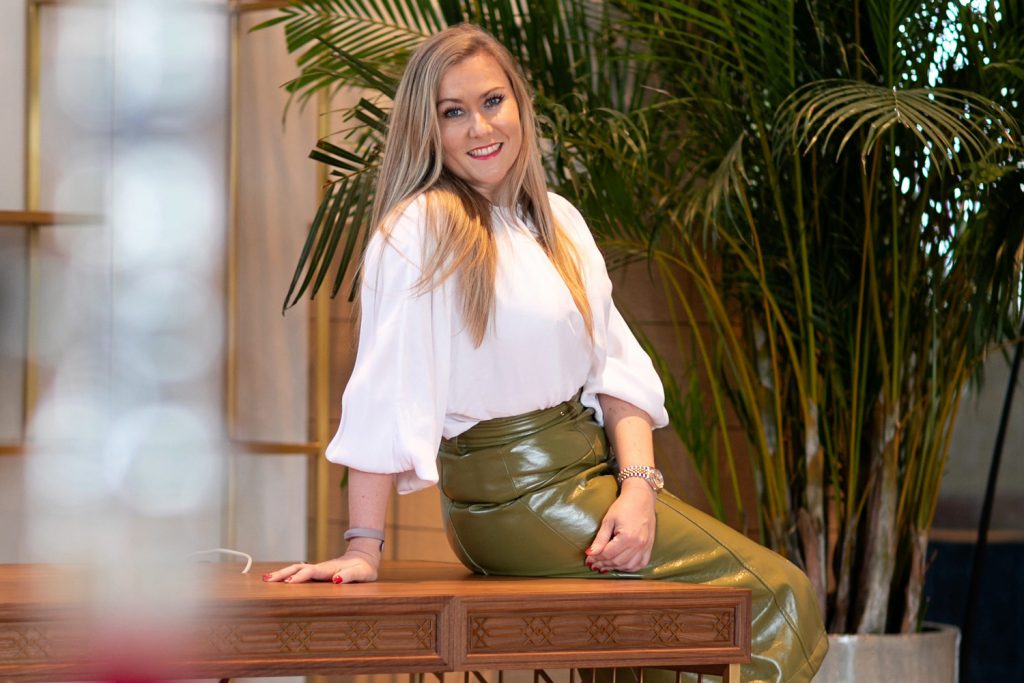
Laura Eggleton, the hotel’s general manager noted: “The guests working from our hotel first of all can expect a portion of inspiration from over 200 artworks on display. For the most curious, we even offer art tours with our very own art manager, so remote working won’t mean a boring day – it is always fun and an endless discovery at Hotel Indigo Dubai Downtown.
“Already at the beginning of 2022 we’ve noticed the trend of creative community migrating from the colder countries to Dubai and looking for the business opportunities. With new easier working visa processes, we see this trend only increasing. As a hotel, we offer flexible long-stay packages and attractive corporate rates. The design of our rooms makes it comfortable and convenient for the guests to set up their working stations, and the artistic interiors provide the perfect background for their Zoom calls.”
Serving locals
Harking back to the discussion of community hubs, Rove Hotels’ Paul Bridger said his hotels’ working spaces really help create a sense of belonging for those who live nearby. He explained: “Overnight visitors aside, Rove Hotels have become a second home to a lot of local entrepreneurs, freelancers and remote workers that utilise our spaces to work from, meet and build their network. So our properties don’t just aim to cater to international travellers but also to the local community and its needs.”
Kerten Hospitality is a prime example of this aim, a mixed-use operator which is as much a working space brand as it is a hotel brand.

Wafik Youssef, the company’s COO, said: “The key is the dynamic link to the local community in a city. There is a similar trend in lobbies that have multi-purpose spaces curated to meet the demand of a new generation of travellers who seek a new type of accommodation. One that allows them to blend business with pleasure from a single location. While offering a variety of cuisines, ease and flexibility of services as well as a family-like atmosphere in which things get delivered.
“Our hotels offer a place to stay, a place to work, to socialise and a community to meet and get enriched by all in one.
“We are turning our lobbies into inspiring, work-friendly zones for both our guests and the surrounding neighbourhood of locals as well as international travellers.
“Stepping in the lobby, feels like entering someone’s living room with staff, guests and residents exploring this new age of hospitality.”

So what does the workation market look like? It’s buzzy, it’s vibrant, it’s an engine for creativity. The modern-day worker does not want to be chained to their desk, they want to be able to open their laptop, then go admire some art, go outside, then laugh with their friends. This doesn’t harm their productivity either, hotels are there to help nurture an increasingly creative workforce
Eggleton is general manager of the first Hotel Indigo in the region After a stint in the UK as general manager of the Holiday Inn Express, she became IHG’s first female general manager in the Middle East in 2015 in Oman.