

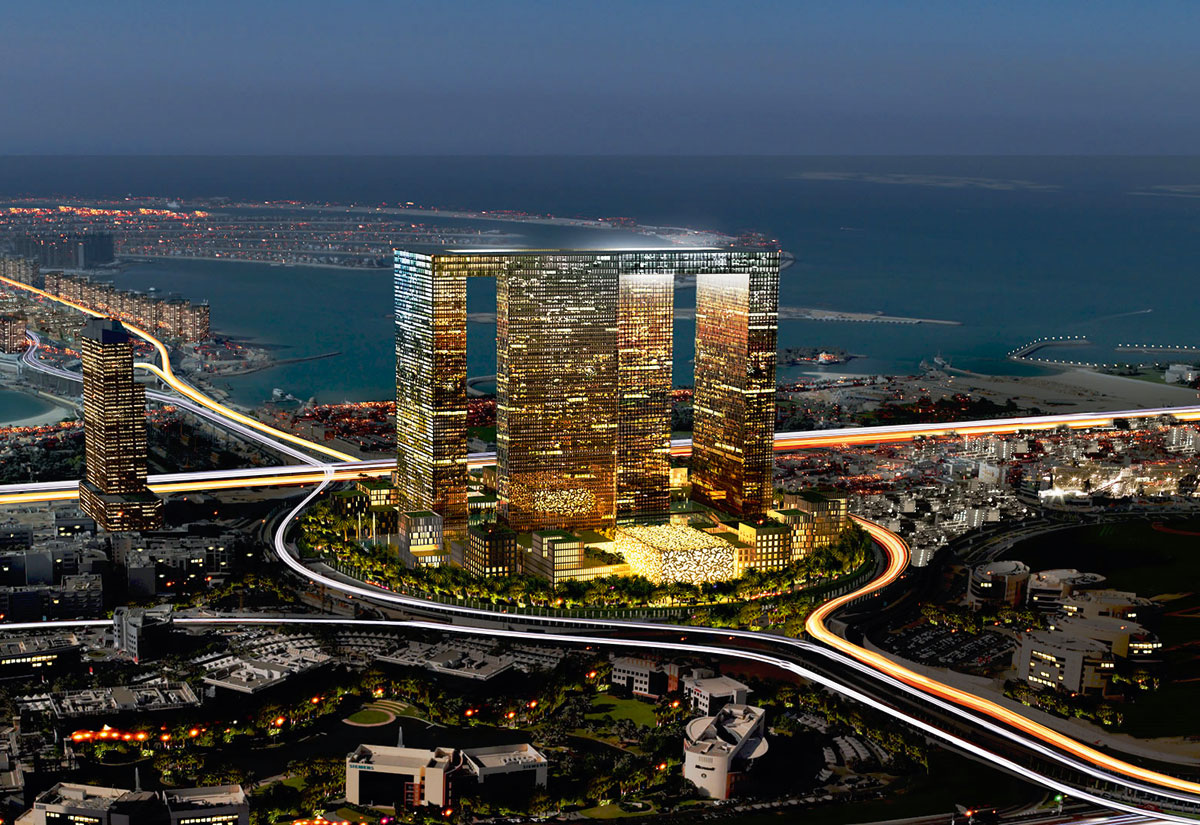
The Dubai Pearl site is one of the last prime development spots in modern Dubai, according to leading global real estate firm Knight Frank.
The US$10 billion project was never completed and the unfinished buildings are now being demolished.
The site has reportedly been taken back by authorities with a new price tag for any willing investor.
Knight Frank’s head of research Middle East Faisal Durrani said any investor will have one of the emirate’s prime spots on their hands.
Talking to Hotelier Middle East, Durrani explained: “Between 2009 and 2014, there were nearly 500 residential transactions at Dubai Pearl, worth nearly AED4.8bn, with 2009 alone accounting for about 80% of all sales.”
Durani said the changing landscape of Dubai since Dubai Pearl was first mooted means the space is now in a better place for development than back then.
“The site, which has seen multiple reincarnations, now finds itself located in the heart of New Dubai, on the doorstep to what is arguably the most famous island in the world – Palm Jumeirah – and it also benefits from pre-existing transport infrastructure, making it a prime site in the city,” he added.
With most of the existing, busy parts of the city already filled with towers, malls, hotels and more, Durani said the area, next to Dubai Media City, is now one of the few plots left to build upon.
He said: “Indeed, with most of Dubai’s most sought after communities now almost fully built out, the emirate is running low on prime development sites. Any plans for a revival of the site will go a long way to alleviating the drought of development sites”.
What is Dubai Pearl
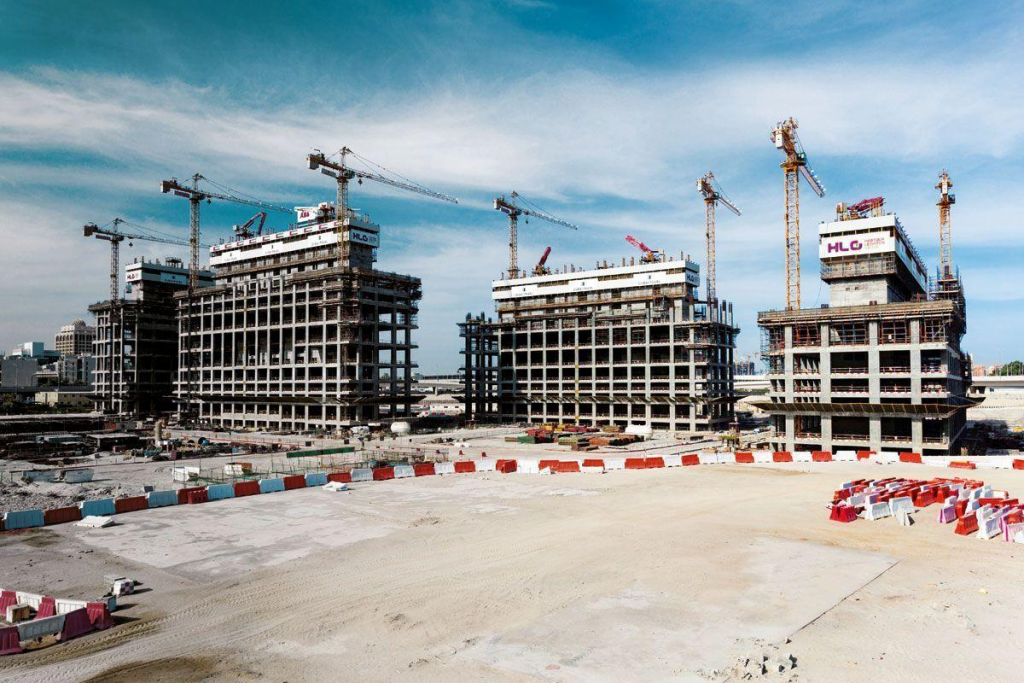
Dubai Pearl is an on-again, off-again US$10 billion mega-project that was first unveiled in 2002. It was first paused in 2006, before being bought from Qatar’s Omnix Group a year later by Abu Dhabi-based Al Fahim Group. Then, in 2008, it came to a stop once more.
The Dubai Pearl masterplan involved four towers based around a large podium, complete with 1,490 apartments, seven five-star hotels, over 60 restaurants and a 1,600-seat theatre.
The floundering development has been a magnet for cash-rich investors and operators ever since work ground to a halt.
The scheme was to be financed by off-plan sales and funds provided by the Al Fahim family and others. In 2008, the investment arm of Dubai International Financial Centre (DIFC) planned to buy US$800m of space within the project but quickly backed out.