

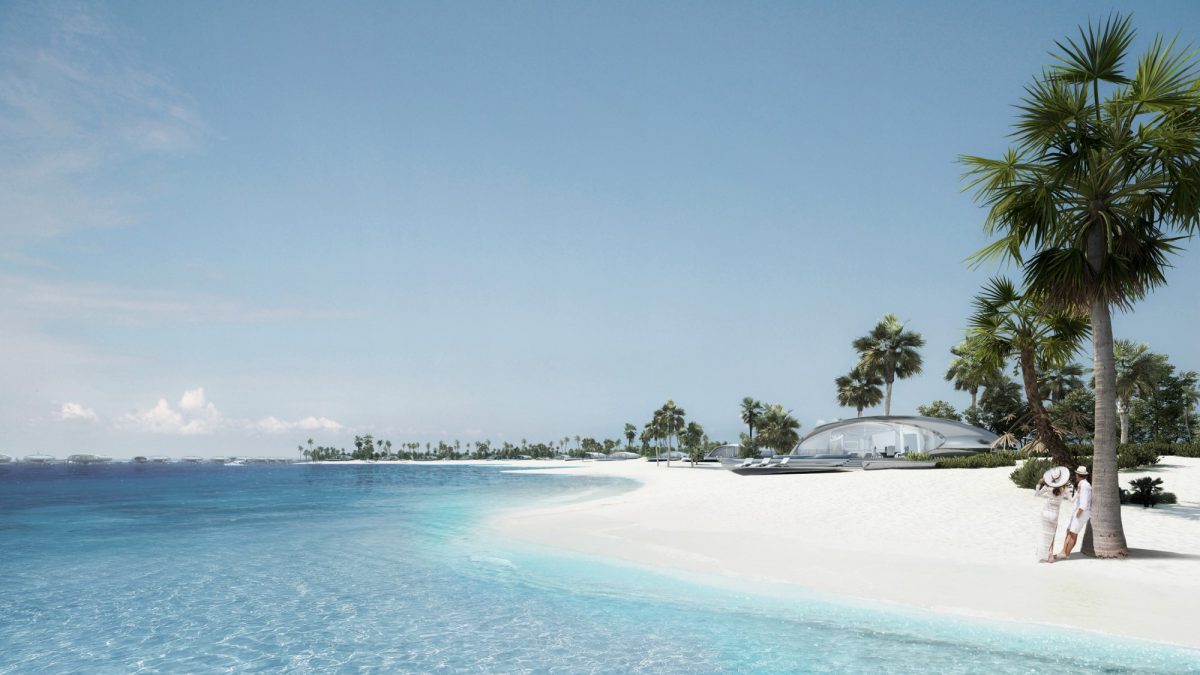
Set to open in phases over the next decade, visitors to the Red Sea Project will be able to check-in, and check-out the first phase in 2022, showcasing a array of experiences, all while celebrating and protecting the natural environment.
Here’s seven things to know about Saudi Arabia’s Red Sea Project.
It’s home to more than 90 islands

The destination is being developed over 92 islands, spread across 28,000 sq km of prime land on Saudi Arabia’s west coast, covering mountain canyons, dormant volcanoes and ancient heritage sites. In phase one, visitors will be able to explore five developed islands and two inland sites, while upon completion in 2030, no less than 22 islands and six inland sites will welcome guests.
Red Sea Project visitors will be able to jet in to a dedicated airport
Eco-friendly Red Sea International Airport, due to open in 2022, is expected to serve an impressive one million tourists by 2030, catering to both international and domestic visitors.
Year-round sunshine
The average summer temperature is 32 degrees, while the island archipelago averages 360 days of sunshine.
The dolphin-shaped Shurayrah island will be the central hub

At its core will be Coral Bloom, where guests will enjoy nine different experiences on a single island: Dunes, The Trail, The Coves, Coral Pavilion, Reef Villas, Nature Reserve, The Club, Golf Course and Luxury Village. Shurayrah island will be home to a total of 11 luxurious hotels.
There’s a huge focus on regenerative sustainability
The Red Sea Project is being developed to the highest sustainability standards to not only preserve the destination’s natural beauty but enhance and regenerate it for generations to come.
Home to 50 hotels and resorts

As well as 11 hotels on the central Shurayrah island, Sheybarah island will feature overwater villas and restaurants, while the desert resort of Southern Dunes is one of two inland locations at the Red Sea Project. But as well as serving as ultra-luxurious resorts for guests, hotel designs have been careful to be respectful of the fragile environment, taking a ‘light-touch approach’, to ensure minimal impact on the biodiversity across the islands.
The projects will be powered by 100 percent renewable energy
The Red Sea Project provides a unique opportunity to establish a design approach that produces less waste, while also creating environmentally responsive buildings. A first of its kind renewable energy project of this scale, there will be no connection to the national grid.