


Red Sea Global is developing AMAALA as a year-round yachting destination.
Located on Saudi Arabia’s northwestern coast, the project is positioned as a warm-weather alternative to Europe’s seasonal sailing circuit and is scheduled to host the Grand Finale of The Ocean Race in 2027.
The Red Sea has historically served as a maritime route for trade, exploration and cultural exchange. AMAALA is building on this legacy with the development of Triple Bay Marina, which will provide 116 berths for yachts of up to 140 metres, alongside the AMAALA Yacht Club designed by HKS.
The marina will host regattas, accommodate superyachts and provide facilities for leisure sailing. Complementing these plans is the AMAALA sailing academy, which will focus on training and developing future generations of sailors.
Environmental considerations form a significant component of the development.
The Corallium Marine Life Institute, also located within AMAALA, will function as a global centre for research and education. Its stated target is to increase biodiversity in the Red Sea by 30 percent by 2040, combining scientific study with conservation practices.


AMAALA’s international profile is currently being strengthened through competitive sailing. TEAM AMAALA, skippered by Swiss sailor Alan Roura, will compete in The Ocean Race Europe 2025. The campaign reflects the project’s alignment with the values of endurance and teamwork.
In 2027, AMAALA will host the Grand Finale of The Ocean Race, marking the first time the event’s round-the-world challenge concludes in the Red Sea. Through this, they aim to place the destination on the global sailing calendar and expect to attract significant international attention.
AMAALA is designed as more than a sailing venue. By combining year-round conditions, large-scale marina infrastructure and long-term environmental commitments, the project aims to create a framework for luxury travel and maritime activity in Saudi Arabia.
What we know about Red Sea Global’s progress so far

Red Sea Global (RSG) is a Public Investment Fund (PIF) company and vertically integrated real estate developer with a portfolio spanning tourism, residential, infrastructure, transport, healthcare and services.
Its destinations include The Red Sea, which began welcoming guests in 2023; AMAALA, scheduled to open its first phase in 2025; and Thuwal Private Retreat, which opened in 2024.
RSG is also responsible for refurbishment works at Al Wajh Airport, including upgrades to the existing terminal and the development of a new international terminal.
AMAALA is designed as a luxury wellness and yachting destination spanning over 4,000 sq km. The first phase, due in 2025, will feature eight resorts totalling 1,470 keys. Over the longer term, AMAALA is planned to include more than 30 hotels, 4,000 rooms, 1,200 residences and supporting retail, dining, wellness and cultural facilities.

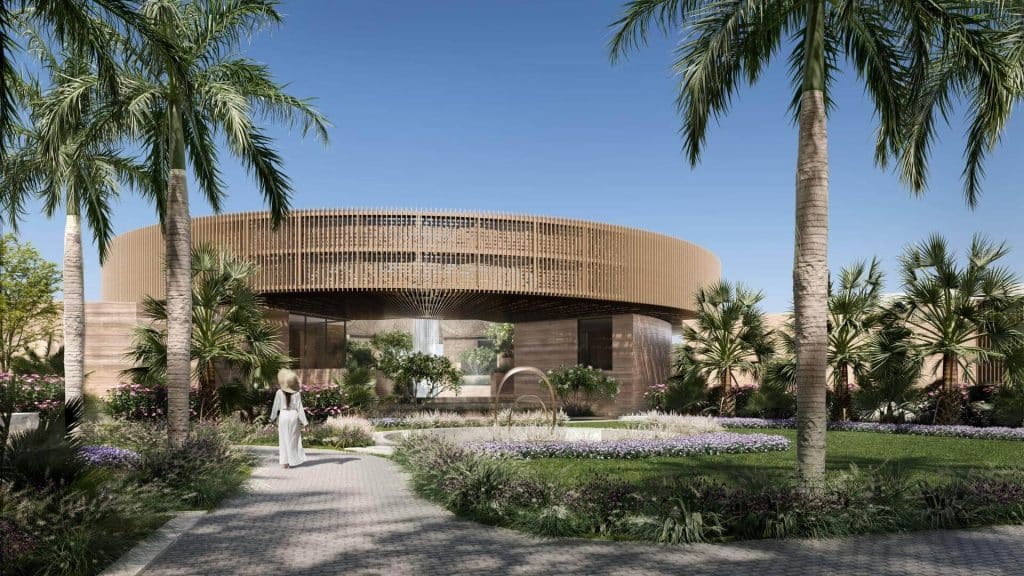


RSG’s recent progress has focused on Triple Bay, AMAALA’s flagship development.
In August 2025, a Services Framework Agreement was signed with Enviro, part of Tabuk Investment and Tourism Company, to provide integrated facility management across hospitality assets, wellness centres, residential clusters and public spaces.
Earlier in 2025, Red Sea Global confirmed that Nammos Resort AMAALA would join the first phase, comprising 110 guestrooms and 20 branded residences, adding to a line-up of eight resorts.
Other properties under development include The Ritz-Carlton, AMAALA, announced in 2024, which will feature 391 guestrooms overlooking the marina and Hijaz mountains. Alongside partner resorts such as Rosewood, Six Senses, Four Seasons, Equinox, Jayasom and Clinique La Prairie, these projects mark a significant advancement in Phase One delivery.
Beyond hospitality, construction is progressing on key assets such as the AMAALA Yacht Club, the Corallium Marine Life Institute and Triple Bay Marina. Infrastructure works have included the completion of the marina basin flooding, ongoing utility installations and the rollout of roads and landscaping.
Upon completion, AMAALA will operate on renewable energy and integrate conservation measures, aligning with Saudi Arabia’s wider sustainability goals.