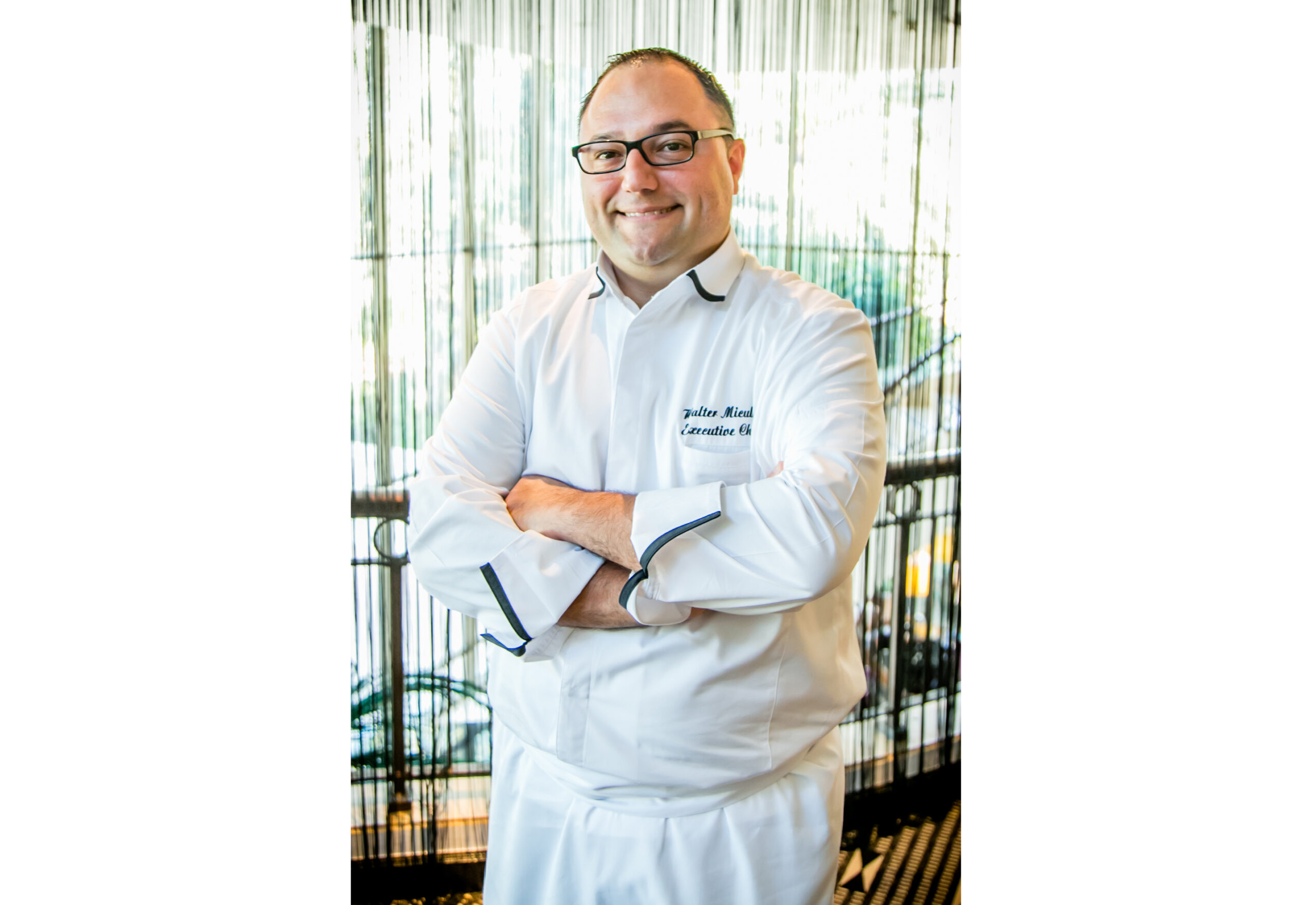
The emphasis for Hilton in Dubai, Makkah and Jeddah is in the focused service sector, and brands such as Hilton Garden Inn and Hampton by Hilton are “less risky to develop” according to Carlos Khneisser, VP development Middle East and North Africa for Hilton Worldwide.
Khneisser spends some time with Hotelier, before he jets out of Dubai on business. He tells Hotelier: “I believe there is a great potential to grow our brands in cities like Dubai, Makkah and Jeddah, especially in the focused serviced sector — with Hilton Garden Inn and Hampton by Hilton. There is a large appetite for those hotels, as they less risky to develop, and the time developing those brands are quite short.
“Subsequently, our full service brands are quite matured in the aforementioned markets and we are looking for a different segment in those markets which addresses the global demand,” he says, maintaining that Hilton continues to look at the GCC markets and the wider MENA region keenly, provided those markets offer strong demand generators.
Delving into the strategy and expansion of the company, Khneisser tells Hotelier that Hilton had a strong 2016, and achieved close to 1.1 million rooms, operating and in pipeline. “It has been a pretty impressive year for us and by the end of 2016 we expanded the company into three entities —Hilton, Grand Vacation and Park Hotel (the real-estate arm). And the three companies started on a very high note in terms of trading. As Hilton we are focusing on the management and franchise model deploying all over the world.
“In our region, 100,000 rooms is a superb achievement which we managed by the end of 2016. I believe the momentum is still on for growth not only in Europe, Middle East and Africa but the rest of the world is gaining as well. We remain very optimistic for 2017 on the back of a successful 2016.”
One of Hilton’s new brand launches for 2016 — Tru by Hilton, turned out to generate strong uptake after its launch. Then the US-based hotel operator launched another brand — the Tapestry Collection by Hilton — earlier in the year. But Khneisser is quick to dismiss any immediate announcements for the region with both brands.
He says: “The Tapestry Collection has been launched in the United States, and we want to make sure that we cover ground in the USA before we expand the brand outside the US. And this is our approach with most of our brands: when we launch a brand we make sure it is trading successfully in the US market and then slowly bring it outside to Europe, Middle East and Asia.”
“It’s a similar case with Tru [Tru by Hilton], we launched on Janaury 1, 2016 and managed to sign 400 deals in one year. And, the moment we believe there is enough mass for Tru by Hilton to be exported outside the US, we will make sure we do so. In the meantime we want to make sure this brand trades successfully and is well established in the country that it was born in,” he says revealing that currently 10 out of 14 brands under Hilton’s stable are present in the region.
Hilton introduced its Curio Collection brand to the region, with its first hotel opening in Doha, Qatar towards the end of 2016. Another property is Dubai-bound and is currently under development that’s scheduled for a 2018 opening. “When we decided to launch Curio by Hilton Collection we found that there is a great potential for independent hotels that are trading, and are in good shape but not very successfully. And, those hotels that we have identified… if they joined the Curio Collection by Hilton, they would benefit from our commercial engine which gives them access to our loyalty scheme, sales and marketing and RMCC (revenue management centres).
The model is fluid and a Curio property could be born out of a conversion or a greenfield project, Khneisser says.
“We could do a conversion of an existing hotel that is well positioned the same way in which we have positioned Curio. It could also be a greenfield project… because there are a lot of owners who want to build their own hotel that represent their own identity and that’s where Curio comes into play.
“Nowadays owners know they are the ones spending money and hence they feel more involved in the design of the hotel, and along with our expertise we can develop a hotel to represent their identity and at the same time compete in the market while providing something different to what the market has,” Khneisser tells Hotelier.
In terms of growing the company with regards to its partners — the owners — Khneisser believes that an organic approach has long been Hilton’s modus operandi.
“Organic growth provides our shareholders a higher margin as compared to acquiring a pre-defined brand. We would prefer to establish a brand that works along the customer needs, which change every year.
“And hence, the moment we established a brand that tapped in to the right customer needs like – Tru by Hilton, Curio Collection or Canopy by Hilton — we have seen tremendous growth,” he says.
He says it’s all about ‘what’s next and what’s new in today’s market’. “Nowadays customers and owners want something new in the market. And that’s why we like to look at how markets develop every year — and work around establishing brands that meets our guests’ needs,” Khneisser tells Hotelier.
More importantly, Khneisser is proud of the fact that Hilton works with a lot of its existing owners to develop new properties. He says: “If you look at our pipeline, 60% of our new hotels in the region are coming from existing owners. That tells you there is trust, which comes from generating a proper return for owners. We believe in growing with existing partners. It’s faster, easier and more satisfactory for both parties.”
The North Africa region is looking very promising for Hilton as well, and Khneisser says the company has opened a regional sub-division in Morocco to cope with the activity.
“We see a good growth in Morocco; we opened our first Hilton Garden Inn in Tangier, and another one will be opened this year as well. And we signed a new Hilton in Casablanca. We have even opened an office in Morocco to overlook the North African region, and we have assigned a director of development to focus on the growth in these areas. We believe that North Africa has a great potential, especially when you talk about Morocco, Algiers and Egypt.”
“It’s important for you to be close to your clients, in order to grow. You have to be close to your investors and be present on the ground. We have 14 well developed brands, and we want to make sure our brands develop properly, be it in North Africa or anywhere else,” Khneisser says, adding that Cairo and the Egypt market is rallying back as its hotels in the country closed on “a very reputable occupancy compared to last year”.
“Indeed, it is coming back, slowly but surely. The market is gaining; in order for ADR and occupancy to grow as compared to previous years, you need to have the stability and trust in the market. In Egypt, we see this coming, but slowly,” he says.
Khneisser also speaks about Hilton’s success with its loyalty programme — Hilton Honors — and the significant contribution it makes towards occupancy. “We now have 60 million members, and it’s almost like a club because they provide us with business worldwide. Hilton Honors contributes more than 51% occupancy through our loyal guests. This is something we look after and a lot of innovation goes into it. We try to be more creative in developing a loyalty scheme that gives a great outcome for our members,” he says.
Hilton Honors also has the full faith of owners, and Khneisser is quick to point it out. “Our owners believe that loyalty drives business, and we have our commercial engines on top of the Hilton Honors programme which provides a significant amount of business to our hotels — corporate deals or the savings’ models that we have in place.
“Owners are keen to know more about these sort of things. We are also investing time and money into our digital technology which is both the booking app and the digital check-in. The Hilton Honors app is downloaded once every eight seconds from the app stores, and the rating of the app is also quite high,” he adds.
Khneisser revisits his initial remarks about the growth of the mid-scale and select service hotel brands.
“If you take Dubai for example — there is still quite a large gap for the mid-scale segment. We opened three Hilton Garden Inn hotels in 2015 and they are all doing above market share, in terms of trading. And we are hoping to open our first Hampton by Hilton by the end of this year, which will be followed by several Hamptons. There could also be another four Hilton Garden Inns coming online.
“The requirement that we look at is aligned with what the market dictates. If we look at Middle East, our luxury segment is still growing. We are still finding the right partners with the right locations and the moment we find the right mix for a luxury type of hotel, we go for it. We recently signed a Waldorf Astoria in DIFC, which is a superb location and equally amazing ownership. And we have waited quite some time to bring the Waldorf Astoria in to this area. This hotel will be opened at the beginning of next year,” Khneisser says, expressing his satisfaction over the proposition of having two Waldorf Astoria properties in Dubai — one on the Palm Jumeirah and the other in an urban environment.
“It’s not like luxury is dead, or there is no growth. You have to be smart when you develop luxury brands and be smart with whom you develop those hotels,” he concludes.