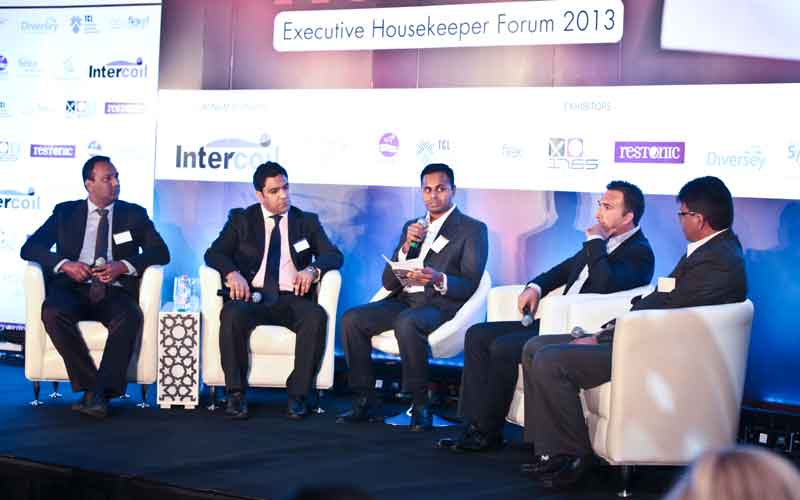
Faithful + Gould and MEAComms hosted a round table discussion on emerging trends and opportunities within the hospitality sector. The experts give us their views on what’s important and what’s up next in hospitality.
The panellists discussed the drivers for growth across the region and how real the opportunities for growth actually are. All panellists felt that there was good reason for optimism, but their reasons were slightly different, as well as the key locations they highlighted.
2020 and 2022 are Big Event years that we’ve heard about ad nauseam, but the impetus they provide for growth in the industry is more than just hype.
Mark Shea, director and head of hospitality, middle east, for Faithful + Gould said: “The biggest drivers now are the mega events: Expo 2020 in the UAE and World Cup 2022 in Qatar. In terms of opportunities, the three- and four-start market is really going to take off. I think the opportunities are real and there is some good reason for optimism.”
John Podaras, partner, Hotel Development Resources, agreed: “The opportunities are real. I see them more in the willingness of governments to commit to spending: particularly in the areas of job creation. We’ve seen tremendous growth in Saudi Arabia, mostly as a result of government spending.”
But perhaps the most positive of the panellists was Filippo Sona, director, head of hotels, MENA region, Colliers International : “When you talk about opportunity, you have to realise that the balance between inhabitants and tourists in the UAE is 11 million tourists to two million residents – no other place is like that. The opportunities are great here.”
But Sona says that Egypt is the place to watch: “Egypt is growing rapidly and the potential for return on investment is great. Residential prices are more than doubling: from [US] $11,000 to $23,000 in six months.”
Sona agreed that a big part of this was the government’s willingness to commit effort and spending, as Egypt’s President Sisi has focused efforts on cutting out red tape and bureaucracy, while still maintaining proper planning.
Emerging trends in hotel design
The design of properties is a hot topic for the industry, particularly with the pressure that the next five to seven years is bringing: get the design wrong and your hotel may be side lined. 80% of construction costs are determined by the design and all the panellists agreed that a more collaborative approach between developer, project manager and client was necessary at design stage.
Bassem Salah, GM for hotels and hospitality, ISG Construction, said: “We’re seeing a lot more in the way of boutique-style branded hotels, which is influencing design. But perhaps the biggest trend is in modular and off-site building of these designs.
The cost-saving impact of modular design and construction is tremendous and is particularly helpful for two- and three-star properties. You can easily build 300 rooms off site.”
Sona said that size does matter and is a key factor in the design trends for hotels leading up to the mega events: “We are seeing a trend for smaller bedrooms – land is becoming more expensive so hotels are scaling down to a smaller, more commercially viable solutions. We are also seeing scaling down of F&B outlets – smaller size of each outlet, plus a trend toward fewer outlets per property.”
Podoras: “Guests are now showing through research that they have moved away from the ‘box room’ and traditional templates to more unique or interesting designs. And boutique hotels – brands like Indigo and Radisson Red – are really capturing that.
Rise in operational costs vs reduction in room rates
Perhaps the most interesting topic of the roundtable was the impact of rising operational costs and what that means for the industry if rates are also reducing.
Our panellists point out that a rise in operational costs isn’t a game-ender: with rising costs, efficiency also rises – people become cleverer with how they work and they start thinking in new ways.
Outsourcing is also becoming a more popular way to get rid of operational costs.
“Housekeeping is a no-brainer,” says Sona, “Because you don’t have to pay for the staff, the utilities or even plan in the building space for laundry facilities.”
He continued: “We have some challenges in this region because of the visa issues – the hospitality industry elsewhere depends on casual and seasonal labour.
“We can’t do that here, so outsourcing is a good way to bridge that gap.”