

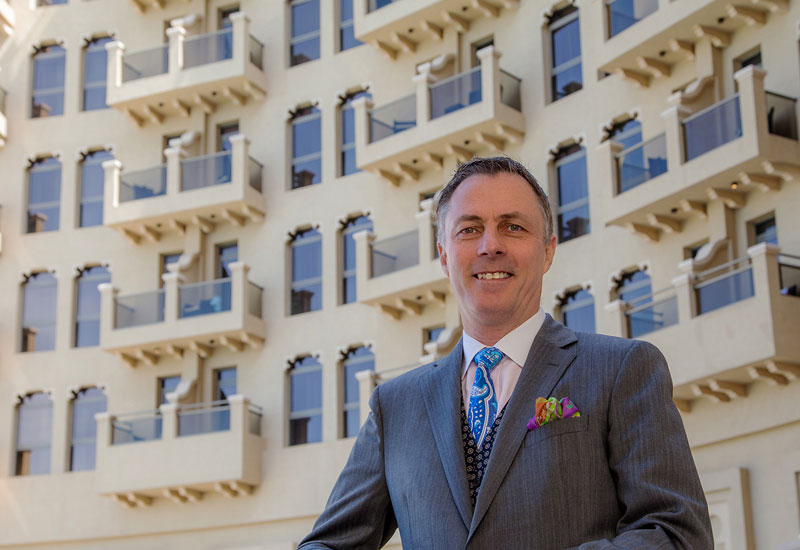
Laurent A. Voivenel, CEO, Hospitality Management Holdings (HMH) shares his hospitality predictions for the year ahead
What is your hero hotel opening in 2015 and why?
We have not one but two superb openings in 2015. The first one will be Coral Muscat Hotel & Apartments that will be our flagship property in Muscat. Coral Muscat Hotel & Apartment is conveniently located in Qurum, at a 20 minute drive from Muscat International Airport and enjoys close proximity to the diplomatic and commercial city centre.
The deluxe four-star property is part of a shopping arcade and multiplex and features 88 beautifully furnished apartments, including 56 two-bedroom & 32 one-bedroom units. On-site will be an international all-day-dining restaurant, pool deck and lounge, terrace lounge, superb meeting venues for small to medium sized conferences as well as excellent leisure and fitness facilities such as a fully-equipped gymnasium, aerobics room and swimming pool.
Our second spectacular opening will be Coral Al Madina Hotel in KSA. The luxurious 5-star hotel has been conceived to be a prestigious address for discerning travellers to Madina and is located just across the road overlooking the Holy Mosque. Featuring 400 plus rooms and suites, Coral Al Madina Hotel is spread over 10 floors and five basements. Included in its extensive facilities are three superb restaurants, lobby lounge, luggage room, shopping arcade, fully-equipped gym and spa, two state-of-the-art meeting rooms, business centre and large parking space as well as helicopter landing site.
What are your recruitment priorities for 2015?
The Middle East hotel industry is already a destination of choice for talented people. However, there are various factors such as the big number of projects under development and rising cost of living especially accommodation that are making the recruitment landscape extremely competitive. It is getting quite challenging for employers to find and retain experienced staff within the available budgets.
Some of our priorities in terms of staffing in 2015 are to appoint the right people for our upcoming hotels and equip them with the right tools and training to offer the best “guest experience”. At HMH we are eager to develop a skilled and professional workforce and at the heart of it is our commitment to serving our guests better as well as giving our associates the right environment to grow in their careers.
In 2014, the onslaught of competition, balancing stakeholder requirements, and the decline in traditional markets such as CIS were reported as major challenges for GMs. What will be the major challenges for GMs in 2015?
We expect 2015 to be nothing more drastic than 2014. CIS will bounce back very quickly. However, if all rooms planned were to reach completion supply growth is likely to outpace demand growth in the short term putting a pressure on room rates and occupancies.
On the other hand, talking about Dubai massive growth of the aviation industry particularly low cost carriers, increased airport capacity, new leisure attractions, development of business infrastructure, technology optimisation, digital and social media marketing, high level of safety and security etc., are all driving the demand for the destination pushing up visitor numbers.
Over two thirds of the world’s population lives within an eight hour flight from Dubai and one third lives within four hours. Let’s put it this way, there is sufficient business out there across the different segments to sustain existing and upcoming hotels, but we will all need to work harder to get it.
Interview continues on next page…
What new/existing markets will be most important to target next year and how will you do this?
Emerging source markets such as India, China and Africa have got a rapidly expanding middle class. Growth of low cost carriers has opened this segment up and Dubai with its fabulous tourism attractions and safe environment is considered a venue guaranteed for families looking for quality affordable holidays.
At HMH we are ideally placed to attract this market with our diverse brands catering to varied segments from budget to luxury. Being the first hotel chain in the Middle East to offer alcohol-free safe environment, we are a family-friendly group. Our existing portfolio features superb properties located in some of the most desirable destinations across the MENA region.
In addition to the perfect accommodation and F&B offering, we have got some fabulous promotions tailored to meet the needs of mid-market travellers and families. These are promoted through strategic marketing campaigns across the various platforms including extensive digital, tie up with key whole sellers and affiliates and trade exhibitions, etc.
Diversification of the hotel landscape was a big topic in 2014. How will this trend materialise/ develop in 2015 and beyond and how are you targeting price-conscious customers?
If Dubai is to draw 20 million visitors annually by 2020 it will need to diversify its hospitality offering in order to widen its appeal to growing middle class worldwide. So there is an urgency to accelerate the development of mid-market hotels in order to reach the right mix of accommodation available in the market.
Investors must broaden their horizons and consider budget hotels like HMH’s ECOS Hotels as the hotel market gets stronger. It is fast growing and highly competitive segment that will reap rich dividends. And we expect to see more announcements for mid-market hotels in 2015.
ECOS Hotels is a ‘no frills’ B & B brand that ties together a unique economic and ecological concept. It is a smart choice for investors offering strong investment opportunity because of lower construction and operating costs and quick and high return on investment.
How will the trend for independent hotels evolve in the Middle East in 2015 and beyond?
Dubai no doubt presents the most fertile ground for any new hotel development or concept. There are currently more than 88,000 hotel rooms in Dubai which may reach 160,000 by 2020. So definitely, there is plenty of room to grow in this market. Dubai has managed to continuously evolve itself as a tourism destination and independent hotels add to its overall offering. Therefore, we expect the trend for independent hotels to continue in the Middle East in 2015 and beyond.
Interview continues on next page…
How do you see average rates, RevPAR and other key indicators in 2015 as more supply comes on to the market?
The Middle East is doing very well in relation to the rest of the world. If one looks at RevPAR growth, according to STR Global data, the Middle East grew at 5.5% for YTD July 2014 while Asia Pacific grew at 1%, Europe 4.4%, North Africa 3%, Southern Africa 6.3%, North America 7.7%, Central America 3.5% and South America 17.1%.
The region’s contribution to GDP at 2.5% is slightly below the world average of 2.9% but is set to increase by on average 4.6% per year over the next 10 years whereas the world average growth is expected to be 4.2% with only Asia Pacific, and Africa growing at a higher rate. In the long term it is a very promising scenario. As more supply comes on to the market, we may see a temporary dip in average room rates, RevPAR. But it will swing back very quickly as demand surges ahead.
What trends will we see in the serviced apartment sector?
Once the domain of business travellers, serviced apartments now offer a stylish and spacious alternative to hotels, ideal for both short and long-term guests and are often preferred by GCC travelers – both families and corporate. Our business mix for serviced apartments is pretty balanced and in line with the industry statistics.
Are third-party managed F&B outlets the future for hotels or are in-house concepts still holding their own?
Third-party managed outlets are no doubt gaining in popularity and will continue to grow. There are multiple reasons for this and primary among these are reduction in operation costs plus guaranteed revenue. These should not be seen as competition rather they complement the in-house concepts. Depending on the product and location, the ratio of in-house outlets to outsourced could be one for three.
What is the significance of partnerships in terms of retail/ attractions/ F&B and local experience for hotels?
Travellers today are very savvy and always on the lookout for more. It is always a value added proposition for tourists when you offer multiple benefits as a package deal. Dubai has developed very well over the last two decades and has multiple demand drivers that has positioned it as a leading leisure and business destination globally. Looking ahead it is only getting better with the city adding more new attractions such as branded theme parks and shopping malls, etc. Strategic partnerships in terms of the various local attractions will continue to grow.
What further support does HMH require from the DTCM? How do you see classification systems evolving in 2015?
Here in Dubai we are extremely lucky to have a very professional and efficient system. Dubai Department of Tourism and Commerce Marketing along with their counter parts in other emirates have been doing a terrific job. What is wonderful is that the classification system continues to evolve and adapt with the changing needs of the industry that in turn has helped the destination to achieve the highest standards.
What are the major trends in sustainability and CSR in the Middle East hotel industry?
The hospitality industry as a whole is getting increasingly aware and committed to working towards a healthy environment – cared for and enjoyed by the whole community. Sustainable construction, water and energy efficiency, recycling and reuse, pollution and waste control, are just some of the common environmental practices being seen in the Middle East.
At HMH we have an unwavering commitment to conservation of environment. It is integrated into our corporate strategy and day-to-day business operations. We were the first in the Middle East to conceptualise an ecological and economical chain of hotels with ECOS Hotels.
Over the years we have formed strategic partnerships with industry and government agencies to devise solutions to environmental problems that are both economically viable and environmentally beneficial. In keeping with our environmental policy, we have chalked out an aggressive target to cut down energy and water consumption by 20% across all hotels under the group by 2020.
Interview continues on next page…
Digital marketing is increasingly occupying a higher chunk of budget. What are HMH’s priorities in terms of digital for 2015?
We operate in a highly digitalised world and in order to achieve the right results digital marketing is vital. Digital marketing primarily falls under the domain of marketing. At HMH we have identified strategic external partners who work very closely with our internal teams to optimize our presence on the web and widen our reach.
Continuing our investment in digital technology, we recently launched www.hmhhotelgroup.com the multi-brand, mobile-friendly reservation website for HMH that is now available in Arabic too. The development of the site is part of our strategy to reach the high growth Middle East market while building direct interaction with Arabic speaking guests. The new portal allows Arab customers around the world to book stays at any of our properties. It will help to tremendously bolster performance of hotels within HMH network.
What are your priorities in terms of IT infrastructure and technology and for 2015 ?
Technology advancements are changing our industry at an unprecedented speed and those who tap it will take all. Hence, we decided to invest 90% of our capital expenditure (CAPEX) this year in an all-round IT upgrade that helped us to close the gaps we saw, giving us an enormous edge over our competitors and creating value for our owners, associates and guests.
Right from rolling out a new e-commerce friendly website for better online conversion to embedding the right hardware and software at various levels of operations in order to increase efficiency and compliance of standards, we have put in place some major initiatives. It goes without saying that in doing so our primary objective is to bolster business and profitability at hotels under HMH banner.
Talking about apps, the best apps are those that are simple and user-friendly. In the space of social media, popular blogs do play a very significant role and influence consumer behavior.
How is booking evolving? What is your company doing to maintain profit levels with pressure on rates as higher booking volumes pass through intermediaries?
Bookings are no doubt a subject for discussion every year. All are in agreement that increasingly higher booking volumes pass through intermediaries that are putting pressure on rates. At HMH we are doing our best to diversify our segments. An essential part of this strategy is to strengthen our relations with intermediaries whom we consider our business partners and working together will lead to a win-win for both.
How are loyalty programmes evolving?
Loyalty programmes are a critical aspect of today’s consumer behavior. At HMH we have developed our own loyalty programme that will be launched in the latter half of 2015.
What are the trends in procurement in the Middle East hotel industry?
Corporate compliance to procurement procedures is one way to ensure that we get the best product at the best price which allows us to pass on the savings to owners and customers. The procurement function is becoming more challenging with the opening up of the cheap goods market, which does not necessarily mean good quality. Each company has its own policy to deal with the challenges but at HMH the system in place is making the deviation very difficult for people.
Which locations within Dubai are emerging as tourism destinations?
Talking about Dubai we can see many exciting new hotel locations emerging within the destination such as Dubai World Central, Mohammad bin Rashid City, Bluewaters Island, Dubailand, Dubai Water Canal, Deira Project, The Lagoons, etc.
What will guests be looking for in 2015?
There is a strong and growing demand for mid-market hotels. The growing airline network includes the rise of low-cost carriers, expansion of airport facilities, and the development of Al Maktoum International Airport at Dubai World Central, and expanding middle classes in key source markets are some of the factors contributing to demand of budget and midscale hotels. Guests are increasingly looking for value for money. They seek to have experiences at affordable rates. Hoteliers must offer products that offer ‘non-typical’ or unusual design and experiences at a midmarket price point to capture this market.
Cultural and local experiences was a big topic in 2014. Will this focus on local culture become more important in 2015 and beyond?
Local culture is the DNA of a destination and will continue to attract and drive tourism. Recently, Dubai’s Department of Tourism and Commerce Marketing (DTCM) and Dubai Culture & Arts Authority signed an MoU to unite their efforts in promoting Dubai’s cultural and heritage tourism offering and it is a great step in that direction. At HMH we believe the concierge is the best ambassador of a hotel and will remain so. A great example is The Ajman Palace Hotel.