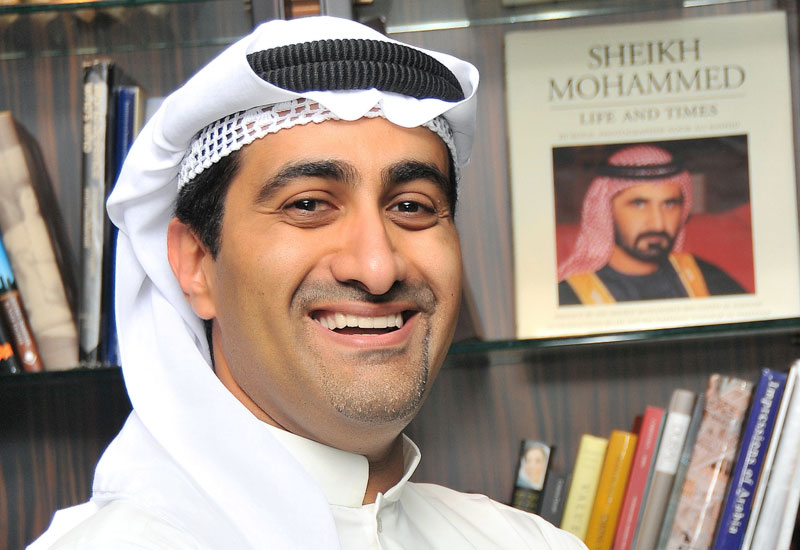
The hospitality industry was once considered a taboo career choice for GCC nationals. However, the perception of the industry is slowly but surely changing, and hotel groups are finally seeking to attract and retain national talent, with local companies leading the way
Nationalisation is a hotly contested topic in the hospitality industry in the Middle East. While some countries set targets for nationals in the workforce, the industry has to grapple with the unfavourable perception local populations have of pursuing a career as a hotelier.
To alter these perceptions, hotel groups have been working with governments and within their corporate offices to develop nationalisation programmes to attract talent.
At Jumeirah Group, which is part of Dubai Holding, recruiting national staff is a priority for the operator. The company’s nationalisation scheme has three core programmes to develop talent at every stage.
These include the Jumeirah National Youth Programme, where candidates under the age of 21 and with less than two years’ work experience join a one-year training course to receive direct training and guidance from senior officers at Jumeirah.
Other initiatives include the National Graduate Management Programme, which allows fresh graduates to join Jumeirah and train in different departments, depending on their area of focus. The recently launched Jumeirah National Future Leaders Programme offers a five-year development opportunity for nationals who wish to pursue a role as general manager.
Abu Dhabi-based Rotana Hotels also has a nationalisation programme called Duroob, which is dedicated to developing the talents of the local population.
Explaining the strategy, Rotana’s corporate vice president of human resources, Joseph Abou Yaghi says: “The programme targets different levels — we target students with an aim to give them an overview of the hospitality industry, then there are those who are unemployed, and also people who are looking at work placements or work experience.
“Depending on which category the person falls under, we work on their career path and development within the organisation. We look at what opportunities we have within the organisation and try to make sure we match their skills and their views with the opportunities that we have and we look at it for not just one single property, but the entire company.”
However, even with nationalisation practices in place, hotels struggle to attract local staff to join the industry due to a number of factors, including pay scales and lack of additional benefits, added to an already existing negative perception of the industry.
Yaghi explains: “There are certain challenges that we as a company can work around and adjust to, but there are certain challenges that are beyond our control. These things might sound minor, but for instance, for Eid, the government sector will give a 10-day holiday for the employees, while the private sector gets only three days.
And those small things, aside from the pay package send the wrong message. This gap has to be bridged. At Rotana we try to address this by recognising the long-serving employees and we give them additional public holidays or vacation days.”
It is a theory supported by Emirates Academy of Hospitality Management’s managing director Ron Hilvert, who says: “I believe the most effective strategy for retention is always to invest in learning and development and to demonstrate the very tangible opportunities for career growth in one of the fastest growing sectors in the world. The unification of public holidays between the private and public sector will also help attraction and retention generally.”
Additionally, some hotel groups have to tackle these issues while trying to recruit nationals to fill government quotas — 32% in Saudi Arabia, 8-10% in Kuwait, 25% in Bahrain, and 60% in Oman. It’s a topic that is heavily debated among hoteliers because of the challenges and opportunities the quotas present.
Speaking at the Arabian Hotel Investment Conference in May this year, Dr Ibrahim Alsini, dean of the Tourism Institute at King Abdulaziz University in Jeddah, championed the quota system for the industry, saying: “I believe in quotas — the pressure encourages the industry to invest in training instead of just hiring from outside.”
Rotana’s Yaghi believes the responsibility should not lie solely on hoteliers. Instead, the local population should be held accountable for increasing the number of nationals recruited.
“I think there should be a certain target that is set for our industry, but it needs to be realistic. And as much as the hotels need to be held accountable, I think those who are unemployed should be held equally accountable.
“There is a database of unemployed nationals — and if you are given an opportunity to work in the hospitality industry, and then you quit the job after two months because you got another opportunity, it’s not right. There should be a certain minimum employment requirement that is expected from the employee.
And this is where I don’t think we still see eye to eye in that regard, so that’s where I would like to see an adjustment to the quota issue,” he says.
“And in countries when you set high targets, there are certain positions that even 50 years from now, culturally, the nationals will not work in those positions. So you have to look at the complete breakdown of manning in the hotel and say ‘you know what — these are the positions, these are where we would like to see nationals’, and accordingly set the quota,” Yaghi adds.
With some operators, however, self-regulation has also helped them set the industry standard for recruitment and training practices for nationals.
Dubai-based JA Resorts & Hotels has been part of Dubai’s Department of Tourism & Commerce Marketing’s (DTCM) Emiratisation Task Force for Tourism since it was established more than 10 years ago. Similarly, Rotana has also set a target for the recently opened Salalah Rotana’s workforce to comprise 90% of Omani nationals through recruitment drives and training programmes.
Retaining Talent
Once recruited, hotels then have dedicated training programmes for nationals to help develop their careers and retain them.
Jumeirah Group’s head of national development Ahmad Mohamed Al Kaitoob explains: “We have a strong focus on developing and retaining our national colleagues. We offer a wide range of training and development courses for nationals at all levels through our dedicated Centre for Learning and Development.
Our training programmes are designed with our colleagues’ career growth in mind and as they move up through the ranks, new training programmes are offered for their personal growth. They may also benefit from participating in DTCM’s Start Programme, which focuses on training nationals about hotel operations.”
The group has enjoyed success with its programme — 12% of Jumeirah’s management team comprises UAE nationals, and 40% of its executive team includes Emiratis.
“There are three key benefits that we offer, which encourage nationals to stay on to build their careers with Jumeirah: the quality of the training and development support that is provided, the opportunities for career development, and the growth of the company, which opens up many future growth opportunities. There is one additional element and that is the calibre of people they work with at Jumeirah,” says Al Kaitoob.
Some UAE nationals at Jumeirah Group are also bound by a contract to serve at the company if they avail of scholarships at Emirates Academy.
Ron Hilvert explains: “The EAHM Scholarship for Emirati Nationals is a scholarship awarded annually to Emirati national candidates who meet EAHM’s entrance criteria and who can demonstrate a strong commitment to the hospitality industry as a career choice.
“For successful applicants, tuition fees and sundries will be covered for the duration of study. However, recipients will be required to work for up to an average of eight hours per week, on projects specified by EAHM.
“Upon graduation, scholarship recipients will assume full time and continuous employment with Jumeirah Group for a period of at least two years.”
At Rotana, Yaghi says the group has introduced a career planning incentive for locals, where, in addition to annual performance reviews, nationals also meet with the corporate team to set a plan for their development.
“Besides the annual performance review that takes place within the organisation, we at the corporate office are going to personally be involved in the career planning meeting for our national members of staff.
“So by mid-year, we will have official meetings — like career counselling meetings — to see the interest of the colleagues who have been with the organisation for at least two years.
“We want to see what they want to do, and how we are going to support them,” Yaghi says.
“We are trying to get them to work on their career progression so we are bridging the gap of benefits, we are also considering that after five years’ service in the hotel, that we may invite a local employee and his family to visit one of our properties.
“These are just some of the ways we are trying to retain national staff to try to keep them, and I think that will take them to the next level.”
While the industry still has a long way to go, Emirates Academy’s Hilvert believes more locals are open to the idea of serving in the hospitality sector.
EAHM’s Hilvert asserts: “I think it is important to remember that the hospitality industry is a young sector in a young country, so it is only recently that UAE nationals have started to consider it as a credible career choice. We are delighted to see the numbers of Emirati nationals expressing an interest in the sector rising every year.”
Tourism Institute’s Alsini also believes there is “a huge change in understanding of working in the hospitality industry”.
“There was a high turnover among Saudi nationals previously, however, now they are more motivated,” he comments.
Jumeirah’s Al Kaitoob concludes: “We have seen a massive change in the mind-set of the new generation of UAE nationals. Many of them are interested to work in hotels, especially with Expo 2020 coming up in six years’ time.”