

Religious tourism is all set to rise in Ethiopia, the CEO of Grand Holidays Ethiopia Tours, Desale Mitiku Asfaw said.
According to Asfaw, “Religious tourism will be one of our greatest success stories in the next decade.” He predicted that as religious tourists are on the rise in the African country,
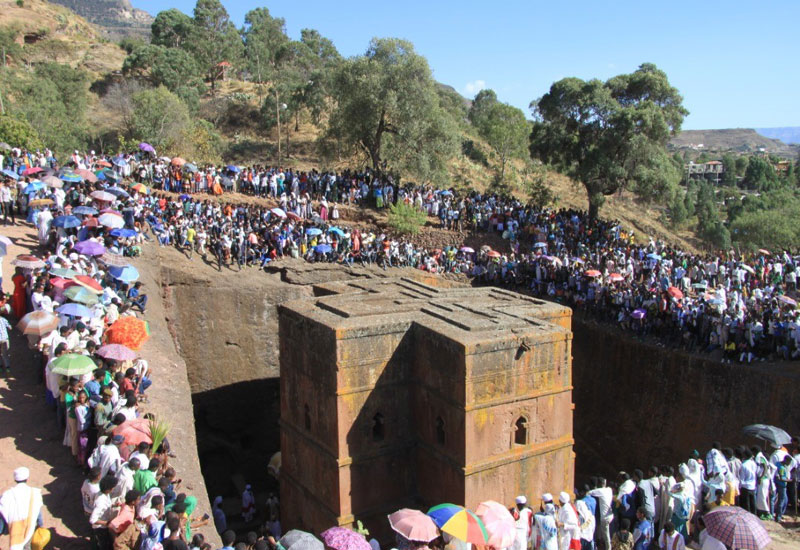
The country is home to a plethora of significant sites. Christians, who make up 63% of the 113 million population, visit Lalibela, which is home to eleven churches. Other Christian spots include the Church of Saint George and the Church of Our Lady Mary of Zion, thought to contain the Ark of the Covenant.
The country also hosts a number of Christianity-orientated celebrations throughout the year.
It is also noted that 34% of the population are Muslim.
Earlier this month the World Travel & Tourism Council revealed Ethiopia’s 2018 tourism sector supported 2.2 million jobs and contributed US$7.4 billion to Ethiopia’s economy, a $2.2 billion increase over 2017.
“Ethiopian religious festivals like Meskel, Ethiopian Christmas, Ethiopian Easter and Timket have become major travel experiences for our visitors,” said Asfaw.
“We find that learning how religion was experienced here in the early centuries in Africa has become a focus for many religious groups, as well as the general touring public. People are fascinated to worship with our Ethiopian congregants, receive blessings, learn about the various regional church crosses, and see how the Bible stories were taught from paintings,” Asfaw added.

