

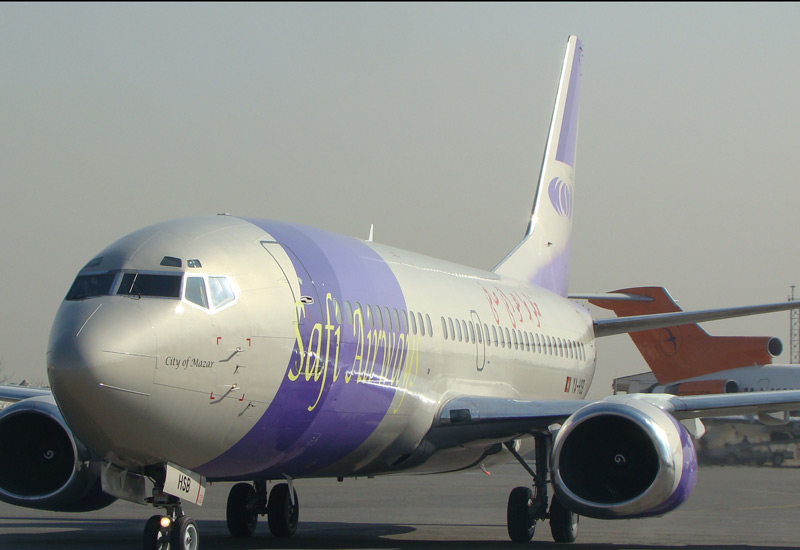
Afghan carrier expands in GCC market in bid to boost sales through GDS systems
Afghani airline Safi Airways has boosted capacity to Gulf destinations and will soon go live on all four GDS systems in a bid to boost sales by at least 10%.
The airline has increased its Dubai-Kabul service from daily to double daily, which now enables passengers to take day trips to the Afghanistan capital and has also introduced a once weekly flight from Dubai to Mazar-e Sharif and another weekly service from Dubai to Kandahar.
In addition, the airline now flies from Abu Dhabi and Kuwait — twice weekly and once weekly respectively and already operates a Sharjah to Kabul service twice weekly.
“The volume in traffic from Dubai to Kabul has doubled over the last 12 months,” said Safi Airways chief commercial officer Claus Fischer.
“I think we will see even more people travelling to Afghanistan now because there is increased political interest and there will be a lot of people moving in from the US and the UK.”
He added that these passengers, who were typically embassy employees, NGOs, aid workers and press were ex-pats who “don’t stay there longer than they have to”, which meant frequent travel — “every six to eight weeks” — from Kabul via the Middle East on airlines such as Safi.
“On the Dubai route, 70% of passengers are ex-pats who have contracts with embassies — mainly the US, UK, France and a little bit from Germany,” he continued.
“The reason ex-pats prefer us is because we have a good on-time performance and reliability record.”
He also stressed that Safi Airways was deemed a “safe” airline on which to travel to Afghanistan as it adhered to European safety standards and employed European pilots.
With this in mind, Fischer also hinted that European routes could be on the cards for Safi, but he remained tight-lipped about the destinations and timings at present.
However, he did highlight that Safi Airways would soon move from Dubai’s Terminal 2 to Terminal 1 — making connections much more convenient — and would also soon operate from Kabul’s brand new international terminal.
Getting the travel trade on board as a stronger distribution channel is one of Fischer’s key aims and as a result, the airline has now gone live on all GDS — Amadeus, Galileo, Sabre and Worldspan.
“There is no other Afghan carrier selling via the GDS,” he said.
“We hope for a 10% increase in passengers as a result of going on the GDS.”
Fischer further explained that rather than sign up to IATA’s BSP system, ticketing would be done with Han Air, which provides airline services.
“They have interline agreements with about 110 airlines including Etihad and Emirates, so we can interline our tickets from day one — that puts everything into perspective when you look at connecting flights. What is important for ex-pats is seamless travel,” he said.