

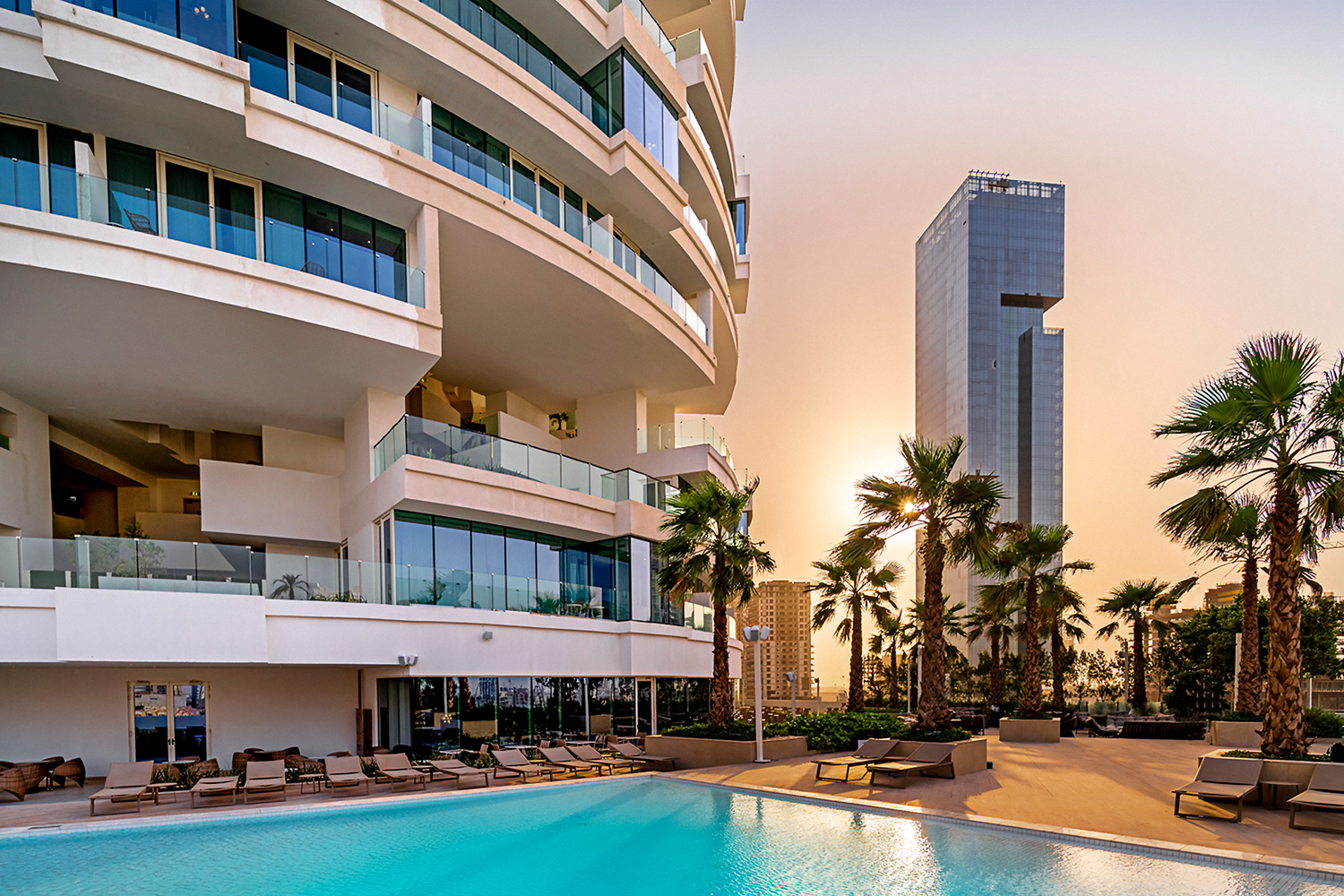
In recent years we’ve seen a whole host of lifestyle hotel brands open in the Middle East, with the UAE becoming a particular hotspot for more art, design and individually focused properties from big chains.
In September the region’s first Hotel Indigo was opened by IHG and soon we’ll see the towering SLS make an appearance in Business Bay. The trend shows no sign of slowing down.
TRI Consulting’s Philippe Vercruysse says that the term lifestyle hotel is a hard one to pin down. The most common elements, he says, are their inclusion of collaborative spaces, cutting-edge design, with a strong focus on technology, and that they are locally connected, experience-led and individualised.
He adds: “One of the key components of a lifestyle hotel is the sense of community both in and outside the property. The creation of an internal community amongst guests is centred around a collaborative space, an area which attracts different types of guests at different times of the day. This work, live, play concept is a common feature in new lifestyle hotels and breaks down the traditional barriers of space planning in hotels.
“Instead of compartmentalised zones like a lobby, restaurant and bar, these collaborative areas incorporate all three and allow for an open and inviting environment for people to meet, socialise and work. In addition to creating a community amongst guests, these areas also appeal to people within the local community. They are increasingly popular with entrepreneurs, designers, and start-ups that prefer to work in an untethered environment or do not have the financial capacity for their own office space.
“This mix of two different groups of people creates an environment that is not witnessed in a traditional full-service hotel.”
He says more and more are opening due to the region’s rising younger population, strengthening tourism sector and saturated upper-upscale and luxury segments in key cities. “With more than 25 percent of the population in the region falling under the millennial generation, coupled with 75 percent of the global workforce expected to be made up with this age group by 2030, investors and hotel operators are focusing on the future with their investment plans.
“If the industry is going to keep pace with changing demographics and traveller needs, investors and developers will need to move away from conventional design and hotel brands and look towards lifestyle orientated midscale properties.”
Christopher Lund, head of hotels for Colliers International says Dubai has led the way with this trend in the past five years, but there is still room to grow across the rest of the country. “There appears to be more space to grow this differentiated sector, especially with regards to three or four-star beach or desert resort properties focused on more price sensitive millennial travellers.
“Across the wider MENA region Saudi Arabia is the most interesting market from a development perspective, with lifestyle hotels expected to play a major role from more typical four-star urban offerings to exciting resort projects in some of the new iconic locations being developed under Vision 2030.”
Radisson has two brands that fall under the lifestyle definition, Radisson RED and properties within the Radisson Collection. Dubai’s first Radisson RED opened earlier in 2020, in Dubai Silicon Oasis.
General manager Stuart Birkwood says: “We offer a playful twist on the conventional hotel stay. Radisson RED is known for its laid-back casual atmosphere, buzzing social scenes and bold design. “We believe that the last thing the world needs is another hotel that plays it safe or takes itself too seriously. Radisson RED is known for its forward-thinking style, strong design ethos, laid back service and contemporary flair. RED stems from a new breed of hotel that rips up the playbook, offering a bold and playful alternative.
“There is a demand from guests wanting to do something different when they travel, be something different and RED delivers them a blank canvas with the freedom to do it. The focus for the consumer has changed as people have complete access to different types of information.
“Guest decisions are heavily influenced by social media, think of some world famous hotels or tourist spots and you probably already know some of the iconic picture spots. People want experiences, not just the bus tour but the best hidden dining spots but also the Instagram-friendly viewpoints and they want their hotel to be part of that. Everyone is a travel journalist now, the rise in lifestyle hotels is a direct response to that.
“During challenging market conditions, you have to stand out from the crowd, be relevant, grab the customers attention and give back.”
Tim Cordon, Radisson’s senior area vice president, MEA, says: “The concept of the lifestyle hotels has been trending over the past twenty years and has gained momentum in recent years, as it has evolved into an established category of hotels. Lifestyle hotels have become the next generation of boutique hotels.
“What was once an individual hotel project is now more and more driven by the chains, as they borrow the best elements of boutiques – small, intimate and modern – and add in advantages that large hotel groups can offer.
“In many cases staying at a lifestyle or boutique hotel is a perfect compromise when you prefer to have your own space, you don’t have the budget to splurge for 5-star hotels but still want something special and sophisticated. Compared to regular hotels, boutique hotels are generally smaller, more intimate, and usually feature a strong artistic sense and focus on design.
Cordon adds that the traditional idea of what makes a luxury hotel is changing in response to the rise of these boutique brands and must work to stay relevant. He says: “Today the overall experience is the second defining characteristic of luxury, it’s about drawing out surprising or unexpected moments. Simply put, today’s concept of luxury is being defined by experiences and memories made. I think luxury brands will always be a part of the industry and same as any other category they will have up and downsides. One of the challenges I’ve witnessed, is making sure that those brands remain relevant to today’s ever-changing consumers, from younger to older travellers and from traditional to contemporary travellers.
Francois Baudin, Accor’s senior vice president, development luxury hotels EMEA, development ME thinks lifestyle hotels need to be relevant to all market sectors, “with a balance between corporate and leisure guests, that is, business events combined with nights out with friends.”
He adds: “All in all, they become a focal point for communities in all age groups that are seeking a vibrant experience, which is attractive not only to hotel guests but also to locals and residents.”
Accor has 12 lifestyle brands which Baudin says provide owners with a unique proposition. He says: “[They offer] the opportunity to invest in boutique curated brands while they collaborate with their maverick founders and CEOs, simultaneously leveraging the strength of one of the world’s leading hospitality firms in terms of distribution, loyalty, procurement, regional expertise and more.”
Three of the most exciting openings coming up in Dubai fall under Accor’s stewardship – the SLS in Business Bay, 25hours in the World Trade Centre area, both due to open in 2021, and Mama Shelter, which is coming to Business Bay in 2023. Baudin says: “Both guests and investors are looking for differentiation, which leads them to seek new products and elevated hotel experiences that are geared towards design, F&B, entertainment and art. It is clear that guest experience equals to higher guest engagement which in turn translates into revenue premiums.
“For this reason, when focusing on guest experience, it is necessary to look into design-led communal spaces with a focus on food and beverage that creates destinations within themselves.” For luxury brands to stay popular, he says the expectation must be met by “the quality of the materials used for interior finishes, the attention to detail through the interior design process and a superior curated service which is authentic, warm and genuine.”
Laurent A Voivenel, senior vice president operations and development, EMEA & India; senior vice president – group human resources and talent development for Swiss-Belhotel International has overseen the opening of a striking property in Kuwait that falls into the lifestyle category.
He says: “The Swiss-Belboutique Bneid Al Gar Kuwait is a trendy four-star lifestyle hotel superbly located across the street on Kuwait City’s beachfront promenade overlooking the beautiful Kuwait Bay.
“It strikes the perfect balance between comfort and style thoughtfully weaving a vibrant spirit for an enhanced and personalised experience. With design that fascinates and experiences that engage, it has been designed to stir the traveller’s soul and elevate the senses. Featuring stylish and spacious rooms and suites equipped with top-notch facilities.
“We are seeing more and more lifestyle hotels because these correspond to the needs of the present generation.
“The baby boomers were more into traditional four and five-star hotels. However, the new generation is looking for different type of lifestyle activities. For them, a hotel is the place to be and caters to their lifestyle and moods.
“They should offer value for money and be accessible, trendy and fun. Moving away from conventional spaces, lifestyle hotels are lively and vibrant while being comfortable and unpretentious. They are far from being stiff.”
Hilton’s Carlos Khneisser, vice president of development, Middle East and Africa, has seen the company introduce a number of lifestyle brands the region recently.
He says: “Canopy by Hilton was launched in 2014 to appeal to travellers wishing to immerse themselves in the culture and history of local neighbourhoods. We understand that travellers are increasingly seeking locally inspired stays and see great opportunity for the brand in the region: Canopy by Hilton made its Middle East debut in late 2019 with the opening of Canopy by Hilton Dubai Al Seef, a contemporary new hotel beside Dubai Creek which offers easy access to the Al Seef promenade and allows guests to explore the area with free bike rentals and/or a buggy service.
“We continue to see fast paced development in the Middle East and look forward to opening Canopy by Hilton properties in Kuwait’s Beneid Al Qar development, at The Avenues – Riyadh and at The Avenues – Khobar. We also expect to expand the brand to Africa with Canopy by Hilton properties in Johannesburg, Cape Town and Casablanca set to open over the next few years.
“We expect more lifestyle hotels to open in the region because we are seeing growing demand from a new segment of traveller who are seeking authentic experiences, comfortable spaces and simple guest-directed service – all elements that lifestyle brands are well positioned to offer. Additionally, our lifestyle brands cater to a broad base of travellers, at a more accessible price point than luxury brands. We have also taken the emphasis off capital-intensive design which has helped create a compelling investment proposition for owners; we have created the brands in such a way that it is easy to build or convert a property.
“Our portfolio also includes three distinct luxury brands – Waldorf Astoria Hotels & Resorts, LXR Hotels & Resorts and Conrad Hotels & Resorts. Each of these brands performs individually in its market, and we work with owners to determine which brand is the best fi t for their project. While Waldorf Astoria creates unforgettable experiences for discerning travellers, LXR offers singular service in alluring locations and Conrad focuses on smart luxury – all elements that are still very much in demand among luxury consumers. We continue to see strong interest for luxury branded hotels and resorts, recently announcing the opening of Conrad Abu Dhabi Etihad Towers in the UAE’s capital.”
One of the main disruptors in the UAE’s hotel scene has been FIVE, originally on Palm Jumeirah but more recently joined by the Jumeriah Village Circle property on this month’s magazine cover.
Aloki Batra, FIVE Hospitality’s CEO says: “Lifestyle hotels connect with their guests through gourmet dining, lifestyle experiences, music and fashion, with rooms being only the beginning of the experience. In December 2019, FIVE Hotels & Resorts hosted the luxe lifestyle festival LUVYA, featuring some of the world’s biggest headline acts including Lost Frequencies and Craig David, plus the world’s number one DJ duo Dimitri Vegas and Like Mike.
“FIVE Hotels & Resorts redefine the concept of a luxury lifestyle brand, being a bucket list hotspot for tourists and residents through its collection of signature restaurants, bars and nightclubs, as well as weekly events and experiences. From beachside sundowners to vibrant brunches and the biggest DJ sensation taking the decks, FIVE Palm Jumeirah and FIVE Jumeirah Village provide guests with the luxury of choice.
“The hospitality industry is one of the most competitive markets and in order to stay relevant, brands need to connect with their customers. Music has become an integral focus point for us, connecting customers from around the world despite differences in language and culture. FIVE Palm Jumeirah and FIVE Jumeirah Village host more than 25 weekly events.
“Even abroad, guests can stay in touch through our social media channels covering all events, the latest celebrities staying with us and the best offers to plan their next holiday with us. In 2019, FIVE Hotels & Resorts launched FIVE Music. Through Spotify playlists curated by the world’s best DJs and our weekly radio show FIVE Radio, customers around the world can now enjoy the FIVE lifestyle.”
Dimitris Manikis, Wyndham’s president and managing director for EME thinks brands like Wyndham’s TRYP help to bring the energy of the world’s most popular destinations into the properties themselves.
He says: “Despite a strong demand for mid-market accommodation, only limited mid-scale and economy hotels are entering the Middle East, as luxury hotels continue to dominate the present and future accommodation supply. However, if you look at travel patterns, people are looking for experiences, value, and accessibility above all else. We see tremendous opportunity for these segments – in particularly for lifestyle hotels – to cater to a more diverse type of traveller.
“Lifestyle brands offer highly customisable experiences at an accessible price point. They are a great fit for those travelling for a shorter time and looking for authentic insights into the local area and the community. Lifestyle brands are able to offer this, while also being approachable from a budget perspective for a variety of different types of travellers.
“What is great about the Middle East is that it has something for everyone. Dubai, for instance, went from a desert to a beach destination, and has since grown into a retail and entertainment hotspot – the lure of luxury will always remain as one of Dubai’s unique selling points – but it is important to remember that there are gaps in the market, and we are seeing demand for mid-market hotel options increase as traveller needs continue to evolve and as the global middle class discovers what Dubai has to offer.”
As one of the most recent hoteliers to open a lifestyle hotel, Hotel Indigo GM Laura Eggleton says it’s the connection to the city they’re staying in that people are looking for. “With its connection to the local neighbourhood and telling the story of the Dubai Creek through art and design, Hotel Indigo Dubai Downtown sets the stage for the creative, artistic, and vibrant, seeking a space of individuality, surrounded by an atmosphere that taps into their personality, which tells a compelling visual story.
“The individuality and its connection to the local neighbourhood, is what uniquely positions the Hotel Indigo brand versus other lifestyle hotel brands.
“Luxury hotels will always hold relevance and importance, but luxury has moved on from when it was all extra material and opulence. Luxury now, in my opinion, feeds off the ability to evoke emotions and create lasting memories – something the Hotel Indigo Dubai has the ability to do very well.
With an Andaz hotel in Dubai and Abu Dhabi, Hyatt area vice president and general manager of Andaz Capital Gate is well positioned to comment on the trend.
He says: “There is a demand for new ways of experiencing hotels as an alternative way to the traditional hotel. People are looking for something new. These hotels look to provide individually cultured experiences rather than standard hotel services. In this way guest stays can be more relaxed and more personalised.
“We believe that lifestyle does not trade off against luxury. A lifestyle hotel can still offer luxury. These days luxury means different things to different people. Lifestyle hotels address this in different ways and have a wider opportunity to discover what each person values as luxury and then creating an experience to fulfil it in a very authentic way.” It seems that, though hard to pin down to one specific kind of property, lifestyle hotels are only going to grow in popularity.
In order for them to be successful, they must harness something of the individual experience for each guest and offer something intangible. great memories.
Traditional luxury hotels, on the other hand, need to tap into this change of guest expectation and need, with more people wanting to feel connected to the place they’re visiting, no matter the price point or service style.


