With the number of restaurants in the region increasing month by month, it’s getting to be an extremely competitive environment in the local F&B scene. To that end, the advisory panel of the Caterer Middle East Chef & Ingredients Forum met at Feast at the Sheraton Grand Hotel to hammer out the basics of what they were most concerned about.
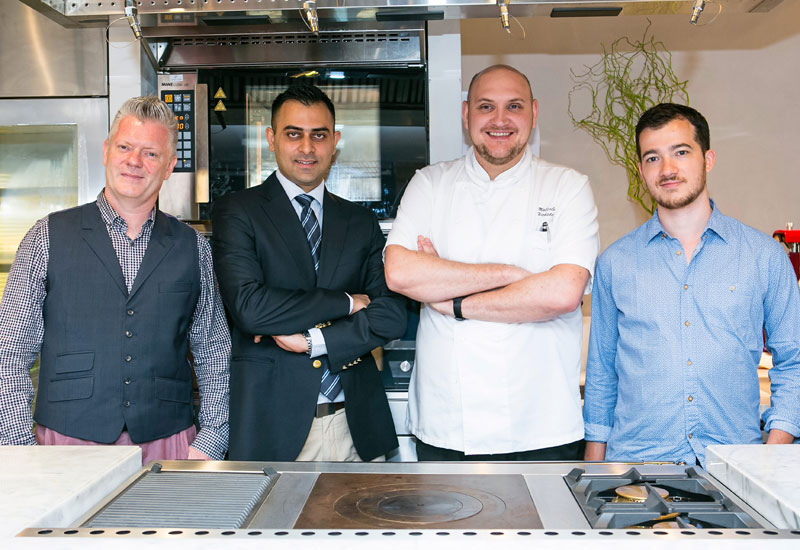
The 2015 advisory panel consisted of the then executive chef of Sheraton Grand, Malcolm Webster, Boca head chef Maxime Le Van, RMAL Hospitality senior corporate chef Daniel Lewis, and InterContinental Dubai Marina executive pastry chef Manish Thakur.
SUPPLY CHAIN
Local ingredients versus imported, and the supply chain was discussed last year; however, the chefs said the breakdown in the cold chain, and consistency is a concern.
Lewis said one of the biggest issues is related to imported produce in the summer, including dairy items. “Consistency is really up and down. When they’re stuck in cargo or when they don’t get their legal documentation to come through the airport, they’re sitting there for hours. As it gets to us, it could have been 30 minutes plus in 40–degrees which affects the texture and the flavours of more delicate items.”
Logistics for delivery only really becomes tough or challenging, he said, when proper delivery bays are not available. Thakur added: “Maintaining the cold chain right from the source to the store is very challenging because there are so many steps involved.”
Webster said he likes to meet all his suppliers and understand where exactly the produce is coming from. “I had a very great experience pre-opening; I went out and visited all my suppliers. I wanted to visit these warehouses, distributors, and plants. A lot of suppliers said: ‘it’s not often we see a chef coming out here’. You see the facility, you understand how they work and handle the produce as well, especially your fresh produce and fish that’s being flown in daily. A lot of chefs don’t spend enough time doing that.”
The group hinted there was some resistance to allowing chefs to speak to suppliers directly, a topic that many F&B industry folk have shared with Caterer previously.
Webster added: “You’ve got to understand where your product comes from and you’ve got to go visit your suppliers, and it helps you further down the line because you have those relationships.”
LOCAL GROWTH
Speaking of ingredients, local produce is also proving to be a staple conversation topic. Le Van said that some of the suppliers have made a move to go individually to the farms and make it available in the market.
Thakur said: “Maximum of our produce is imported so we do see very less of local produce, whether it be meats or even dairy. There has to be a push from the chefs’ end as well, so we help the farmers grow.”
Lewis pointed out that because of the arid land, it’s a huge investment on people’s part to make this a success. “It’s a big investment, it’s got to come from the top or the government. In Abu Dhabi there are a lot more farms coming up in the last 10 years but it’s still a long way off. Slowly but surely they’ll get there. The scary part is the investment. They’re judged on their operating profits, gross profits, and so on.”
Le Van indulged in praising the local produce: “And it has beautiful produce, the cucumbers are lovely… chillis and capsicum loves the heat. Basil is good because it hasn’t travelled.” However, he said he does think it’s difficult to purchase in big hotels where convincing the purchasing department is the hardest task.
He continued: “Yes the price is higher but I’m going to use less because the quality is better and the taste is much better. It’s a more expensive product but if we manage it in a better way with better training, this is the way forward.”
RECRUITMENT
A topic that is often talked about, our chefs stressed it was important to hire people who interacted with customers confidently. Thakur backed this up and said: “When we were recruiting, up till our chef de partie, we were looking for people who could interact and communicate with the customers.”
Webster explained why this was important: “Customers know as much as we do nowadays, with internet, social media, television. They know what’s in season, they know what’s available and sustainable. And if the cook they’re talking to doesn’t know it… you’re in trouble.”
The concerns around job–hopping and poaching were also raised, with chefs lamenting that recruits often move for “a couple of hundred dirhams”. While not a problem only limited to this region, it’s certainly one that is a global issue.
Le Van said problems arise when people are scared to lose staff, so promotions are given quicker than they should be. He said: “Commis chefs come to me and ask for a chef de partie position, and they’ve only been doing it three years. I did it for six! Before they get the skill, they get offered the position.”
The demand for good staff members, however, is possibly greater than the supply, according to Webster. “Most are here for money, not for love or career. As a young chef, money comes later!”
Le Van agreed: “You need people who want to be chefs as a career. The one who leaves after six months will do something else after a few years.” Webster said: “I don’t look at people who have been less than a year at a place — how long will they work for you for?”
To find out more, interact with these experts and many others from the culinary industry, attend the Caterer Middle East Chef & Ingredients Forum on October 6, 2015.
LIKES AND FAVOURITES
When talking about convincing the purchasing department about local produce, Webster said this is a way to also build stories around using local produce. “The whole PR thing — local, sustainable, organic. It helps build a story, that’s how I would sell it as a hotel chef.”
We then asked the chefs whether social media and marketing played a role in their daily workloads. The consensus was an emphatic yes. Le Van asserted: “It’s the most important marketing part now, it’s not even advertising anymore. You need to be a talking point constantly to survive.” Thakur agreed and said: “With everyone having a smartphone these days, the reach is exponential.”
Le Van pointed out the current culture of the region where diners point to photos of dishes on Instagram and ask for that for their meal as an example.
BUY ONE, GET ONE FREE?
Discount deals and vouchers was also discussed by the advisory panel. In a region with multitude of choice for F&B, there has also been a surge in the number of offer websites like Groupon and Cobone, and discount deals like The Entertainer books.
Lewis said: “I’ve never lived in a country where there are vouchers for everything. That’s got to be part of your food cost as well, and you get hit with that. Some of our outlets do AED 200,000 a month just in vouchers. Take the Entertainer vouchers, it’s a big hit for my margin. It’s another aspect we’ve got to try and balance it. It’s tough.”
Le Van added: “I’m always fighting against it because I think it looks bad. You get people who are after the discounts and vouchers, which is fair because it’s available. But then it looks bad for you, it diminishes your brand. You promote yourself as being cheap.”
PERSONALITY SHINES
A trend that has been developing over the last few years is the increasing visibility of chefs in the front-of-house. Lewis said it can depend on the style of restaurant in question. “In the fine dining definitely. Italian 100% because it’s all about the interaction. But if you go to the fast food chains like Wagamama’s, the chef won’t really come out. But in our new design, you’ll come into the kitchen before you actually get into the restaurant. There’s a new mindset to it, but interaction is critical to the success of any hospitality project.”
Le Van agreed and said: “We need to be able to respond to customer demands. Some customers come for the experience, have a good time with friends, have the business meetings, and don’t want to see any chefs, while some people are very interested.”
Thakur added: “The general trend is that the kitchen is coming into the restaurant. There’s a lot of vibrancy and interaction; it’s really healthy because a chef can explain to a guest what he’s doing. It caters to the ambience of the establishment as well. That’s how majority of businesses are run these days, it’s no more chefs behind the walls. Chefs are more of businessmen today, they are more of restaurateurs, they wear different hats today.”