By the end of December 2014, the value of the Russian rouble had fallen by around 40%, having been impacted by fluctuating energy prices and sanctions resulting from Russia’s involvement in the Ukraine conflict.
While hoteliers in the region cannot predict what will happen in 2015 and beyond, many are focusing their marketing and sales strength even more on burgeoning Asian markets to offset the risk
While back in August 2014, a Dubai Deparment of Tourism and Commerce Marketing (DTCM) report for the first half of the year revealed that Dubai’s top tourism markets remained relatively unchanged, in January, Igor Egorov, chairman of the Russian Business Council in Dubai, said that the number of bookings from Russian travellers to Dubai in the last two months of 2014 was down by more than 50% as a result of the falling rouble and oil revenues.
Peter Goddard, managing director of TRI Consulting, explains: “Hotels in Dubai have begun experiencing several demand-and-supply-based issues that have weighed down on performance levels.
“The largest impact was seen through the deterioration of political and economic conditions in Russia and some eastern European countries that drive significant demand.”
Results from Hotelier Middle East’s trend forecast research, conducted in December 2014, showed however, that the region’s hoteliers are continuing to capitalise on the rapid urbanisation, increased disposable income and a relaxing of travel restrictions, which have opened up Asian markets in the last few years. Operators are upping the ante in India, the UAE’s number two inbound market after Saudi Arabia, according to the DTCM half-year report.
Additionally, they are looking to China, which in August 2014 was the sixth most popular inbound visitor market for Dubai, and one which saw a substantial increase of 26% last year, attributable both to the growing propensity of Chinese residents to travel overseas, and the targeted campaigns of DTCM and its partners within Dubai’s tourism industry to leverage this to the emirate’s advantage.
A report from Alpen Capital, released in September 2014, revealed that Indian arrivals had the strongest growth in the UAE, with Abu Dhabi and Dubai reporting an increase of 27% and 16% respectively year-on-year in 2013. The UAE in fact is the third top-visited destination for Indian travellers, with 6% of outbound Indian travellers coming to the Emirates according to a report by the United Nations World Tourism Organisation (UNWTO).
Some experts attribute this to an increase in mid-market supply as a result of government incentives. Chris Hewett, senior consultant, TRI Consulting comments: “The Indian market is very strong and I think there will be some factor where the industry realigns and tries to focus on that.
“When a market goes from being a very strong upscale and luxury-driven market to a situation where you start getting a greater proportion of mid-market options, you’ll see the destination has the ability to cater to a wider audience.
“The luxury segment has a niche that it attracts and the mid-market properties have the ability to encroach on the three-star and the five-star markets, and have a greater captive demand to draw upon.”
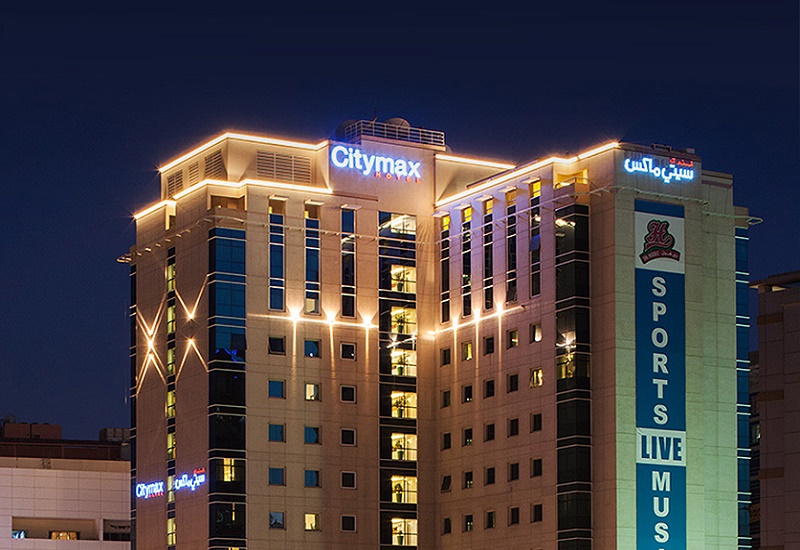
Midscale local operators such as Citymax Hotels and R Hotels, are increasing their sales and marketing efforts in India through close collaboration with travel agents and DTCM.
Citymax Hotels has already experienced a surge in Indian visitors, having boosted its Indian guest arrivals to 25% of its total guest profile in 2014, an increase of 7% on the previous years’ arrivals. Hailing from cities such as Chandigarh, Jaipur, Kochi and Ahmedabad as well as the traditional centres of Delhi, Bengaluru and Chennai, Indian guests stay an average of four nights, according to the operator’s marketing manager Rohit Challapalli.
“Our average stay is two-three nights, but our Indian guests stay longer than most, enjoying what Dubai has to offer with regards to shopping, and more recently, an interest in excursions and sightseeing. Previously, most of our Indian guests were here to visit family and friends, now they do that as well as playing tourist,” comments Challapalli.
R Hotels’ managing director Sumair Tariq adds that despite the fall in the Russian market — which is very strong in Ajman where the firm has 500 keys — R Hotels closed 2014 at 92% occupancy across both of its Ajman properties, with the lowest occupancy figure for the year 84% in September. Tariq attributes this relatively positive performance to the company’s focus on the Indian market.
“We’ve got a huge number of Russian guests in Ajman so when it dwindled we got hit a bit in the last quarter but now we’re back online; we’ve opened up other markets. We sent our sales team to different markets; we went to India for example.
“India has opened up, we are getting a lot of them, we are targeting a lot of the sports teams, cricket teams, football teams. We are trying to be the preferred hotel because we’ve got a big inventory here so we can cater to a large number of guests.”
Further afield, in Saudi Arabia, Asia was the largest international tourists’ source (excluding the rest of the Middle East) in 2012 with a number of tourists arriving from India and Pakistan, mostly for religious tourism, according to the 2014 Alpen Capital report.
For many operators with a large presence in the Kingdom, such as Hilton Worldwide and InterContinental Hotels Group, targeting pilgrims is the number one priority in their Saudi Arabia hotels.
InterContinental Hotels Group chief operating officer, India, Middle East and Africa Pascal Gauvin comments: “It is expected that the number of pilgrims will more than double from the 2013 figures to hit over five million tourists visiting the Kingdom for religious pilgrimage in 2015.
“Furthermore, with Saudi Arabia now operating the Extended Umrah Tourism Programme, enabling visitors from 65 countries to stay up to a month in the Kingdom following Umrah, we expect to welcome an increased number of international travellers into our hotels in the Kingdom,” he adds.
According to a report published last month by Oxford Economics for InterContinental Hotels Group, The Future of Chinese Travel: The Global Chinese Travel Market, growth of the Muslim population in China is expected to lead to increases in the flow of visitors from the world’s most populous country to Makkah and Madinah. Travel from China to the holy cities is forecast to rise by 50% by 2023.
China’s Muslim population is expected to reach 2.1% of its total population by 2030, representing a 28% increase on 2010 levels. Over the next decade, growth in Chinese arrivals to, and nights spent in, Dubai and Abu Dhabi is expected to top that of other major city destinations throughout the world, such as London and Paris in Europe and Sydney in the Asia Pacific region.
And while currently, India represents the largest volume of inbound visitors to Saudi Arabia aside from the rest of the GCC — and the largest to Abu Dhabi and Dubai after Saudi Arabia — Chinese visitors are the biggest spenders in the region.
The UNTWO report revealed that in the UAE, Chinese visitors are primarily attracted to the deluxe facilities and services, world-class entertainment and high-end shopping at reasonable prices.
Dubai is the preferred destination for Chinese visitors in the region followed by Egypt and then Saudi Arabia. In fact, the emirate accounts for 44.5% of Chinese travel to MENA. Additionally, it said that in 2012, Chinese travellers spent $102 billion on international tourism, up 40% from 2011.
Last year in April, Hotelier reported that Dubai welcomed the single largest incentives group in its history, comprising more than 14,500 delegates from Chinese firm Nu Skin, who spent an estimated US $80 million on a 10-day junket for nearly 15,000 staff members.
In response to this demand, DTCM regularly conducts roadshows and market-specific campaigns to ensure Dubai is positioned as a destination of choice with the Chinese traveller, and last year opened its fourth office in China.
Issam Kazim, CEO of DTCM comments: “The continual increase in guests from China can be attributed both to the emerging middle-class and increasing propensity for people from China to travel overseas and to the focus of DTCM and our partners on growing this high potential market. The Chinese market is incredibly important to us and our strategy is to position Dubai as a foremost destination by continuously evolving our broad and diverse tourism offering to cater to the more experienced traveller as well as targeting a new generation of first-time travellers.”
As well as an increase in visitors from China, there is also a growing Chinese community in Dubai, with important
dates such as Chinese New Year taking centre stage on the city’s events calendar.
In February, Burj Al Arab hosted live entertainment and a fireworks display to celebrate the occasion, while
special Chinese tasting menus were on offer throughout Dubai’s restaurants and hotels as well as promotions, traditional dance performances and fireworks.
TRI Consulting’s Hewett notes: “The Chinese market is very strong. The middle class in China are starting to travel a lot more and becoming wealthier. You can see it in the malls, some of the employees in the high-end retail outlets are actually Chinese because they’re really focusing on catering to the needs and language required in the regional market, and that’s a good test to see what’s happening in hotels as well.”
Some hotel operators are investing in their own Chinese-specific service drives. For example, last month Hilton Worldwide announced the expansion of its Hilton Huanying programme, aimed at offering Chinese travellers a customised hospitality experience with services such as expanded breakfast options and a 24-hour Mandarin interpretation service.
The programme is to be rolled out at more than 110 properties worldwide, and in the Middle East this includes several UAE properties, such as Conrad Dubai, Hilton Dubai Jumeirah Resort, Waldorf Astoria Dubai Palm Jumeirah. Doubletree by Hilton Resort & Spa, Marjan Island, Ras Al Khaimah, and Hilton Sharjah.
Hilton Worldwide Arabian Peninsula vice president of operations Christian Grage comments: “With the expansion of Hilton Huanying in the UAE, our hotels are well-placed to welcome the spike in Chinese visitors to this region, through offering tailor-made services that better meet the needs of our guests.”
The firm is also investing in hotels in China, which in turn is increasing brand awareness for outbound travellers. Plans to develop more than 400 Hampton hotels in China were recently announced following the signing of a licensing agreement with Plateno Hotels Group. The first of these are to open by the end of this year.
InterContinental Hotels Group has announced it will double its China portfolio by 2018, and is gearing up to open its first properties under the Hualuxe Hotels and Resorts brand, which it claims is the first international luxury hotel brand specifically designed for Chinese consumers.
In October, Jumeirah Group announced three new management agreements to operate luxury hotels and resorts across China, bringing the group’s China portfolio to eight.
Gerald Lawless, president and CEO of Jumeirah Group comments: “We are delighted to be expanding our portfolio of hotels and resorts in China, which is a significant market for Jumeirah.”
Similarly, for The Rezidor Group, Asia is a growing market, according to Mark Willis, senior vice president MEA.
“You can see it across the GCC — a lot of religious tourism — and I think often people tend to forget that’s coming into the region from Asia. It’s a good solid inbound market for us.”
While Willis admits The Rezidor Group has taken a hit from the instability in Russia, he claims the risk is being spread across a number of areas.
“Rezidor, as with all the other brands, is certainly being impacted by Russia and the lack of outbound travel due to the various restrictions they’re putting in place.
“It’s a very concerning situation and it’s a real time of instability.
“We’re extremely lucky in that we’ve got a strong brand foothold across a wide arena, whether that’s the US or Europe, as well as in Asia.”
Stat attack
– 6% of outbound Indian travellers go to the UAE
– 27% increase in indian visitors to abu dhabi in 2013 yoy
– 26% increase in chinese visitors to dubai YOY in H1 2014
– India is Dubai’s 2nd inbound market
– $80 million spent by Chinese firm Nu Skin on a 10-day junket to Dubai last year
– 44.5% of Chinese travellers to mena go to dubai
– China is Dubai’s 6th inbound market