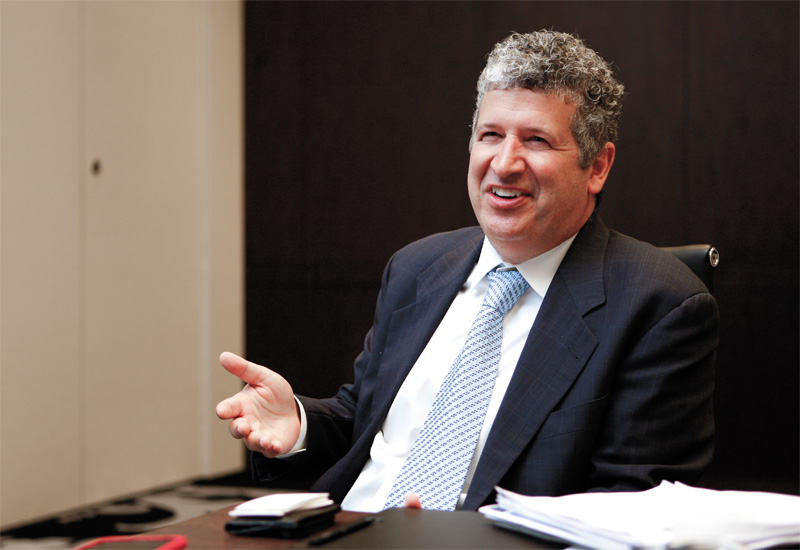
The CEO of Booking.com, Darren Huston, says websites such as his level the playing field for independent hoteliers and reveals he is ready and waiting to face competition from hotel groups’ own booking engines
Established in 1996, Booking.com is the world’s largest on-line travel agency (OTA), currently offering 302,072 properties with a best price guarantee in more than 41,000 destinations in 183 countries. With a thriving Middle East office in Dubai, Booking.com has just opened its 100th office globally, in Romania.
Hotelier Middle East was granted a rare interview with the media-shy company CEO, Darren Huston. He was quick to stress the major benefits that Booking.com can offer for independent, non-branded hotels.
“In 1970, you might have had a great (hotel) that died because nobody ever heard of it. In 2013, you can basically have a marketing department through Booking.com, you only pay for the bookings you get and the whole world in 41 languages can know about your little property.
“[For example], my family went skiing in Northern Slovenia and stayed at this beautiful independent hotel (the Hotel Cubo) that had the highest ratings on Booking.com. I would never ever have found that in the whole world, in the middle of Ljubljana in Slovenia but we had an amazing time, the owner was great and everything that the reviews said is exactly what happened.
“For an independent property owner who wants to just run a great business, the internet levels the playing field,” Huston asserts.
Booking.com carries 20 million reviews from ‘real guests’, he reveals.
“The reviews are super critical, you know all our reviews are by hotel guests, that is the difference with some of the other sites. You can’t write something bad about your competitor, you can’t even be the hotel owner and write something good about yourself, ” he says.
Huston emphasises that the reviews can be both good and bad — and that the latter should inspire hoteliers to take remedial action.
“That way, we don’t have a bad relationship with the hotel, we just say, ‘Hey, we want to sell your product too, but you have to please the guests.’ It also empowers the guests, because the hotel knows you’re going to do a review, so they’re going to make sure you have a good time.”
Language Skill
Booking.com has a ‘translation team’ who prioritise their work according to demand, with English being the site’s base language in which all text is presented, while up to 60% of the web site is translated into other major languages, including Arabic, Chinese, Spanish, and German, while other parts of the site are available in minority languages.
Specifically in the Middle East, 65% of Booking.com’s traffic is intra-regional and 35% extra-regional. The top three cities in terms of traffic are Dubai, Mecca and Abu Dhabi, while Doha is also important.
Booking.com is also constantly evolving to provide better options for families, a key focus in the region.
“Families are a tough nut to crack. We do a lot of work to try to figure out where they can fit in and for families, maybe hotels are not the right thing. We have 25 accommodation types on our site, it’s not all hotels and particularly in Europe, families book into aparthotels, even stand-alone serviced villas, which is another growing area of our inventory,” he says.
Above all, Booking.com sees its mission as educating hoteliers, in exploiting the power of the internet and this extends to the big international chains as well.
“If we can partner with the big chains, we can help them adapt themselves,” observes Huston. “I don’t care if the Marriott site gets better or the Hilton site gets better, I’m actually kind of excited about it.”
Booking.com in the Middle East
– 65% of traffic is intra-regional.
– 35% of traffic is extra-regional.
– Top three cities in terms of traffic: Dubai, Mecca and Abu Dhabi.
– total reviews: 20 million.
– Mobile bookings: Highest in the UAE.
– Next target: More booking options for families.