A slew of announcements from Bahrain’s Economic Development Board (EDB) and the Bahrain Tourism and Exhibitions Authority (BTEA) in recent months communicate a renewed emphasis on the country’s hospitality and travel industry as the Kingdom continues to diversify its economy.
Already the fastest growing sector in the Kingdom, with hotels and restaurants expanding by 10% in 2014 and 7.3% in 2015, strong investment in tourism is intended to increase its overall contribution to Bahrain’s GDP. Analysts estimate travel and tourism currently contributes around 5% of GDP and while forecasts vary, the EDB is targeting tourism revenues of US $1bn by 2020.
Visitor numbers, around 80% of which come from within the GCC, hit 10 million in 2014, an increase of 11% on the previous year. The new “Ours. Yours. Bahrain” tourism brand identity intends to raise awareness of the destination and increase demand, with new representative offices being opened in the UK, France, Russia, Germany and India, as well as the Gulf, to target alternative markets.
BTEA CEO Sheikh Khaled Bin Humood Al-Khalifa says the campaign was developed around promoting the “warmth and welcoming attitude” of the Bahraini people and part of a four-pronged strategy prioritising “awareness, attraction, access and accommodation”.
Access for foreign visitors is critical and major infrastructure is being developed to facilitate this. Bahrain’s biggest strategic project is the estimated $1.1bn expansion of Bahrain International Airport, 70% of which is being funded by the GCC Fund — primarily by the Abu Dhabi Fund for Development (ADFD) — with the rest provided by the Bahraini government.
Designed to increase capacity to 13.5 million passengers a year — twice the current capacity with figures showing that 8.5 million people passed through the airport in 2014 — the new airport will sustain Bahrain for the next 15 to 20 years, according to MEED’s Bahrain market outlook.
In addition, a new $3 billion road and rail crossing is being planned for completion in 2018, to reduce the congestion on the existing King Fahd causeway, which is used by 10 million vehicles a year.
The new causeway and bridge will undoubtedly increase family travel from all states connected to the proposed GCC rail network, offering Bahrain access to a broader range of mid-market travellers.
At the other end of the spectrum, port facilities are being developed for yachts that arrive in Bahrain from other countries, and to increase appeal to the leisure market, the Avenues Mall is being built.
On the accommodation front, BTEA statistics report 120 hotels operational in Bahrain, with 3,000 rooms in development pipeline across more than 10 five-star and four-star hotels, including One and Only Resort and Spa, now under construction.
Bahrain’s room stock currently sits at 9,190 rooms, according to STR, with 1,002 rooms added in 2015 and 1,521 rooms forecast to be complete during 2016, reflecting the increased pace of development.
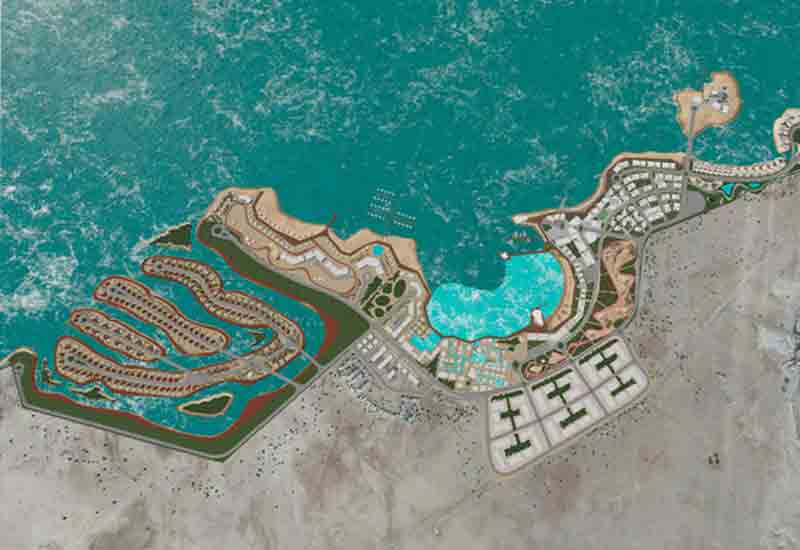
US-headquartered chain, Wyndham Hotel Group, has four properties under development and due to open within the next 12-18 months, while Emaar Hospitality Group has announced plans to launch four hotels under its Address and Vida brands by 2018. Luxury Asia-based brand, Anantara, will also open on Durrat Al Bahrain in 2018.
As the infrastructure increases, so too will employment opportunities, with MEED forecasting that travel and tourism will directly employ 44,000 by 2024, around 4% of total employment and up from around 31,000 jobs today.
Current scenario
The targets are clear, with BTEA and EDB emphasising the collaborative tourism effort required to deliver them, but how realistic are they in the current market?
The increase in rooms is set against a backdrop of occupancy averaging 60.4% during the first four months of 2016, an increase of 2.1 percentage points over the previous year, and there is little concern that the rate of supply growth will outpace demand. ADR has declined 9.4% to $189 and RevPAR has decreased 6.2% to $114, for January to April 2016 compared to the same period in the prior year, but overall GOP remains flat, averaging 37.4% for the period compared to 38% year over year.
Bahrain has, according to TRI Consulting’s associate director Christopher Hewett, “fared a lot better than a number of other markets in the region”.
“Bahrain’s hotel market is starting to witness a revival from a number of years of subdued performance and limited growth,” Hewett observes. “With the opening of a number of key properties, including the Four Seasons Bahrain Bay and the announcement of various large-scale projects which includes the expansion of Bahrain International Airport, the market can expect stronger growth for the remainder of 2016 and into 2017.”
At the Four Seasons, which opened in March 2015, general manager Greg Pirkle acknowledges that the market has been impacted by a reduction in outbound traffic from Saudi Arabia, a result of declining oil prices. However, he says the renewed efforts from the Ministry of Tourism to target the rest of the GCC are balancing this.
“While Saudi Arabia is our top source market, as anticipated when we opened last year, we have a very strong guest profile from the GCC as a whole. This contributes a total of 80% of our guests,” reports Pirkle. “We attribute this to the increasing trend towards intra-regional tourism and GCC staycations drawing guests to Bahrain from across the Gulf, as well as our wide range of dining and leisure offerings that appeal to guests looking for a weekend break.”
In addition, the hotel is working “hand in hand” with BTEA to explore new potential markets such as Russia, which in particular is slowly beginning to gain traction, according to Pirkle.
“We expect to see more business coming in from international markets towards the end of 2016 and beginning of 2017 as the non-oil economy picks up pace,” he says.
A similar outlook is true at Downtown Rotana Bahrain, although here, China is the new target on the horizon.
“The GCC remains our main feeder market, representing 80% of our visitors with a strong presence from Saudi Arabia,” says general manager Lilian Roger. “Europe is our second largest contributor with around 12%.
“Since we are a newly opened property, our immediate focus still remains penetration of the local market, and of our next door neighbours. We are also keeping an eye on growing potential from markets like China, and we want to be perceived as a “Chinese-friendly” hotel; we have Chinese-speaking staff, all our menus are translated into Chinese and we also cater to their diets with a special selection of Chinese delicacies from our breakfast buffet,” Roger adds.
However, Christopher Hewett, is less convinced about the potential of increasing overseas travellers to Bahrain in the current scenario.
“Due to the lack of international airlift within Bahrain, the nation needs to focus on attracting regional travellers, particularly from neighbouring Saudi Arabia, Qatar, Kuwait and the UAE. The development plans for Hawar Island is positive, however further development of key leisure infrastructure is needed, especially as Dubai, Abu Dhabi and Doha continue to expand their respective offering,” says Hewett.
Collaborative efforts
Starwood Hotels and Resorts, which operates The Westin and Le Méridien Bahrain City Centre hotels, is doing exactly this and investing significant resource in widening its GCC reach. The hotel reports 75% of clients come from the GCC, with the remaining travelling from the US, UK, Germany and France.
Complex director of marketing for Starwood Hotels and Resorts in Bahrain, Haitham Assem, explains: “The market occupancy is stagnant compared to last year however; our occupancy increased by 5% due to a very thoughtful strategy developed by the new
management, which involved very measured tactics that opened the core GCC markets.”
He acknowledges that the increased supply has put pressure on rate, with a spending decline specifically with the corporate market, and says that as more international brands launch the projects currently being developed, competition will be tougher. In line with the new “Ours. Yours. Bahrain.” brand campaign, Assem says the hotels will add Egypt and Jordan to its targets, but predominately remain focused on its core GCC feeder market.
Le Méridien has also developed its own campaign, #BahrainUnlocked, as part of the brand’s focus on stimulating the curiosity of guests through the discovery of the destination’s culture, art and cuisine.
“#BahrainUnlocked is an initiative that encompasses all of those elements, and it is the most authentic way to show visitors what the island has to offer from the perspectives of locals and residents,” explains Assem. “A hashtag inviting local photography enthusiasts, from amateur to professional level, as well as social media buffs and bloggers, to unlock the island. The activity is to capture what ignites inspiration and makes Bahrain special. Everyone who has an Instagram account is encouraged to post their photos using this hashtag.
“The result of this campaign will not only be in line with Le Méridien’s core values, but will also expose the country as a curious destination, while giving the community a chance to have their input and participation materialised into a digital photography exhibition. As we speak we have over 560 posts and counting,” says Assem.
It is initiatives like this from hotel operators that BTEA and the EDB will rely upon, as they continue their major investment in travel and tourism in the Kingdom of Bahrain.