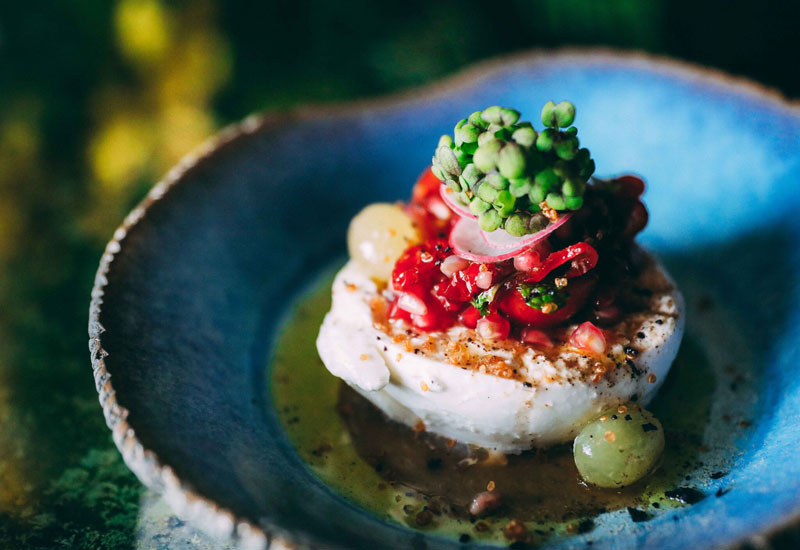
Chefs should come up with more creative ways to tackle the increasing problem of food waste, according to Coya’s Middle East executive chef Benjamin Wan.
Inspired by the challenge of minimising food waste at the Peruvian restaurant’s Dubai and Abu Dhabi outlets, Wan challenges his staff to find new uses for the produce that arrives daily.
He said: “Tackling food waste is certainly a major concern and something of a ‘work in progress’ for the regional and global restaurant industry. At the simplest level, we create a more sustainable kitchen through waste minimisation. A little creative thinking can decrease waste significantly by utilizing every part of the fruits, vegetables, seafood, and meat that people often don’t think of as edible, transforming them into something delicious.”
Examples of how they do that include making stock from chicken, beef, and fish bones, while top grade tuna and salmon bones have been scraped of their meat and add to the taco filing.
Trimmings from beef ribs are used to make beef bao filling and after using the corn for corn salad, the cob goes to pastry to be used as an infusion for sweetcorn ice cream.
“As the UAE government takes steps to reduce food waste, Coya is doing its part to develop an authentically sustainable kitchen that will hopefully inspire our guests and our peers to take simple steps to decrease their own food waste footprint,” Wan concluded