

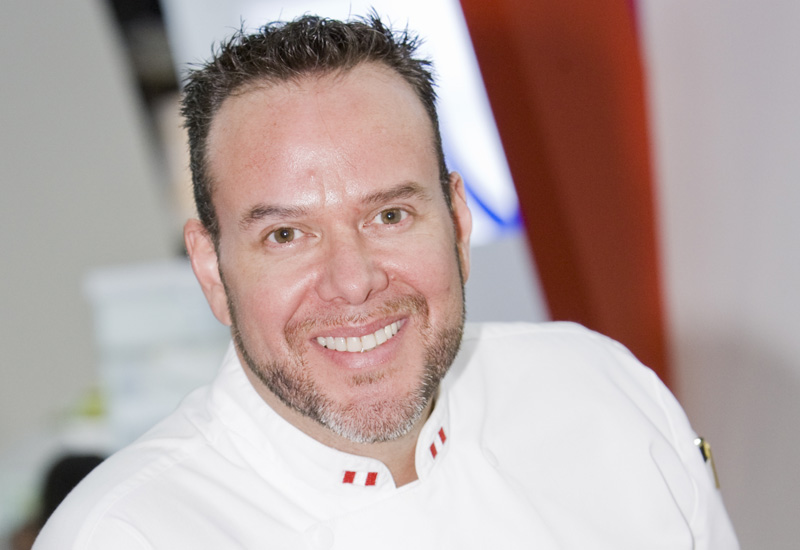
Peruvian chef Christian Bravo spoke to Caterer Middle East while on a visit to the UAE and told us what is the most important thing chefs should strive for
When did you decide to become a chef?
Almost everyone in Peru has a chef’s soul. I became a chef when I was 25 years old, and that is old for this career. I decided to make a u-turn in my life when a friend of mine invited me to see the first culinary school in Peru, which his family had opened. I then decided to close my graphic design company, and start learning from scratch. Fifteen years ago, it was crazy to do something like that. I do all three things that I love now — I design my plates, I make the playlist for my restaurant, and I cook for everyone.
Why did you fall in love with this profession?
The first thing is to remember that cooking is an act of love, and you really have to have passion and love for service. If you can love that, then you can handle this kind of job. I enjoy every minute — my biggest payment is not the bills, it’s the smile on the face of my customers.
What are your favourite Peruvian dishes?
Ceviche and lomo saltado. Lomo is tenderloin and saltado means jumping — jumping tenderloin on a wok. It’s a Chinese-Peruvian fusion cuisine, and my Twitter is also @lomosaltado.
Do you think Peruvian food is one that can appeal to many?
I’m very glad that everyone to whom I present my food becomes a fan easily. It’s not only a trendy thing; people find something familiar in our flavours. That is because we have a little bit of everything — Peru has influences from Europe like Spain and Italy. We also have an Arabic influence because of the Spanish. We have influences from China and Africa as well. That’s the richest thing about our cuisine; everyone can find something familiar with it.
How many restaurants do you have right now?
I have three restaurants in Peru. I am consulting around the world for Peruvian restaurants, and my brand is called ‘Bravo’. We installed the first franchise in Peru, and now we are expanding in Latin America.
You have another connection with the UAE in addition to the Taste of Peru festival and representing the country at shows like Gulfood – tell us more?
Last year I was talking with The Act Dubai to help them with the menu, but it was the same time I had to open my first franchise so I couldn’t do it. But my friend, Roberto [Segura], who was my student in the culinary school in Peru [did it]. He used to work with me in Bravo as a sous chef, so I am proud that he is handling the first Peruvian restaurant in Dubai. Roberto is doing an amazing job and I feel proud, like a father.
What’s the most important thing you remember while creating new dishes?
You know, I had a recent memorable experience in Italy, in a very simple restaurant. It blew my mind because of the simplicity and perfection — that food was, for me, one of the best meals I ever had in my life. Better than any three-star Michelin restaurant I have ever been in. It makes me confident about Peruvian flavours and cuisine. I keep in mind you have to stay humble, and one thing that I won’t refuse in my food will be the flavour. I discovered that many big restaurants, they forget the simple things. When I saw simplicity in this restaurant, I felt that’s important because we have to stay in search for good flavours.
