Jordanian based concept Chili House celebrated its 30th anniversary in October 2015, and its CEO has major plans for the brand in its 31st year, including opening its first restaurants in UAE and Kuwait.
Owned by the Daoud Family, the first restaurant was opened in Amman in 1985 by its founder and president, Fahid Daoud, who previously had experience with opening Gold Star Chili, Inc in the USA in 1965.
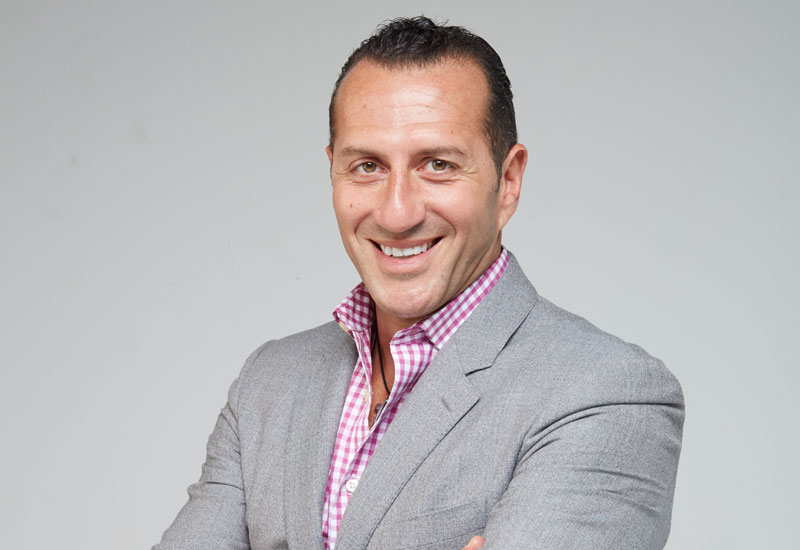
CEO Sami Daoud says: “The story started back in 1965 when my father’s brothers immigrated to the United States and started the first Gold Star Chili Restaurant. That gave the family some background to the restaurant business. When my father moved back to Jordan in 1985, that’s when he started the first Chili House with his nephew based on what they learned in the US.”
In 1998, Daoud joined the board of directors for Gold Star Chili and Chili House Jordan. In 2004, he took over the position of CEO. Over the last 11 years, the team has grown the business from 10 stores in Jordan to its current position, with 28 restaurants in its portfolio in seven countries — Jordan, Palestine, Libya, Qatar, KSA, Oman and Iraq — while employing more than 500 people.
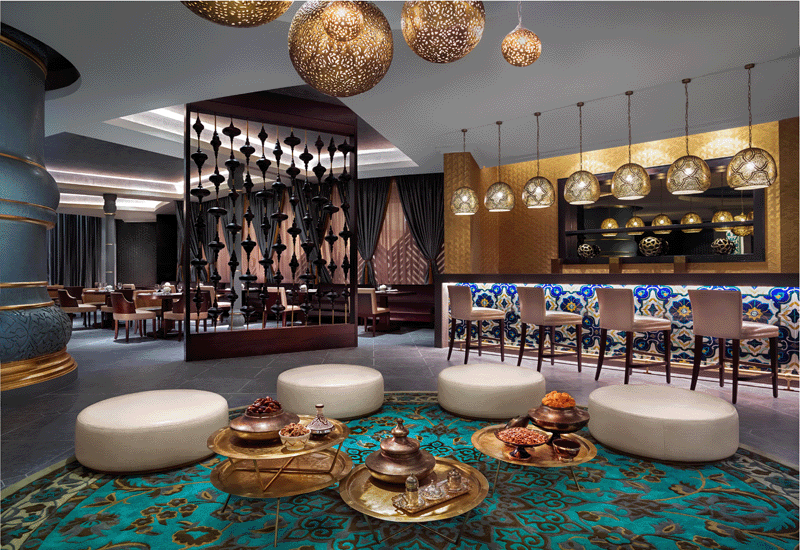
In 2013-2014, Daoud brought on-board a consulting firm from Canada, and re-designed and re-branded Chili House. The project integrated technology and a more upscale architectural look and feel. The stores that have implemented the new look and tone have experienced increases in volume of more than 19%. Daoud says that when the restaurant opened in 1985, the venue was almost “the first social network”. He explains: “At the time you knew you would run into friends or family members at the local Chili House. We opened units as neighbourhoods developed, and it was always the meeting place. We allowed that continue into our branding moving forward.”
Currently, Chili House-wide sales across the chain account for US $25 million annually from 28 locations, while the Gold Star Chili storewide sales are $55 million annually from 87 locations. In 2016, Chili House is set to open its first restaurants in Dubai, UAE, Kuwait City, Kuwait, and Misratah, Libya. Current negotiations are also underway for Egypt and Algeria.
A drive for technology
Daoud explains that the move into new markets has seen an increased focus on technology including a phone app, all of which were launched in 2014. He says that every restaurant has a ‘Chili Box’ located on every table, which has a charger for diners’ electronic items like laptops and chargers. It also has a volume control, which Daoud explains: “The unique thing about the Chili Box is that once you download the Chili House app and check into any of our restaurants, it allows you to select the music you want to hear. That song will come in a queue just like a jukebox for the whole restaurant — and you can control the volume in your own vicinity.”
He adds: “It’s working well for us in Amman and in Qatar, and once we launch in Dubai, we’ll launch with the same system.”
Also tapping into the millennial market, the app lets customers take selfies, which feature on any of the digital screens in the restaurant, as well as the website. “The whole concept behind is that you can control your environment when you’re at Chilli House,” he says.
Another technological introduction is something Daoud terms “the long-distance table”. If a guest books this table in a restaurant in one country, their relatives or friends can book the same table in another location and talk to each other via Skype while having lunch “together”. Each table is equipped with a camera, a screen and all the necessary equipment to facilitate the conversation. “That was something else that drives the togetherness aspect [of the brand],” he adds.
The reason behind these was a brand study that Daoud carried out in 2013 to find out how Chili House was perceived by consumers. He reveals: “We found that people thought we were dated. People who grew up with us never left us, but we were starting to see older crowds in the restaurant and not younger crowds. So the phone app to drive millennials back in the store.”
Daoud adds: “Studies also told us that this segment is looking for certain things, and fortunately for us, we always had them. They wanted fresh products, they want ingredients which are not hormone-injected or antibiotic-injected. And we’ve been doing that for the last 7-8 years already.
“All of our vegetables are all from European-certified organic farms, and when we franchise to outside markets, we force our franchisee to seek similar.”
He continues: “Now our groups in Libya and Iraq are having some difficulty finding certified organic products — they obtain vegetables from organic farms but it doesn’t a stamp on it. So we can allow that temporarily until we can get it certified.”
Franchise empire
Speaking of franchises, Chili Star owns just the three outlets in Amman, while the rest are franchised. “We go through a very strict process in qualifying franchise groups to take the brand,” he says. He has signed a master franchise agreement in the UAE with Adhwa Albilla Investment LLC to open five units in the next three years, which also has the master franchise rights in Oman. The preferred top three sites in Dubai are on Sheikh Zayed Road, Jumeirah Lake Towers and Jumeirah Beach Residence. Daoud has also signed a LOI with a franchise group in Kuwait, and is nearly at the point where a MFA will be signed. A sub-licence has also been signed by its master franchise group in Tripoli to open and develop in Misratah.
The important factors Daoud looks for when signing a franchisee are experience, understanding franchising, and financial liquidity. He says: “In the restaurant business, ROI is a two or three year process and in markets such as the Gulf with such outrageously high rent rates, you can expect that the strategy is that you’re going to build a flagship which is probably not going to make you any money. But it is going to set the tone for the brand, and then the next stories will generate profit. Eventually the first store will catch on, but that’s generally the process.”
He reveals that any franchisee would be expected to have $500,000 liquid assets and net assets of at least a million dollars. Once a franchisee is signed, Chili House Jordan would offer complete turnkey support from assistance in site selection, to design and development. “We have a prototype training centre in Amman where they send us their staff members for management or chef positions, BOH, FOH, waiters. It’s a 42-day programme. We also send an opening team for the opening of the unit. They come seven days before the unit opens, they stay seven days afterwards. We have 100% marketing support, with proven marketing agendas that have worked,” he says.
The group plans to unify its marketing activities, where Jordan would control the social media and design for each market. It launched an open cloud system in 2014, which includes a database of all its marketing materials, photoshoots, operational manuals, and design manuals; each franchisee gets a username and password for access.
Daoud says: “We usually leave three of four members who have a year-and-a-half to two years’ experience in each of the markets [where we open]. We think it’s a good idea to have people with experience stay on the ground that’s beyond the opening team, and beyond the people they send to us to train. It’s an added insurance to make sure, from an operations perspective, that the business runs correctly.”
He admits this puts the home team under duress as they have to find replacements for the veterans in Amman, but Daoud says “the reward is well worth the sacrifice”.
He proclaims the group has never attended a franchise exhibition but this is on the cards.
“We plan to, and tie in the last few countries that are still out there. We’d love to develop in Lebanon — it would be a great market because it would prove we can play with the big guys.”
Daoud adds: “To my knowledge we’re the only fast casual restaurant concept that has been able to expand outside of Jordan and do a franchise. We do plan on competing on a global scale, and we’re going to keep getting better.”
He concludes: “Are we perfect? No! In the food and restaurant business, you always have to track the trends. But you can’t be everything to everyone.”