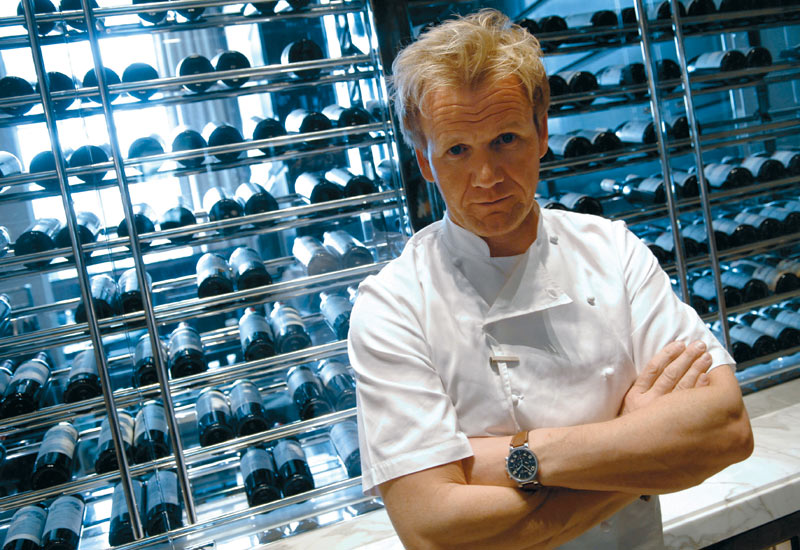
With the recent opening of two Gordon Ramsay restaurants at the St Regis Doha and the forthcoming launch of Rhodes44 at the St Regis Abu Dhabi, the Middle East’s appetite for restaurants led by celebrity chefs shows no signs of being sated.
The trend is particularly apparent in branded luxury hotels, driven by improved operating efficiencies for the celebrity chef and increased brand exposure for both chef and hotel.
But rather than rushing headlong to join forces with a culinary superstar, hotel owners and their operators should first consider a few fundamental issues. Given the importance of food and beverage operations to the overall operating success of the hotel, getting these initial judgments correct is critical.
Five steps to the perfect hotel-celebrity chef marriage…
Meeting your match
The hotel operator and owner should define precisely, as early as the letter-of-intent stage of the hotel management agreement, which type of celebrity chef concepts (or third-party restaurant branding) fit with the brand, quality and operational aspirations of the hotel.
The parties should undertake a detailed market analysis to determine the projected financial performance of the restaurant affiliation with a given celebrity chef and whether the business case is compelling enough to justify the added investment, structuring and operational complexities. The regulatory/licencing environment in the hotel’s jurisdiction should form a key part of this analysis.
In the contract
Once the parties have agreed on joining forces with a particular celebrity chef, they must determine how best to structure the relationship. There are two main options: a lease between the hotel owner and celebrity chef or a licence/consulting agreement between the hotel owner, operator and chef.
Under the former structure, the hotel owner leases restaurant space in the hotel to the celebrity chef, who is responsible for the day-to-day operations of the particular restaurant, including developing menus, managing employees and purchasing supplies. This structure caps the economic upside of the hotel owner, as rent payable by the celebrity chef will generally be a mix of base rent plus an agreed percentage of the restaurant’s gross revenue. In return, day-to-day operating risks and expenses are the responsibility of the celebrity chef. These trade-offs should be considered in light of the projected financial performance of the restaurant outlet. In addition, a lease structure requires dedicated internal resources on the part of the hotel owner to manage the ongoing relationship with the celebrity chef. The hotel owner is a key link in balancing the distinct set of interests between the chef and the hotel operator, ensuring that they collaborate to drive the overall performance of both the hotel and the leased restaurant.
Lease structure
The hotel operator has limited control over day-to-day restaurant operations in a lease structure. While this limits the operator’s financial exposure, there is a risk that the hotel’s brand could be compromised if the celebrity chef fails to deliver on the promise of a superior quality dining experience. This further highlights the importance of selecting the right celebrity chef for the particular hotel brand and creating a framework that gives the hotel operator a voice to influence quality standards at the restaurant. Also, given that the celebrity chef’s staff will be on the hotel premises on a daily basis, the hotel operator will want the ability to define and control how, when and to what extent the restaurant’s staff can access the hotel’s back-of-house areas. While this access may contribute to the celebrity chef’s operational efficiencies, it also creates a potential source of tension or disruption to the hotel’s operations.
Licence or consulting arrangement
Under a licence or consulting arrangement, the celebrity chef licences his name for use at the restaurant and agrees to provide consulting services – such as advising on the menu and recipe development – but day-to-day operations are the responsibility of the hotel operator. Consequently, the risk of damage to the hotel brand and operational disruption to the hotel is much lower in a licence or consulting structure. Since the celebrity chef will typically receive a fixed percentage of the restaurant’s revenue under this type of arrangement, it creates a higher risk/reward dynamic for the hotel owner. If the restaurant is a success, the hotel owner participates in that success at a higher level than it would under a lease structure. In return, the owner assumes responsibility for ongoing operating costs, expenses and general liabilities of the restaurant, resulting in increased financial exposure. In balancing these issues, the hotel owner must consider the operator’s food and beverage expertise and their ability to leverage the brand of the celebrity chef to boost overall financial performance at the restaurant.
The licenced restaurant’s revenues and expenses are generally included in the calculation of the hotel operator’s fees under the hotel management agreement. As such, the operator must give significant consideration to the synergies between the hotel’s and the celebrity chef’s brand, as well as analysing whether the financial performance of the restaurant will be enhanced to a level that justifies the additional cost and complexity of structuring and managing the relationship with the celebrity chef under this type of agreement.
Cultural implications
Cultural considerations around the serving of alcohol – and, therefore, the availability of liquor licences – will influence the decision over which structure to employ. In various Middle East jurisdictions, for example, restaurants are required to rely upon the hotel’s liquor licence. With limited control over day-to-day operations in a lease structure, the hotel operator will need sufficient protection, from a liability and operational perspective, should the celebrity chef act in a manner that jeopardises this licence.
Winning formula
If the hotel owner and operator join forces with the right celebrity chef and structure the relationship correctly, it can significantly enhance the hotel’s financial performance and brand. But choosing the wrong chef or the wrong relationship structure can be a lasting drag on both the hotel’s financial performance and brand.