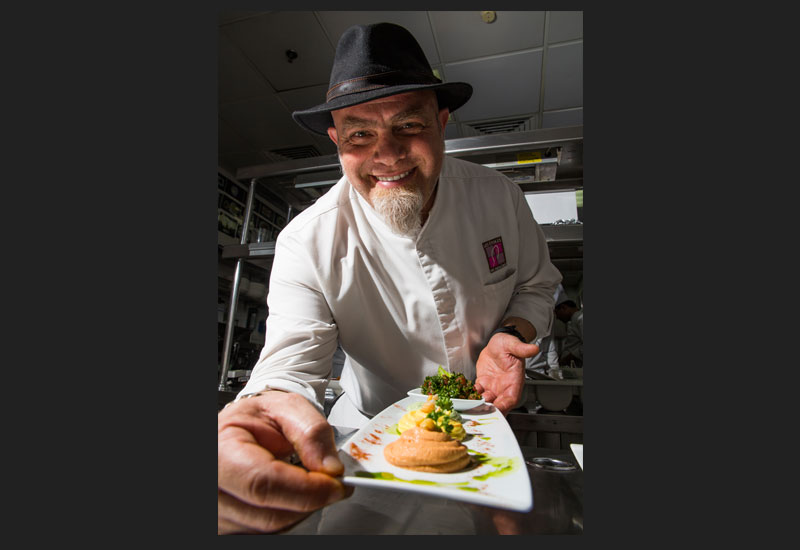
Lebanese chef Joe Barza offered a special menu and cooking classes at Jumeirah Zabeel Saray’s Al Nafoorah restaurant recently; we caught up with him to learn more about his work ethic
You often tour restaurants across the world; why did you decide to promote your cuisine in different countries?
Currently, you have three or five million chefs, and there won’t be any use promoting French or German cuisine. We have a sleeping treasure Lebanese and Arab food. With my experience, know-how, character, knowledge, you name it … I put my efforts in this. And this is how I succeeded to be the best in the world among my cuisine. This is part of my job — I promote Lebanese food all over the world.
What do you look for when choosing where to improve the profile of your cuisine?
It’s not only the food, it’s the whole idea behind it, it’s the chef, it’s the people that I’m working with. That’s why I choose only the best resources. Money is not everything — for example, the GM here at Jumeirah Zabeel Saray is a very good man. I feel at home. Meeting new people is great, and it always keeps me on the edge.
How would you describe your cooking style?
I do not do fusion food. I try to upgrade or give the product its value. I’m not against hummus with tahini, or mana’eesh with za’atar. But new ideas are needed. If you taste what I have just made, this is hummus. But it’s hummus with saffron, with red pepper, I can do hummus with ink… my brain is filled with knowledge.
What are you like in the kitchen?
I am a human. You can ask the guys [at Jumeirah Zabeel Saray], they don’t want me to go. But I don’t like people to mess around; they have to do it my way. It’s sometimes hard for me, because I turn from kitchen to another kitchen. But I work with self-confidence, with charisma, with the support of the management, so I can do it my way. I impose my character in a nice way. But I’m happy every day.
With such a busy schedule, how do you find time to stay healthy?
I love food; I should be 300 kilos, but I do sport. I swim and use the treadmill. Chefs must look after their health. It’s the stress which affects us.
Are there any culinary trends you’re seeing across the world?
With what’s happening now all over the world, everybody is going back to the basics.
You’re on the committee for the Dubai World Hospitality Championship which had its inaugural year in 2013. Tell us more about that.
What I like about the people of the committee is that they are big dreamers, they are very well-organised, and they know what they want. They want to promote the Arabic chef and Dubai, and they want to show talent. They want to go back to traditional food, which is my message too.