

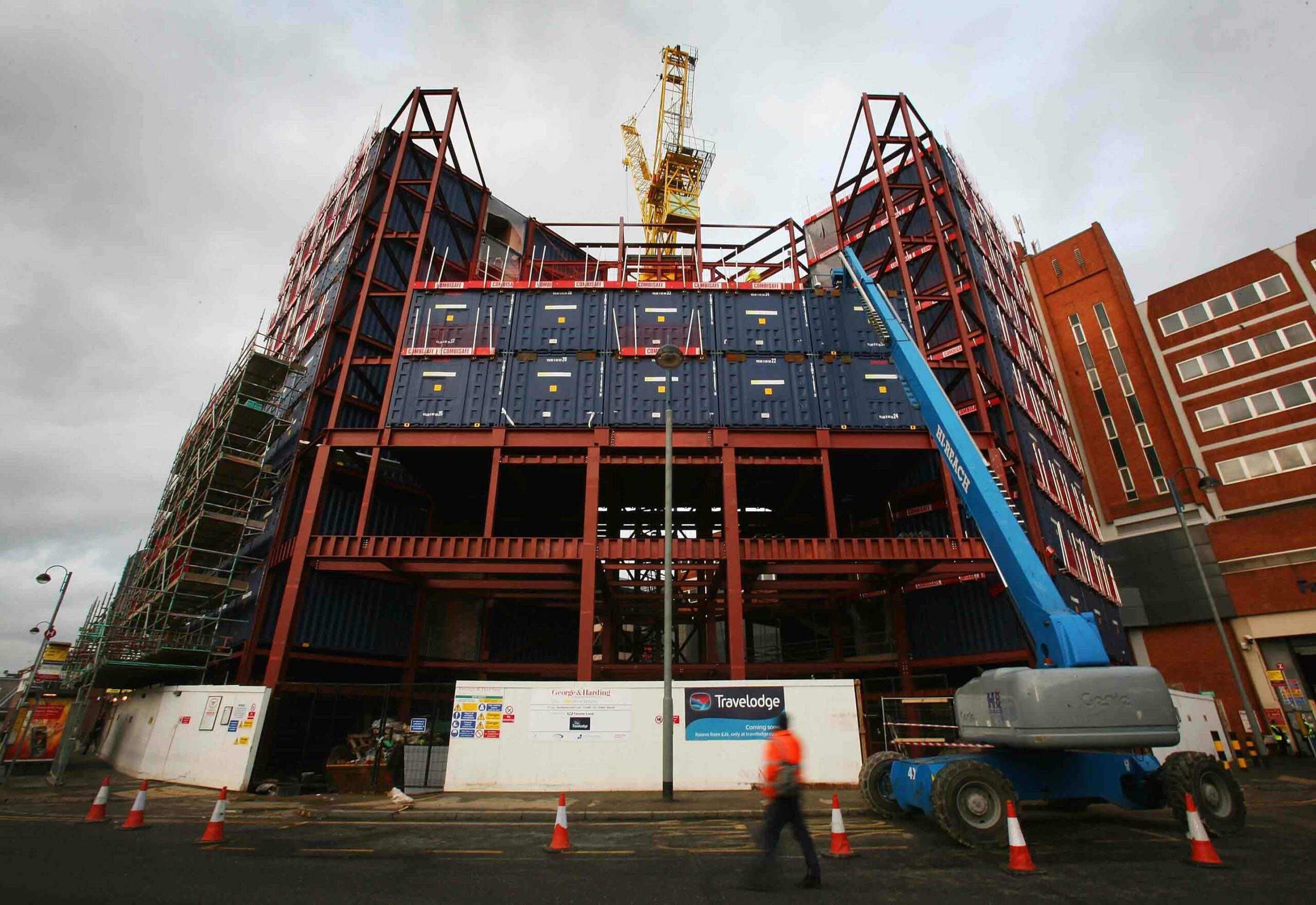
Temporary hotels are popping up in the UK to cater to cash-strapped travellers.
Theses mobile structures are popping up in dilapidated urban areas and can be re-used or moved around.
Construction time of these hotels, which are pre-build units incorporated into a steel frame that can be easily demolished, is reduced by almost 50% compared to traditional methods.
As such, they have been dubbed ‘pop-up’ hotels by research firm Euromonitor International, which this morning at London’s World Travel Market (WTM) unveiled its global travel trends research for 2009, identifying temporary hotels as much more than a fad.
In fact, two companies have already unveiled their version of the pop-up.
Budget hotel brand Travelodge opened its first modular hotel in Uxbridge, West London, in August 2008.
It is built from steel containers that were constructed and fitted in China.
Travelodge plans to build nearly 40 hotels per year by 2020 and half of those are expected to be the pop up variety. Prices are £29 or less per room.
In addition, the M-house and M-hotel concepts have been created by entrepreneur Tim Pyne.
The hotel structure comprises individual units included in a steel construction building, tailored towards corporate customers for rent up to three months.
The first unit, to be based in Hoxton, east London, is due to open by the end of 2009.
“The M-hotel concept can explore the opportunities to construct hotels in underdeveloped areas,” said Pyne.
“The design permits for those structures to be easily dismantled, moved and relocated around the world.”
Euromonitor claimed pop ups would appeal to “generation Y, baby boomers, younger consumer groups and environmentalists”.
The firm also revealed that pop up restaurants were becoming popular across London.


