


Saudi Arabia’s hotel sector is entering a period of sustained expansion, with the Kingdom’s room inventory set to increase from its current base of 171,650 keys.
According to Knight Frank’s Saudi Report, approximately 94,500 additional rooms are either under construction or at advanced planning stages. This follows a year in which the country’s travel and tourism industry expanded by 32 percent, signalling continued activity across hospitality, infrastructure and visitor demand.
Oussama El Kadiri, partner and head of hospitality, tourism and leisure advisory, MENA at Knight Frank, says: “Growth in Saudi Arabia’s hospitality market is being driven by a combination of government initiatives, private sector investment and evolving consumer preferences. Travel and tourism contributed a record SAR444.3 billion (US$114.4 billion) to the economy in 2024, representing 11.5 percent of the nation’s GDP – the highest in the region, according to the World Travel & Tourism Council.”
Recent performance indicators point to continued demand. In the first quarter of 2025, international visitor spending reached SAR49.4 billion, reflecting a year-on-year increase of 9.7 percent, while total tourism expenditure rose by 11 percent to SAR284 billion.
Visitor growth and spending patterns
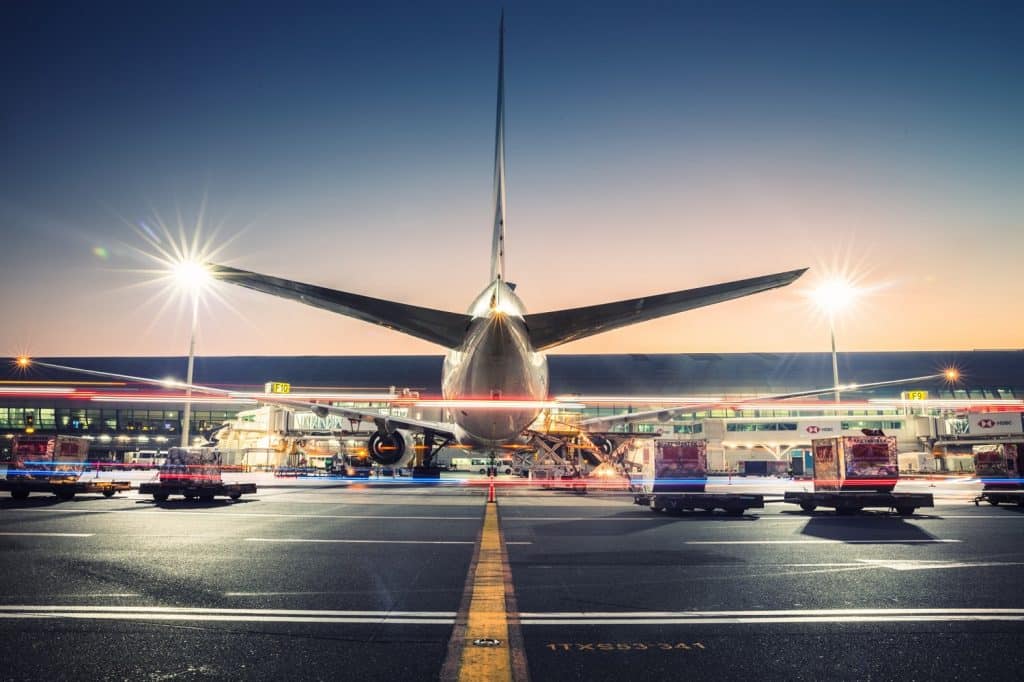
In 2024, Saudi Arabia recorded 29.7 million international visitors, an increase of 8 percent compared to the previous year, alongside 86.2 million domestic tourists, up 5 percent year-on-year.
Total tourist spending for 2024 reached SAR284 billion. Of this, international visitors accounted for SAR169 billion, representing a 19 percent increase. These figures indicate both volume growth and higher levels of expenditure per visitor, with international tourism contributing a larger share of total spend.
Faisal Durrani, partner and head of research, MENA, says: “Our research reveals a rapidly evolving industry driven by high-value travellers, experiential offerings and world-class hospitality assets emerging under Vision 2030 and the National Tourism Strategy. Having already reached 116 million domestic and international visitors in 2023, the government has revised its 2030 target from 100 million to 150 million visitors, with one-third expected to be religious tourists.
“This underscores the Kingdom’s dual ambition of strengthening its global role as Islam’s pilgrimage hub while expanding its reach into international leisure and business travel and domestic tourism.”
Religious tourism and shifting traveller mix

Religious tourism continues to form a central pillar of demand. In 2024, Saudi Arabia hosted 1.8 million Hajj pilgrims and 35.7 million Umrah pilgrims. Within this segment, international Umrah participation reached 16.9 million, marking a 25 percent increase compared to 2023 and the highest level recorded to date.
At the same time, the composition of international arrivals is changing. Non-religious travellers now account for 59 percent of total international arrivals, compared to 44 percent in 2019. This represents a 127 percent increase over the period. Leisure and holiday travel generated SAR36.4 billion in 2024.
Asia accounted for the largest share of international visitors in 2024, with 9.7 million arrivals. Egypt was the largest individual source market, contributing 3.2 million visitors, followed by Pakistan with 2.8 million and Bahrain with 2.6 million.
Hotel performance and pipeline growth
Operational indicators across the hotel sector show moderate growth. Between January and August 2025, the average daily rate increased by 0.3 percent to SAR746 (US$199), while occupancy reached 61 percent. This contributed to a 1.3 percent increase in revenue per available room.
As of September 2025, Saudi Arabia’s quality hotel stock stood at 171,650 rooms. Supply is projected to grow by 18 percent by 2027. In total, approximately 358,000 hotel rooms are planned across the Kingdom, with around 94,000 keys already under construction or in advanced planning stages.
Riyadh is expected to see a 19 percent increase in quality hotel rooms, reaching 30,330 keys by 2027. Makkah and Madinah continue to account for a significant share of future supply. Projects such as Rua Al Haram (more than 70,000 keys), Rua Al Madinah (more than 47,000), Knowledge Economic City (more than 42,000) and Masar Makkah (more than 41,000) will contribute more than 252,000 rooms in the Holy Cities, with 64 percent positioned within the four- and five-star categories.
Domestic travel behaviour and frequency

Domestic tourism remains a key contributor to demand. In 2024, Saudi nationals accounted for 74.3 percent of total visitors. Travel frequency data indicates that 29 percent of Saudi nationals and Saudi-based expatriates travel within the Kingdom every two to three months. This rises to 50 percent among individuals with monthly incomes exceeding SAR80,000.
Travel patterns show a preference for short breaks. Among Saudi nationals, 36 percent favour trips lasting four to six days, while 20 percent opt for week-long stays. Higher-income travellers show a stronger preference for longer domestic holidays, with 67 percent choosing trips of seven to ten days.
Among expatriates, 47 percent favour trips of two to three days, while 19 percent limit travel to day trips. Trips exceeding two weeks remain limited across both groups.
Weekly travel is also a feature of the domestic market, with 13 percent of nationals travelling every week. This reflects established patterns of short-haul movement between cities. Since 2019, approximately 250,000 Saudis have relocated to Riyadh, with the city accounting for 66 percent of all new jobs created during this period.
Amar Hussain, associate partner – research, MENA, says: “These trends point to robust and broad-based demand for domestic tourism offerings, ranging from short city breaks to longer cultural and nature-based experiences. The consistency of domestic travel behaviour, based both on our data and publicly available statistics, reinforces the importance of ongoing investments in hospitality infrastructure, destination development and regional connectivity under Vision 2030. This is particularly the case in established hubs such as Riyadh, Jeddah and Al-Ula, as well as boosting offerings in popular regional hub locations such as Al-Soudah, Taif and Abha.”
Key destinations across the Kingdom

The report identifies a concentration of domestic leisure travel around major urban centres and religious destinations. Makkah remains the most visited destination overall, attracting 42 percent of domestic travellers. Among higher-income Saudis, Riyadh is the leading destination, with 61 percent selecting the capital.
Riyadh and Jeddah each account for 40 percent of domestic travel, reflecting their roles as centres for business, leisure and cultural activity. The Dammam Metropolitan Area attracts 16 percent of domestic travellers.
Regional destinations are also gaining traction. Abha and Taif attract 24 percent and 22 percent of domestic tourists respectively. Al-Ula accounts for 20 percent of domestic travel, while Umluj and Jizan attract 6 percent and 5 percent respectively.
Focus on higher-tier accommodation

Accommodation preferences indicate a focus on higher-tier products. Of the Kingdom’s existing 171,650 hotel rooms, 60 percent fall within the luxury, upper upscale and upscale segments. Makkah accounts for 40,200 rooms within these categories, while Riyadh accounts for 18,500 rooms, representing 23 percent and 10 percent of total supply respectively.
By 2030, luxury, upper upscale and upscale rooms are projected to represent 76 percent of total supply. Demand data supports this trend, with 83 percent of travellers indicating a preference for four- and five-star hotels. Demand for lower-tier accommodation remains limited.
Serviced apartments represent the second most preferred accommodation type after hotels, with 22 percent of respondents selecting this option, up from 20 percent in 2023. Resorts account for 11 percent of preferences, an increase from 9 percent in the previous year. Approximately 8,000 hotel rooms are planned across Red Sea projects by 2030.
Outlook for tourism development

El Kadiri says: “Saudi Arabia’s tourism and leisure sector stands on the brink of a historic transformation. Mega-destinations such as The Red Sea, AlUla, and AMAALA are now materialising from visionary blueprints into tangible luxury escapes. The Red Sea’s first resorts and international airport are operational, forming the initial wave of over 3,000 keys that will anchor Saudi’s position as a global luxury and regenerative tourism hub. These developments, underpinned by tremendous infrastructure investment and sustainable design, reflect a strategic focus on both volume and value.
“Saudi Arabia’s trajectory remains remarkable. By blending heritage tourism, pilgrimage innovation and modern leisure experiences, the Kingdom is crafting a multifaceted tourism identity in which luxury meets authenticity and ambition meets execution.”
