

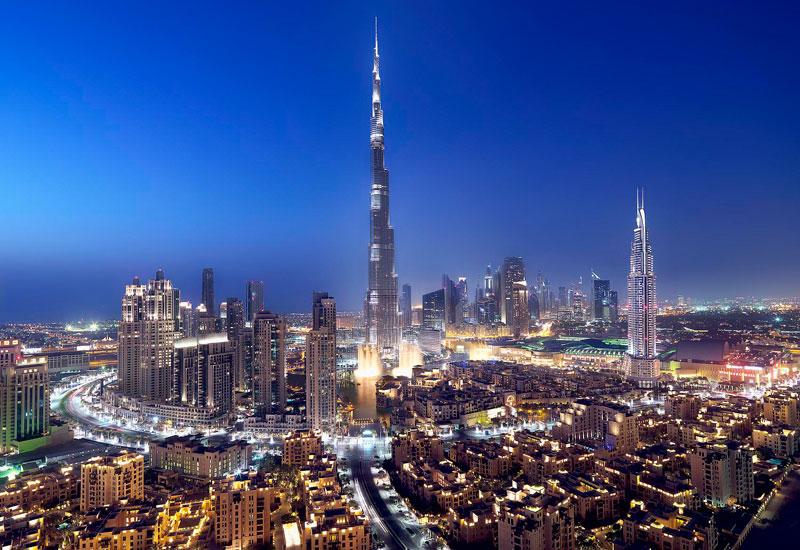
Dubai has always been considered a luxury destination, but with increasing room rates and growing tourist numbers, a market for midscale hotels is emerging. Hotelier finds out how this will impact the city as it gears up to welcome 20 million tourists by 2020
Riding on the success of visitor numbers exceeding 11 million in 2013, representing a 10.5% year-on-year growth, Dubai’s tourism industry is bullish about the emirate’s future.
Positive visitor numbers, along with completion of major infrastructure projects such as the Al Maktoum International Airport, and the city’s recent Expo 2020 win, show that Dubai’s Department of Tourism and Commerce Marketing (DTCM) has been, and continues to work overtime to promote the city and its attractions.
Optimism has rubbed off on the accommodation sector too, with a number of new properties and brands announced over the past six months, including Dubai’s first Hilton Garden Inn, the Ecos budget brand from Hospitality Management Holdings, the first InterCity property from Steigenberger, and at least six hotels each in the pipeline for Hilton Worldwide, Marriott International, and Emaar Hospitality.
At present, Dubai’s hotel pipeline stands at nearly 30,000 keys, and according to DTCM, the emirate is set to welcome between 145,000 and 160,000 keys by 2020.
Occupancy and average rates in the city have also seen a steady rise. While occupancy slipped slightly in June due to the usual drop expected during Dubai’s summer months, all signs indicate the market is close to reaching pre-crisis levels, not just in terms of occupancy, but ARR too. However, while a growing number of tourists serves hoteliers well, analysts are concerned about increasing room rates.
TRI Hospitality Consulting senior consultant Christopher Hewett says: “We’ve all seen how the average rates keep increasing in Dubai and it will get to a point where some people may find it unaffordable to spend one or two nights in Dubai when hotels charge $300 a night. And this is why Abu Dhabi is also starting to get a lot of demand because it’s seen as a more affordable option when it comes to hotel accommodation.”
Increasing rates are also a concern for DTCM, but director general Helal Saeed Al Marri has said the authority will not regulate prices “even if hotels double their rates”.
Explaining the decision, he states: “I do think that rising prices are a risk, [it is] one of the things that does worry us, but at the end of the day the hotel sector here is experienced. What I believe is the market will not continue going up because the demand and supply will balance and the hotels are really savvy about this, and they will achieve the right balance.”
Wyndham Hotel Group regional VP MEA Bani Haddad also believes the market should stay dynamic. “The effect is obviously very positive on hotel rates — we are seeing around 7% increase versus last year. If you compare Dubai to other cities like Paris or New York — even though rates are going to pre-crisis levels — they are still quite acceptable,” he comments.
As a result of increasing room rates, the industry has witnessed a hike in demand for midmarket hotels. The growth of the segment will also see the introduction of new tourist markets, believes Ròya International’s founder and group CEO Ahmed Ramdan.
Meanwhile, DTCM has also introduced a number of incentives to encourage more growth in the segment, including the waiver of a 10% municipality fee levied on hotel establishments, as well as tax breaks.
“We are starting to see a lot more projects being announced, which focus on the midmarket segment and a lot of this is attributed to government initiatives, which were focused on creating a strong midmarket segment through the waiver of the 10% municipality service charge, as well as with the speeding up of licenses and approvals, and favourable lease rates for launching in key areas around the city,” explains Hewett.
The promise of this underserved sector has not gone unnoticed by international players, with Hilton, among others, set to introduce its select-service Hilton Garden Inn brand in Dubai next year.
Carlos Khneisser, vice president, development, Hilton Worldwide Middle East, says: “Many international hotel operators are recognising the emirate’s development prospects, including the midmarket segment.
“This gives us a great platform to further develop our Hilton Garden Inn and Hampton by Hilton brands and to build awareness of our midmarket and value offering among a captive and growing audience of travellers.”
Although there is still some time before the number of midscale hotels matches the number of upscale and luxury properties on the market, the long-term impact of this new segment will be an overall maturation of the market, with a wider range of accommodation options for visitors on offer.
“Dubai must remain as value for money,” urges Ramdan. “Right now I feel prices are going higher and higher and higher. Not everybody can afford it and one day we may wake up and it’s too late.”
But while hoteliers are talking about introducing budget and midscale brands, there is still a significant focus on luxury, with the UAE’s first Four Seasons property set to open in Dubai by December; the St. Regis making its Dubai debut as part of the three-brand Habtoor Palace complex in Q2 of 2015; and phase four of the Madinat Jumeirah, which is currently under development, among several other luxury properties in the pipeline.
Pascal Gauvin, COO, India, Middle East, & Africa for InterContinental Hotels Group, which has three Dubai properties in the pipeline, explains: “[Despite] the growth of midscale we still see immense potential for our luxury brand, InterContinental Hotels & Resorts, which has a long heritage in the Middle East”.
Dubai’s reputation as a “high-end” market is not something DTCM is in a hurry to change. However, Al Marri asserts that the destination offers what he calls, “affordable luxury”.
As Al Marri explained at ATM: “Dubai today is definitely a high-end destination, and by that we mean affordable luxury. It is a destination that caters to families, and when you look at the types of hotels, it’s not just about affordability. Different markets spend on different things — some on experiences, others on luxury.”
“We are not looking to go into mass tourism like some destinations. But what we are looking to do is maintain Dubai’s affordable luxury, and as more and more [airline] routes open up, it does give us that direct access.”
The new routes Al Marri refers to include the Emirates and Quantas partnership, established last year, which has opened up several new target markets for the emirate. Additionally, in the past three months alone, Emirates has announced several new routes, including Chicago, Boston, Oslo, Brussels, and Kiev.
The airline is also increasing its number of flights to destinations such as San Francisco, Houston, Doha, Frankfurt, Karachi, Mumbai, Delhi, and the Seychelles. So while Saudi Arabia remains Dubai’s primary source market, DTCM is turning its attention to emerging markets to attract more tourists.
“For Dubai, part of our strategy is to focus on having great diversity in our source markets, and we are also focused on the underserved markets in Africa, in CIS, in South America, and new markets such as Australia and China, which are growing very rapidly,” adds Al Marri.
“India is growing at double digits per year in terms of the segment we currently have, China is currently growing at double digits per year — so if we just maintain our share from those markets, we are getting 70% of what we are looking for.”
DTCM also eased visa restrictions on 13 more EU countries earlier this year, including Bulgaria, Romania, and Latvia, and according to Al Marri, there are several ongoing discussions to make travel easier for tourists from key markets.
With hotels, tourists, the number of flights, and guests all on the rise, several new areas are under development in Dubai. Among the projects creating the most buzz, is the one million ft2 Starwood complex on Sheikh Zayed Road, which comprises the 966-key Westin Dubai, the 241-key St. Regis Dubai and the 384-key W Hotel, which are due to open next year.
“The St. Regis will open in quarter two, then the W Hotel in quarter three, and then toward the end of the year, the Westin will open so the plan is that by the end of 2015 the whole complex will be open along with the entertainment centre,” Starwood Hotels & Resorts senior vice president and regional director for the Middle East, Guido de Wilde told Hotelier earlier this year.
Upcoming areas also include Meeras’ Citywalk development, which will house a Marriott property, and the Deira Islands project, where according to a statement by Nakheel, half of all hotel plots have already been sold. The Al Jaddaf (also spelt Al Jadaf) area on Al Khail road is emerging as a hub for business hotels.
Dubai Marriott Hotel Al Jaddaf opened its doors in the area at the start of the year, and Rezidor’s Park Inn Al Jadaf, the Swissotel Dubai Al Jadaf from FRHI, and the Fraser Residence Al Jadaf are coming soon.
Ròya’s Ramdan, however, cautions that infrastructural development will have to be a priority in order to drive traffic to these new areas. “The RTA first needs to finish the infrastructure to get [to Deira Island]. It’s a congested area — that will be the first challenge. The second challenge is what kind of brand you’ll put there. By nature, it is not a very high-end area. It’s more trade, souk and merchants; it’s a midscale market.”
The most talked-about district, however, is the site for the Expo 2020, located near the Dubai World Central in the Jebel Ali Area. The six-month long event is expected to draw some 25 million visitors to Dubai between October 2020 and April 2021 according to Al Marri.
Despite the aim to essentially double the city’s hotel offering by that time, Al Marri says only 5% to 10% of the pipeline is likely to be located in the area.
“We would expect to have somewhere between 5000-10,000 keys in that area. Near Dubai World Central, we’d probably expect a minimum of 10 hotels. I think there are hotels already starting planning around the World Central and they will come online gradually,” he predicts.
However, Al Marri is quick to point out that hotels will not be built specifically for the Expo, but acknowledges the event will certainly lead to a significant increase in occupancy at the time.
Among the groups planning hotels near the site is City Seasons Hotels, whose director of marketing and communications Elise Sarkis-Talj revealed to Hotelier earlier this year that the group was seriously considering developing a property in the area.
“Besides the buzz of 2020 and all that it’s bringing with it, you will have a lot of movement in Dubai and around the World Central and Al Maktoum International Airport. If [the government] is building in such an area, it means that the area is bound to grow,” she explained.
This is a sentiment echoed by TRI Hospitality’s Hewett: “It’s a very strategic location, it’s near Dubai World Central and Al Maktoum International Airport, which will, in the long term, become the leading airport in Dubai, especially with an increased capacity of 160 million passengers.”
“And furthermore it’s very close to some strong corporate demand generators, namely Jafza, and all the infrastructure and logistical companies that are going to go into the Dubai World Central.”
While the focus appears to be on quantity with regards to development, DTCM has not neglected to broach the subject of quality. Recently a new hotel classification scheme was announced, and is due to come into effect from September.
Since it was first talked about last year, the scheme — which aims to improve transparency around the types and quality of hotel rooms and accommodation in the emirate — has been revised following consultation with the industry.
“A revision has been applied to room size perimeter requirements, bringing hotel classification in the emirate in line with rating systems in other international destinations. A further addition is wi-fi access being available in public areas of all new hotel establishments,” says Khalid bin Touq, executive director, licensing & classification sector, DTCM.
Although there has been some uncertainty voiced around whether the criteria will apply to existing hotels — and in some cases, whether ratings will be altered — Touq confirms that the revisions will only apply to “new hotel establishments”.
Another ammendment to the scheme has been the addition of holiday homes to the existing list of accommodation categories. The criteria states that from June 15, all holiday homes in Dubai must be rented through a licensed operator.
“Any individual home owner who wishes to rent out their property as a holiday home will be required to use the services of a licensed operator, with their property becoming part of the operator’s portfolio,” says Touq.
This new addition means the categories now include Resorts, Hotels, Hotel Apartments, University Campus, Youth Hostels, Guest Houses and, Holiday Homes, with Holiday Homes rated as either Standard or Deluxe.
With His Highness Sheikh Mohammed bin Rashid Al Maktoum, ruler of Dubai, and UAE vice president and prime minister approving DTCM’s Vision for Tourism — which targets 20 million visitors by 2020 — the next five years will be crucial for the city.
As part of Vision 2020, DTCM outlines three areas on which Dubai will focus investment. These include promoting the UAE as a world-class family destination; increasing focus on business visitors, marketing the city as the MICE capital of the region; as well destination tourism, with the aim to enhance the city’s reputation as a regional events hub, and turn it into a global events and entertainment destination. To achieve these targets, development must continue at the same pace for the next five years — a challenge Al Marri is confident Dubai can handle.
“Our target was to grow between 7% and 9% per year, and since that target was set, we have been exceeding it. With the attractions and growth of airline seats and infrastructure… a lot is being invested and regulations are being enhanced. And as a result, we feel confident in achieving the target of attracting 20 million tourists by 2020,” he asserts.
