

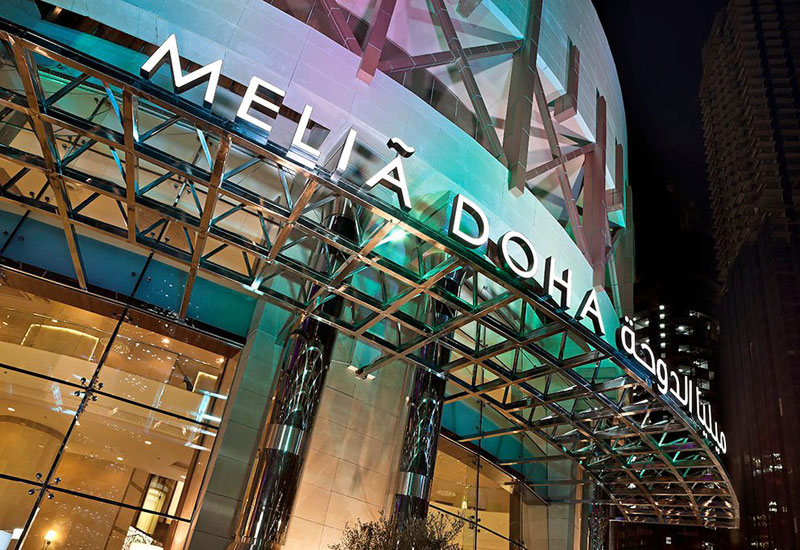
Priding itself on being the first Spanish hotelier in Qatar, Mallorca-founded Meliá Hotels International made the next step in its Middle East expansion on February 1, 2015 with the opening of Meliá Doha, just four months after the management contract was signed with Tamniyat Qatar Real Estate Investment.
Located within the mixed-use 41-floor Bin Samikh Tower, the hotel features 280 rooms and 37 suites. Surprisingly, given its sparkling, contemporary lobby, the hotel was actually built seven years ago by Spanish construction company Ecisa. In the interim, it has seen interest from a few hotel operators, including Marriott International and Swiss-Belhotel, which signed a contract to open the Swiss Deluxe Grand Hotel in 2013.
However, owner and operator soon parted ways, leaving the hotel empty again. The hotel’s rather muddled background has posed a number of challenges for the Meliá team.
Meliá Doha guest experience manager Antonio Stalenhoef Diaz comments: “It’s been ready for seven years, so that’s why we’ve had a lot of difficulties in some of the rooms. We’ve had to change beds, wallpaper, and carpets, so it’s been a big challenge.”
Overhauling the interiors wasn’t the only hurdle for the 22-strong ExCom task force, brought in to turn the hotel around in just four months, having been given a deadline of February 1. Recruitment, training, procurement and licensing were also to be considered. However, the team is proud to say that it managed to rise to the challenge, opening on time, albeit softly.
“It was challenging,” explains executive assistant manager in charge of food & beverage, Nicolas Marius Cedro. “The hotel was built, but it was not delivered in the normal way. Meliá International took on the challenge to open our first managed hotel in Doha because it represents growth in the Middle East for us. We took on this challenge even if we knew in advance we were going to have many issues.”
While in the wider Middle East region, Meliá International operates four hotels in Egypt, Meliá Doha is its second property in GCC, following the 2012 launch of Meliá Dubai in Bur Dubai.
Plans have been announced to open contemporary urban brand, ME by Meliá, in Dubai next year and in Doha in 2017. Another brand, Innside by Meliá has also been signed for Dubai, and further expanding the GCC portfolio, the extended-stay Meliá Downtown Residences Dubai is scheduled to open its doors in 2018.
Cedro asserts however, that for the company, Meliá Doha is the most important opening at the moment from a strategic point of view.
“Of the 350 hotels we have in the world across seven brands in 39 countries, I can say that at the time being, this hotel is the most important for the company in terms of growing up in the new-for-us Middle East market.”
On February 1, the hotel opened just four of its floors since the other rooms weren’t ready yet, and F&B was limited to room service and breakfast. The taskforce clubbed together, working day and night to get the rest of the hotel up and running.
“There was HR, engineering, the vice president was here for several weeks and spent long days with us to help the general manager,” explains Cedro.
Three weeks later, and the hotel was almost fully open; its restaurants and bars were functioning, and 290 of the 317 rooms were available to guests. However, given the stess and long hours the staff had endured, many of them dropped out early.
Article continued on next page…
“It was so tough and pressurised that many of the F&B and ExCom staff left. It’s difficult in this region to bring staff on board because of visa issues. Even if you want to bring over specific employees, sometimes you can’t because they won’t let you, so that was very challenging for us and that’s why corporate HR was based here for two months on a daily basis,” says Cedro.
According to Diaz, however, “staff were working 14-hour days for two months, but nobody complained”.
“Team work was our biggest weapon; first we had to make a team and check which tasks everyone had in the hotel, and from there, we saw what the priorities were.”
At the time of going to press, Meliá Doha had 178 staff on board, with a total target of 250, however even with the staff they managed to secure, training them up in time for the opening was a struggle.
“Now we are okay, but the problem we’re facing is that the people we have on board are not all we want. We try to train them on the floor but sometimes we have to teach them as a baby — how to walk, etc,” explains Cedro.
Casual housekeeping, security and procurement staff have also required substantial training to meet the Meliá brand standards, he adds.
“We opened so quickly that we didn’t take time to train because the staff came one by one. On the F&B side, we have 61% of the team and we still need about 20% of the senior staff and 10 or 12 more managers for F&B to deliver the service we want, and to follow the brand standards,” adds Cedro.
In addition to staffing issues, procurement of materials posed a challenge for the team — particularly the unexpected items.
“For me, everything became so hard to get,” claims Diaz. “Small things, like plants, the fragrance for the lobby, etc.”
The signature scent for Meliá Hotels’ lobbies contains alcohol, and so the team had to source a non-alcoholic alternative.
“We had to get a company to replicate the scent, but with no alcohol. We’ve had to get used to that sort of thing,” adds Diaz.
Sourcing ingredients for some of the hotel’s F&B outlets — including fine-dining Indian restaurant Signature by Sanjeev Kapoor, Spanish outlet, Aceite, and all-day dining venue Nidaaya — has also put the team to the test.
“Ingredients are a big challenge; from the food to the chinaware, and crockery. It’s challenging in Doha, because we need products with labels in Arabic; you need a certificate of origin for everything, and you have to have many things checked,” comments Cedro.
Article continued on next page…
He reveals how the team managed to overcome these issues to some extent, by travelling to Dubai to link up with distributors who can make products available in Doha. The hotel has also partnered with an olive oil company in Jaen, Andalusia, which will distribute its oil exclusively to Meliá Doha.
“I’ve created a relationship with a Spanish supplier from Dubai to have things distributed to Doha,” Cedro says. “We brought special pans from Dubai to cook paella… hopefully within a few weeks we’ll have all the products we need.”
Despite the rocky beginnings, one thing that really worked in the hotel’s favour was that its opening coincided with Saudi Arabian school holidays, and as a result the hotel was full in its first couple of weeks.
“We got lucky in terms of occupancy,” explains Cedro. “But on the operations side it was very tough as you can imagine; in the end we managed. We got just 7.9 in Booking.com results, but we know that this average is going to go up now that our restaurants are open.”
In charge of managing guest experience, is Diaz’ team, which consists of four staff on the hotel floor, and five on the phones, dealing with requests and complaints.
Part of Diaz’ role will be boosting the Booking.com score of 7.9 to “at least 8.5”, and with the score at 8 at the time of going to press, it’s clear the team’s efforts are pushing the ratings in the right direction.
To help with this, Diaz, who is also in charge of staff inductions and training, is offering incentives to staff who get a mention on TripAdvisor.
“We have an incentive plan for staff,” he explains. “It’s not 100% integrated, but every time a guest names a staff member on TripAdvisor, we give them a pin where we write a nickname for the guest that did the review. Depending on how many time she/ he is nominated, there will be benefits. So the first time it’s a pin, the second time it’s dinner in one of our restaurants, the third time it’s a day off, and with four nominations, the staff member has a free nights’ stay with breakfast in the hotel. It’s like a circle of winning. We’re getting reviews, we’re helping the staff to be happier, and the guest is happier.”
The guest relations department is something the company has invested a lot into to ensure a two-way communication between guests and staff, in order to offer more personalised service, and to encourage guests to voice complaints while they are on-site.
Diaz’ team is in charge of ensuring everything from housekeeping to F&B and engineering is running smoothly and that the rooms are up to brand standards. “I’m the ambassador for the company, so I have to make sure the lobby smells a certain way. I’m responsible for making sure that everything is running as a Meliá hotel. We want to create an image in their memory that reminds them they stayed in Meliá Doha,” he adds.
F&B FOCUS
Warm Spanish hospitality is referenced in a number of touch points throughout the hotel — from the welcome to the five F&B outlets, each of which offers something different to the Qatar F&B scene.
On entering the property, guests are greeted with a large, bright circular lobby, with floor-to-ceiling windows. This is home to Riqqa, the lobby lounge, which combines coffee and a dessert display with a luxury boutique, where guests can purchase designer perfumes, watches and purses.
Article continued on next page…
“We’ll have a display of all the desserts along with the jewellery and they will be linked in the menu, like the Cartier opera cake for example,” explains Cedro. “We’ll also have merchandising so you can take away.” On the fifth floor of the hotel, is third-party managed Signature by Sanjeev Kapoor and in-house Spanish concept, Aceite.
Signature by Sanjeev Kapoor is the first restaurant in Qatar for the Indian celebrity chef, who is well-known for his role as a judge on Masterchef India. The restaurant has a capacity of 60 people and an outdoor terrace. Dishes include tandoori wasabi lobster, succulent duck stewed and seared on tawa, and blood orange and ginger kulfi. “Signature has a creative menu, a charcoal tandoori oven, and the chefs are trained by Sanjeev and his corporate teams,” explains Cedro. “The food is amazing; the chinaware, the glassware, the perfume, the water, the services and standards are just for his restaurants, so it’s very unique and we’re very proud to have this concept in the hotel.”
The venue itself has been designed to create an intimate atmosphere with wooden finishes and white table cloths. Meanwhile, a degustation menu has been specially created by the executive chef and paired with international wines and spirits.
“It’s of an even higher standard than the ones we have in Dubai and Abu Dhabi,” adds Cedro, referring to Meliá Dubai’s Signature, and the Abu Dhabi outlet in Nation Galleria Mall.
Directly opposite Signature by Sanjeev Kapoor is tapas bar and restaurant, Aceite, a concept designed by Meliá’s corporate team.
“You can have tapas, enjoy the food directly, like in Spain. There are high tables to share so you can have a social experience. Also the food we have in Spain is quite similar to Arabic gastronomy,” Cedro explains, hinting that if successful, Aceite may be expanded to other Meliá hotels. “The brand is new in Meliá. In the new ME and Innside hotels, yes — why not [open an Aceite]. It could be an option”.
Meanwhile, Nidaaya, the hotel’s all-day dining menu is, according to Cedro, to be developed into a more niche concept, with a meat display and charcoal oven.
“It will be like a charcoal steakhouse where you can choose your meat from the display. I can say that it will be brasserie service style; you’ll share the starter on the middle of the table, with a nice piece of bread. We’ll also be open for burgers cooked in the charcoal oven between lunch and dinner,” he says.
The pinnacle of the hotel will house Noir Lounge & Club, a night venue to rival next door neighbour, W Doha’s Crystal when it opens shortly after Ramadan.
As club director of Noir, Bobby Chaggar brings his experience of managing Q43 in Dubai and The Heron skyscraper’s private member’s club in London to Doha’s nightlife scene. The music genre at Noir will have a focus on vocal, light house and what Chaggar describes as “accessible R&B”. Explaining the vibe he intends to create, Chaggar comments: “The service will be intimate, at your table, bespoke to you. The atmosphere will be free from arrogance and posing. Noir is for the guest who has pure class and nothing to prove.”
In terms of ambience, Chaggar cites Provocateur and Boudoir in Dubai and Buddha Bar in London as examples of what he is looking for, explaining: “I don’t believe in reinventing the wheel. We’re taking the wheel and painting it a different colour.”
He says the focus will be on knowing guest preferences and catering to regulars. “I will encourage staff to give out their mobile numbers. If you build a rapport with guests and they can call you and say ‘can you look after me’, then that means you’ve got their loyalty.”
“Everyone here will bring something to the party: from bussers to waiting staff to concierges. Our staff is encouraged to form a bond with regular guests — meaning that they already know their favourite table, drink and so on. The best waiters border on being virtual concierges.”

