

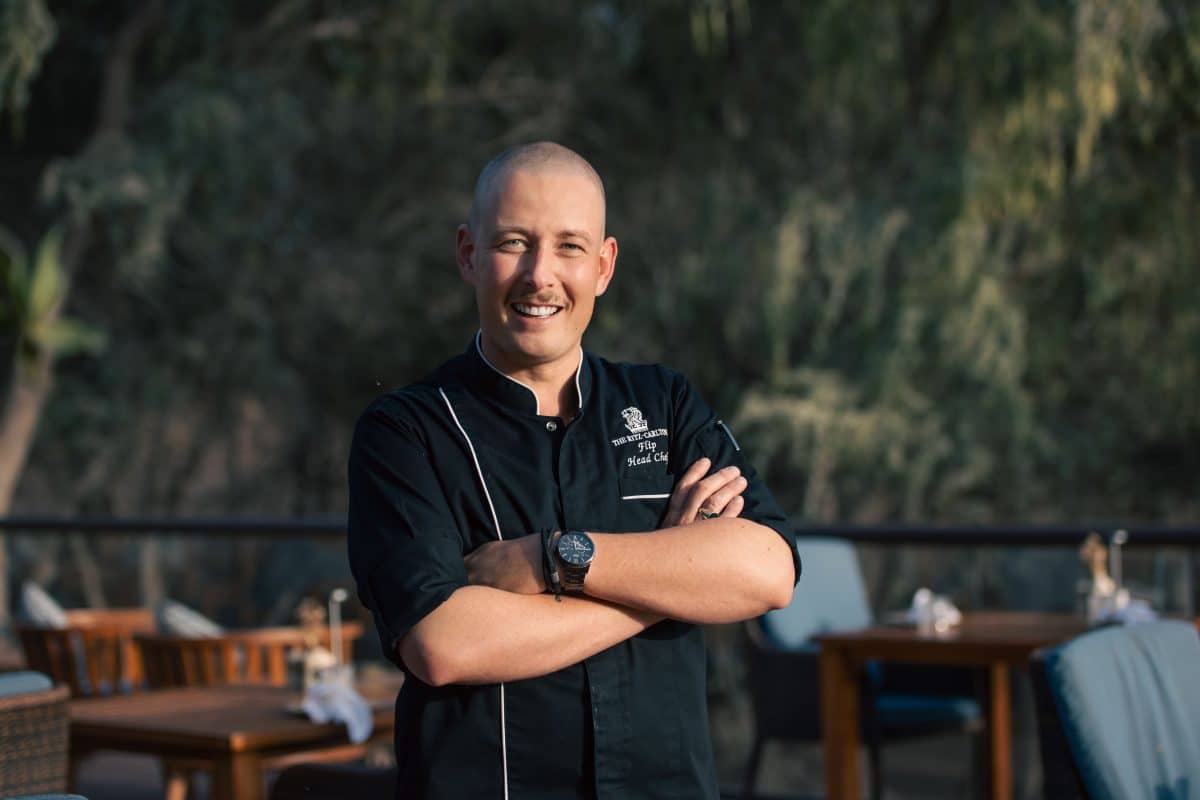
Farmhouse by Syrco offers a conscious dining experience, featuring local flavours and responsibly sourced ingredients. With a menu inspired by classics and local traditions, the restaurant was awarded one toque by Gault&Millau 2025.
Here, we get to know the head chef Florian van Dillen a bit better.
How and why did you get into the hospitality industry?
Ever since I was four years old, I knew I wanted to become a chef. Creativity has always drawn me in – the idea that you can turn nothing into something. Plus, eating is arguably one of the best things in life; it brings people together. No evening ever got worse after six oysters and a bottle of champagne.
At twelve, I started working at a catering company that handled my parents’ 25th wedding anniversary. There I was on Saturday afternoons, cleaning melons and washing lettuce, and I instantly knew – this is my world. The noise, the music, the smells, the people, the humour, the freedom — being in a kitchen is just the best!
From there, I went on to work in a bistro at 14, a Michelin-starred restaurant at 16, and eventually opened my own restaurant at 28. I wouldn’t want to do anything else. It’s both a blessing and a curse — a fascinating contradiction.
Have any previous roles helped get you where you are today?
Absolutely. That’s true for anyone: every decision you make leads to where you are now. My years of leading high-level kitchens have shaped me into the ideal candidate for this role.
Have there been any mentors in your career so far?
Like with any craft and especially cooking — you’re a student for life. Every chef I’ve worked for has been a mentor in their own way. I am who I am today because of what I learned from them.
If I had to name the chef who influenced me most, it would be Pieter Bosters. I worked closely with him for four years, and to this day, we’re still close friends. He taught me refinement.
What challenges are you expecting to face and what’s the plan to tackle them?
The transition from running a restaurant to working in a hotel is a big one, and there’s still a lot I need to learn. That will be my greatest challenge. Hotels come with layered structures and shared decision-making, which is quite different from the more singular approach of restaurant ownership. It just proves again that you’re a student for life. I’ll tackle this challenge the same way I’ve approached my entire career: stay calm, listen well, observe closely, and don’t get ahead of yourself. That’s how most doors open for you.
Do you have any advice to your fellow hospitality professionals?
Always trust your gut. Don’t stay too long in places that don’t help you grow. Surround yourself with people who believe in you. Never burn bridges.
And maybe most importantly: believe in yourself. Support yourself. Take care of yourself. If you can, go see the world. Life is short — do what you love. That’s the path to real happiness. It’s a cliché, I know. It’s also the truth.
What is your ultimate goal in hospitality?
One day, I want to be among the best — part of that elite group of chefs who have earned three Michelin stars. To win the Champions League of hospitality. To push myself and my team to be the absolute best we can be. I gave myself another 30 years to reach this goal, let’s see where it ends!