


The hospitality industry in Saudi Arabia has seen a significant shift over the years, with more women stepping into leadership roles and challenging industry norms. While the journey has not always been easy, progress is evident as organisations implement mentorship programmes, inclusive policies and leadership development initiatives to support female professionals.
In this feature, five experienced women in the sector — Marina Krasnobrizhaya, GM at The St. Regis Riyadh; Philma Gomes-Ellis, commercial director of Shangri-La Jeddah; Renad Al Qurashi, marketing manager at Hilton Riyadh Hotel & Residences; Anna-Marie Dowling, GM of Nofa Riyadh, A Radisson Collection Resort; and Hessa Al Mazroa, GM of Novotel Sahafa — reflect on their years working in Saudi Arabia’s hospitality industry.

With careers spanning from one year to two decades in the Kingdom, these professionals bring diverse perspectives shaped by their experiences. Krasnobrizhaya arrived in early 2022, immediately diving into pre-opening activities at The St. Regis Riyadh. Gomes-Ellis, with nearly a decade in the Gulf, moved to Saudi Arabia in late 2023, bringing her commercial expertise to Shangri-La Jeddah.
Al Qurashi, who has been in Saudi hospitality since 2018, has built a career in marketing and brand management. Dowling, with over 30 years in hospitality, has been leading Nofa Riyadh for more than 18 months, driving growth and transformation. Meanwhile, Al Mazroa, one of the earliest Saudi women in the field, has worked in the Kingdom’s hospitality industry for nearly 20 years, navigating a male-dominated industry long before the current wave of change.
Each of these leaders has witnessed the evolving landscape firsthand — whether in the early years when female representation was scarce or today, as more women take on senior roles.
Breaking barriers
Al Mazroa reflects on her early experiences in the industry; she highlights: “I believe I’m one of the rare Saudi women who started at a very early stage—back in 2004, at Al Hokair Group. Before 2010, navigating the industry as a Saudi woman was challenging. At the time, even seeing Saudis in hospitality was rare, let alone Saudi women.”
Al Mazroa recalls being the only woman in meetings and events, quickly learning the importance of confidence and communication. She shares: “I don’t particularly like using the word ‘challenge’ because I see everything as an opportunity for improvement.”
She mentions that mentorship played a significant role in her career, particularly from Majid Al-Hokair, who supported her growth. Al Mazroa shares: “In 2015, I was appointed deputy GM, reflecting the company’s vision to empower Saudi women in leadership. It was a bold step, especially at a time when no one else was doing it. A major milestone came in 2017 when I became the company’s first female GM.”

Krasnobrizhaya reflects on the challenges women have faced in Saudi Arabia’s hospitality industry, particularly in reaching senior management roles. “Limited representation in leadership positions and societal expectations in certain areas presented challenges,” she explains.
To navigate these barriers, Krasnobrizhaya sought allies within her organisation who supported her career growth. “By fostering open dialogue about gender diversity and advocating for inclusive policies, I helped create an environment where female talent could thrive and aspire to leadership positions,” she adds.
Gomes-Ellis, however, shares a different experience, stating that she has not personally encountered challenges as a woman working in Saudi Arabia’s hospitality industry. “Perhaps it’s because I am oblivious to gender bias, or maybe my focus on merit and efficiency allows me to navigate without considering demographic disposition,” she explains.
Her leadership philosophy centres on equality driven by performance. Gomes-Ellis highlights the promotion of women within her team, stating: “In the past year, we have promoted three Saudi women to senior management roles — not because they are women, but because they wholeheartedly deserved it.”
Al Qurashi acknowledges that one of the initial challenges in Saudi Arabia’s hospitality industry was the perception that senior roles were more suited to men. She adds: “However, I demonstrated that leadership is about skill, vision and dedication. To address these barriers, I focused on building a strong network, mentoring other women and fostering a supportive workplace culture.” Al Qurashi emphasises that creating a culture of empowerment is essential for lasting change in the industry.
Dowling shares a similar perspective, recalling that when she first joined Nofa Riyadh, she was the only female leader on the management team. She shares: “Today, I’m proud to say we now have four women in leadership roles. By fostering an inclusive and collaborative environment, I aim to demonstrate that diversity not only strengthens our team but also drives success and mirrors the progressive transformation of Saudi Arabia’s hospitality sector. Leadership is defined by capability, not gender.”
Role of Saudi Vision 2030

Krasnobrizhaya, Al Qurashi and Dowling all acknowledge the role Saudi’s Vision 2030 plays in expanding opportunities for women.
Krasnobrizhaya notes: “Vision 2030 has been transformative, fostering an environment of inclusion and diversity. The initiative has enabled female professionals to access leadership roles, training programs and networking opportunities, all critical for career development.”
Dowling echoes this, adding: “The Kingdom’s Vision is about fostering a culture where women confidently lead and inspire future generations.”
Gomes-Ellis highlights the role of women in shaping luxury hospitality, explaining: “Women bring unique perspectives that enhance guest experiences, which is why tourism and hospitality is globally seen as a sector where women can thrive.”
Al Mazroa points to the overall progress of women in the workforce, stating: “Women’s participation in the workforce has increased to 40 percent.”
Shaping the future
The increasing presence of women in leadership roles is reshaping the hospitality sector in Saudi Arabia. Krasnobrizhaya says: “Progress in leadership teams is achieved through development and a commitment to uplift colleagues.”
She emphasises that industry-wide acceptance of gender diversity enhances decision-making processes and business outcomes. Recognising personal development as a responsibility, she actively supports mentorship programmes that equip women with managerial skills.
Krasnobrizhaya states: “My vision includes motivating employees to set goals, maintain focus and pursue growth at every level. Women’s leadership not only fosters professional networks but also influences corporate policies. Over the next five years, female professionals will hold roles that shape business strategies.”

Gomes-Ellis shares the example of Shangri-La Jeddah’s commercial team, where 75 percent of members are women and half hold leadership positions. Their consistent performance in the top 50 monthly sales dashboard demonstrates the link between gender diversity, job satisfaction and business success.
“I believe that healthy competition drives job satisfaction and recognition plays a pivotal role in retention and tenure,” Gomes-Ellis notes, highlighting how an inclusive leadership approach strengthens industry momentum.
Al Qurashi also observes: “Women bring perspectives and leadership styles that transform hospitality.” She highlights the Hilton Riyadh Hotel & Residences’ ‘Women in Leadership’ programme, which offers mentorship, training and networking opportunities. Al Qurashi benefited from this initiative, alongside the Ministry of Tourism’s Executive Masters in Hospitality Management Programme, further enhancing her expertise.
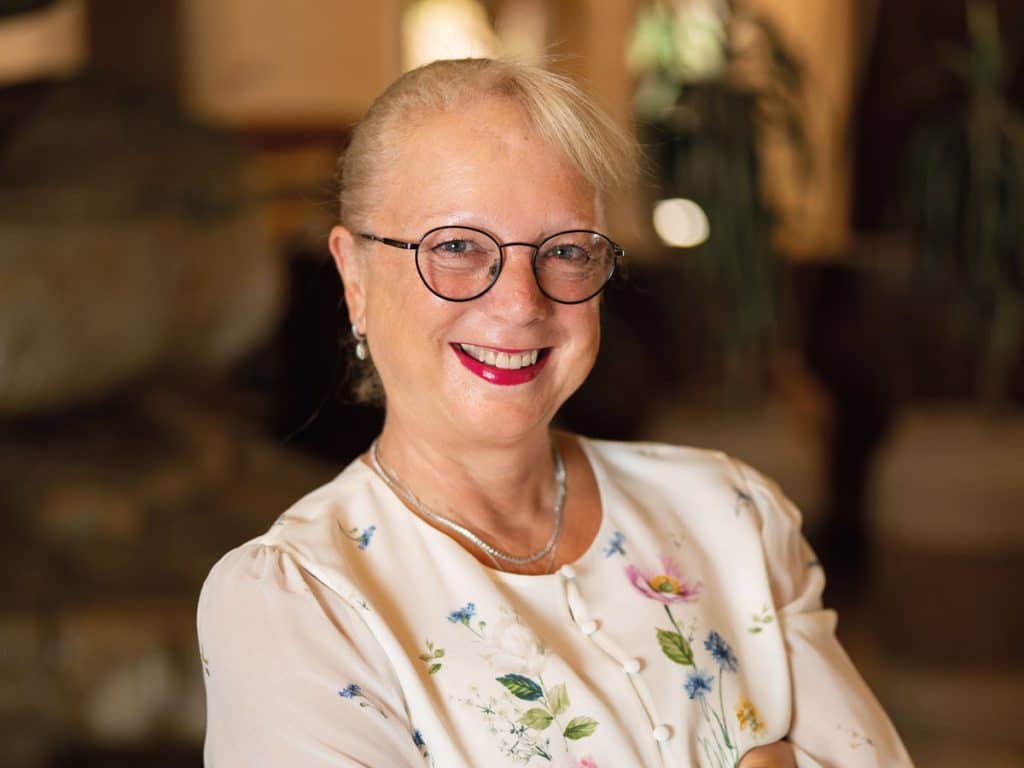
Dowling echoes this sentiment, noting: “The presence of women in leadership positions brings fresh perspectives, inclusive leadership styles and new approaches to hospitality in Saudi Arabia.” She highlights the impact of structured leadership workshops and cross-functional exposure, which encourage women to contribute ideas and lead strategic initiatives.
“Celebrating women’s contributions stimulates a supportive environment, innovative thinking and collaboration,” Dowling explains. She foresees that gender diversity will become a cornerstone of organisational progress, with women guiding strategic decisions and shaping workplace culture.
Advice for women

“I believe in leaving ladders behind,” Gomes-Ellis says, advocating for policies that open doors for female talent. She adds: “When aspiring leaders see visible career pathways, they develop a stronger sense of belonging and motivation. By fostering a culture of mentorship and leadership advocacy, the industry can redefine career possibilities for women and establish a more balanced professional landscape.”
She believes mentorship and networking play a crucial role in professional growth, encouraging individuals to be proactive by attending industry forums and networking events. “By introducing oneself and asking questions, in-person networking can be rewarding,” she notes, pointing to the strength of Saudi Arabia’s social connections among women.
Gomes-Ellis encourages: “Young women need to apply an equality mindset by leveraging individual abilities and promoting an inclusive work environment.” She highlights the importance of resilience, as hospitality requires bouncing back from setbacks while demonstrating emotional balance and professional respect.
She adds: “Flexibility is vital, enabling smooth responses to sudden challenges and ensuring seamless operations. Empathy and active listening are also extremely valuable as understanding and responding to guest needs can enhance overall experiences.
“Take the lead, then take it to completion. By integrating resilience, clear communication and strategic execution, women can build leadership pathways and position themselves for greater opportunities, particularly in traditionally male-dominated areas.”

Krasnobrizhaya adds: “Success comes from persistence and the ability to evolve alongside the industry. Another vital lesson from my journey is the importance of authenticity. Staying true to my values and beliefs has helped me earn trust and respect, which is essential for any aspiring female leader.”
Al Qurashi encourages aspiring professionals to be confident, seek mentorship and build strong networks. “Each obstacle offers a chance to develop new skills and prove capabilities,” she adds, highlighting how embracing challenges fosters growth.
Dowling shares: “Never hesitate to advocate for yourself and your ambitions. Hard work and consistent results speak volumes as measurable achievements challenge traditional norms.”
She recalls facing disappointment when initially passed over for a general manager position, but instead of seeing it as a defeat, she used the time to develop her leadership skills through mentorship, reading and hands-on experience. When the opportunity arose again, she was fully prepared.
Dowling explains: “I learned that senior leadership involves motivating teams and winning hearts and minds through delegation. Women bring unique perspectives and a guest-focused approach that drive progress.”

Al Mazroa shares similar views, advising women entering male-dominated fields to “believe in yourself”. She stresses that confidence is crucial for earning recognition and passion sets individuals apart in the competitive hospitality landscape.
Al Mazroa adds: “Women in leadership need to prove themselves twice: first, that they can do the job as a woman and second, that they can meet their KPIs. We ensure no woman is restricted in her development. If women have the courage to push forward, they can achieve miracles.”
Underscoring their contributions to balancing industry dynamics, she remarks: “Women add the cherry on top. Agility and adaptability help women navigate constant change, while kindness and care foster strong professional relationships.”