


NEOM’s chief development officer has given an update on THE LINE.
Speaking at he World Economic Forum in Davos, Switzerland, Denis Hickey, outlined key updates on the progress of the mega structure and other developments within the gigaproject. The ambitious urban initiative, central to Saudi Arabia’s Vision 2030, is undergoing phased construction, with excavation and foundation work well underway.
THE LINE, designed to redefine city planning with its linear structure, could take a century to be fully realised, he said.
Hickey says: “THE LINE is more than a city; it’s a paradigm shift in urban development. This master-planned city eliminates cars entirely, offering an exceptionally efficient transportation network that ensures seamless movement for residents.”
“We’re kind of designing this while we’re building,” Hickey stated, referring to the scale and complexity of the development. The first phase of construction, which includes excavation, piling operations, and laying foundations, is expected to transition into vertical construction later this year.
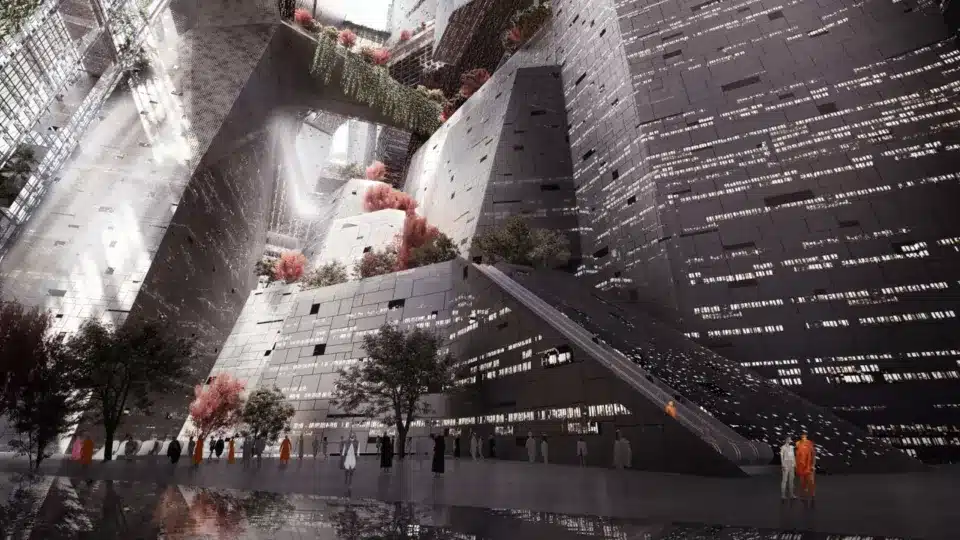
THE LINE is designed to span 170km in length, 1.2km in width, and 500m in height. NEOM has described its excavation and piling operations as the largest globally, involving 260 excavators and 2,000 trucks operating continuously.
Hickey noted that the development will take significant time to populate. He shared: “It’ll take 100 years or whatever to fill that. But we’ve got to plan now.”
Despite reports suggesting a scaling down of THE LINE’S original vision, the chief development officer reiterated that the city is still planned to accommodate nine million residents upon full completion.

The project aims to eliminate conventional road infrastructure by integrating a central transport spine consisting of high-speed rail and autonomous mobility solutions.
He concluded: “This is the dawn of a new era in urban living. THE LINE represents a future where cities coexist harmoniously with nature while ensuring a high quality of life for generations to come.”
NEOM’s gigaproject progress
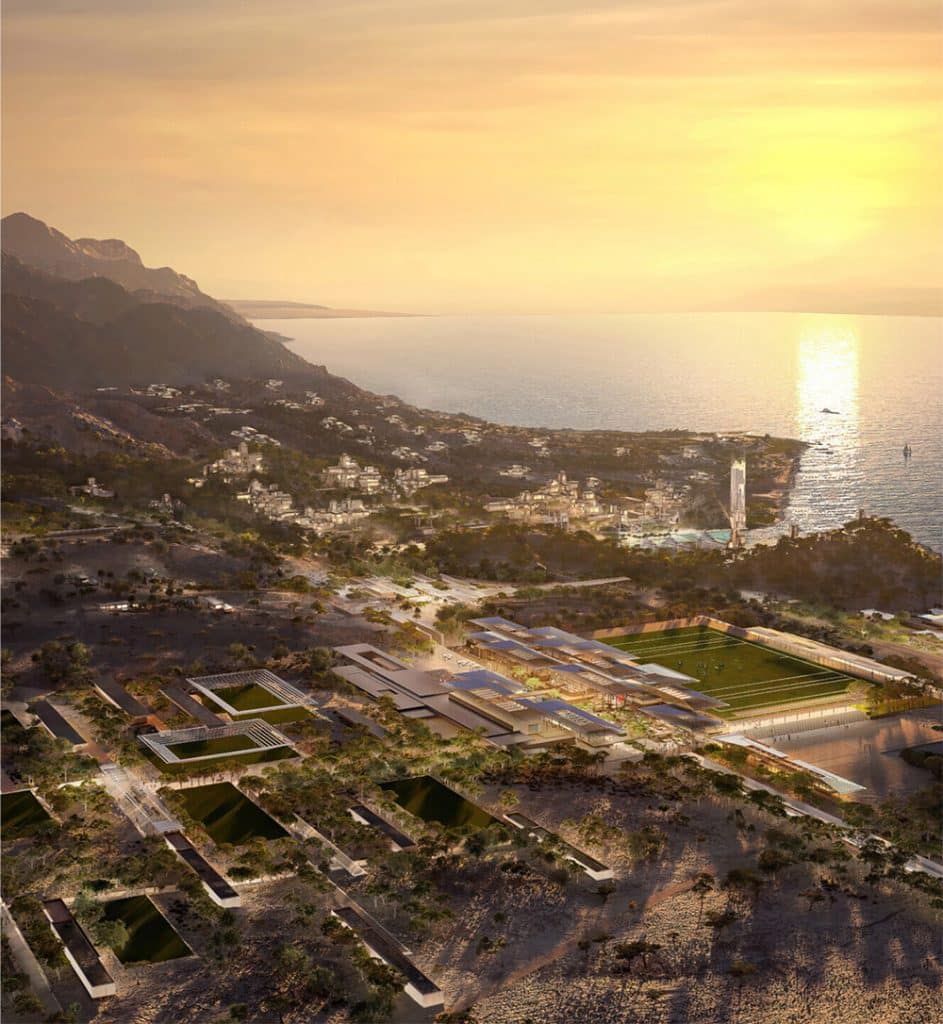
In addition to THE LINE, NEOM comprises multiple regions designed to serve distinct economic and social functions. These include Oxagon, a coastal industrial hub; Trojena, a future winter sports destination; Magna, a planned luxury coastal development; and Sindalah, a tourism-focused island resort.
Oxagon’s port is now fully operational, with ongoing infrastructure expansion aimed at enhancing intermodal logistics capabilities. The development of Magna includes extensive excavation efforts to create a resort within a mountain.
Hickey says: “We are in construction now; we’re going into the mountain.”
The process involves hollowing out the interior to house a hotel, retail spaces, and residential units.
Trojena is progressing with the construction of an artificial lake and associated tourism infrastructure. The region is scheduled to host the 2029 Asian Winter Games, positioning it as a key element in NEOM’s tourism sector expansion.
Infrastructure and transportation developments
NEOM’s transport infrastructure includes dedicated rail networks to link Oxagon with THE LINE. Heavy rail and autonomous freight solutions are being explored, with considerations for integrating autonomous goods vehicles.
The expansion of Oxagon’s port, situated near the Suez Canal, is a key component of NEOM’s logistics strategy, aiming to enhance intermodal trade routes.
The design of THE LINE incorporates a central transport spine, eliminating traditional roadways and replacing them with high-speed rail and autonomous mobility solutions. This configuration is intended to optimise land use and improve efficiency in urban mobility.
Economic considerations
NEOM is a core component of Saudi Arabia’s Vision 2030, a national strategy aimed at economic diversification. The Public Investment Fund (PIF), has allocated substantial resources to transform Saudi Arabia’s economic landscape.
Analysts have noted that while extending the project’s timeline enhances feasibility, it also introduces uncertainties related to fiscal and regulatory adjustments over the coming decades.
Economic pressures, including fluctuating oil revenues, influence the feasibility of large-scale initiatives such as NEOM. The Saudi government has faced fiscal deficits in recent years, raising questions about sustained investment in gigaprojects.
NEOM’s long-term viability depends on its ability to attract investment and generate economic returns through tourism, logistics, and advanced industries.
Challenges and controversies
NEOM has faced scrutiny regarding project feasibility, regulatory oversight, and labour conditions. Reports have suggested that THE LINE’s original scale has been revised, leading to speculation about potential downsizing.
Some civil engineers have raised concerns about execution challenges, particularly given the region’s environmental and logistical constraints. Labour conditions on NEOM projects have been criticised, with reports alleging significant fatalities among migrant workers involved in construction. Saudi authorities have denied these claims, categorising them as misinformation.
Hickey acknowledged the polarised reception but maintained that increased communication and transparency are required to address misconceptions.
Beyond operational challenges, THE LINE’s unconventional urban structure has elicited mixed reactions. Some stakeholders view it as an innovative model for sustainable cities, while others question its practicality and long-term societal integration.
Future outlook

Despite the complexities associated with its scale and ambition, NEOM remains central to Saudi Arabia’s development agenda. The project’s phased construction allows for gradual refinement of infrastructure and technology implementation.
While the full realisation of THE LINE’s may take a century, NEOM’s broader initiatives such as Oxagon’s industrial hub and Trojena’s tourism development, are expected to contribute to regional economic diversification in the near term.
Continued updates on construction progress, investment inflows and regulatory adaptations will shape the trajectory of THE LINE’s and its associated developments.